

Running an ecommerce store means competing for attention in a market where visuals often determine whether a shopper clicks or scrolls past. AI tools are reshaping how online sellers operate, cutting costs and speeding up workflows that once required significant time and budget. For sellers looking to grow faster, knowing which tools deliver real results is half the battle.
Among the areas where AI is making the clearest impact is ecommerce product photography, where platforms like Caspa help sellers produce professional-quality images without the expense of traditional shoots. Better visuals build customer trust, improve conversion rates, and directly affect revenue. Sellers ready to upgrade their creative output can explore what Caspa offers for product photography.
Table of Contents
- Why Ecommerce Brands Are Turning to AI to Stay Competitive
- What Makes an AI Tool Worth Using for Ecommerce?
- 15 Best AI Tools for Ecommerce in 2026
- Common Mistakes Brands Make When Building Their AI Stack
- How AI Helps Ecommerce Brands Scale Without Increasing Costs
- How Caspa Helps Ecommerce Brands Create Better Product Content
- Get Product Photos that Increase Your Sales Today
Summary
- Visual content demands in ecommerce have grown well beyond what traditional production workflows can handle. A single product now requires images formatted for product pages, marketplace listings, social feeds, and paid ads, each competing for a few seconds of attention. Brands relying on batched studio shoots and reused assets often experience a quiet erosion of conversion rates before anyone traces the cause back to stale or inconsistent imagery.
- AI adoption among ecommerce businesses is no longer a competitive edge. It is becoming a baseline operational requirement. According to SellersCommerce, 84% of ecommerce businesses say AI is their top priority for improving customer experience, reflecting how widely teams recognize that manual workflows cannot scale to meet current customer expectations.
- The revenue case for AI tools goes beyond efficiency. Triple Whale's data shows AI can improve conversion rates by as much as 20% for ecommerce brands, while retailers using AI report up to a 30% reduction in customer acquisition costs. Those outcomes come from removing friction at specific points in the workflow, not from adding features to an already complex stack.
- Building an AI stack without a decision filter is one of the most common and costly mistakes growing brands make. Lenny's Newsletter found that over 50% of respondents use three or more AI tools simultaneously, and the pattern is predictable: each new platform solves one problem while creating new ones through additional logins, training requirements, and workflow conflicts. The stack grows heavier while the team moves more slowly.
- Data quality, not tool selection, is the real barrier to successful AI implementation. Webvillee Technology reports that 77% of companies cite poor data quality as the top obstacle, meaning even capable tools produce inconsistent outputs when product data, image assets, and copy briefs reside in separate systems with no shared standard. Choosing the right tool matters far less than feeding any tool clean, consistent inputs.
- AI's impact on scaling costs is measurable and specific. Triple Whale reports that retailers using AI see up to a 30% reduction in operational costs, not by cutting headcount but by removing the friction that slows teams down. Separately, AI automation can handle up to 80% of routine customer service interactions without human involvement, which allows support teams to stay lean while maintaining fast response times as order volume grows.
- Product photography fits into this operational picture because visual content has historically scaled linearly with catalog size, meaning more products required more shoots, more scheduling, and more editing hours, and platforms that generate studio-quality images at catalog scale break that relationship directly.
Why Ecommerce Brands Are Turning to AI to Stay Competitive
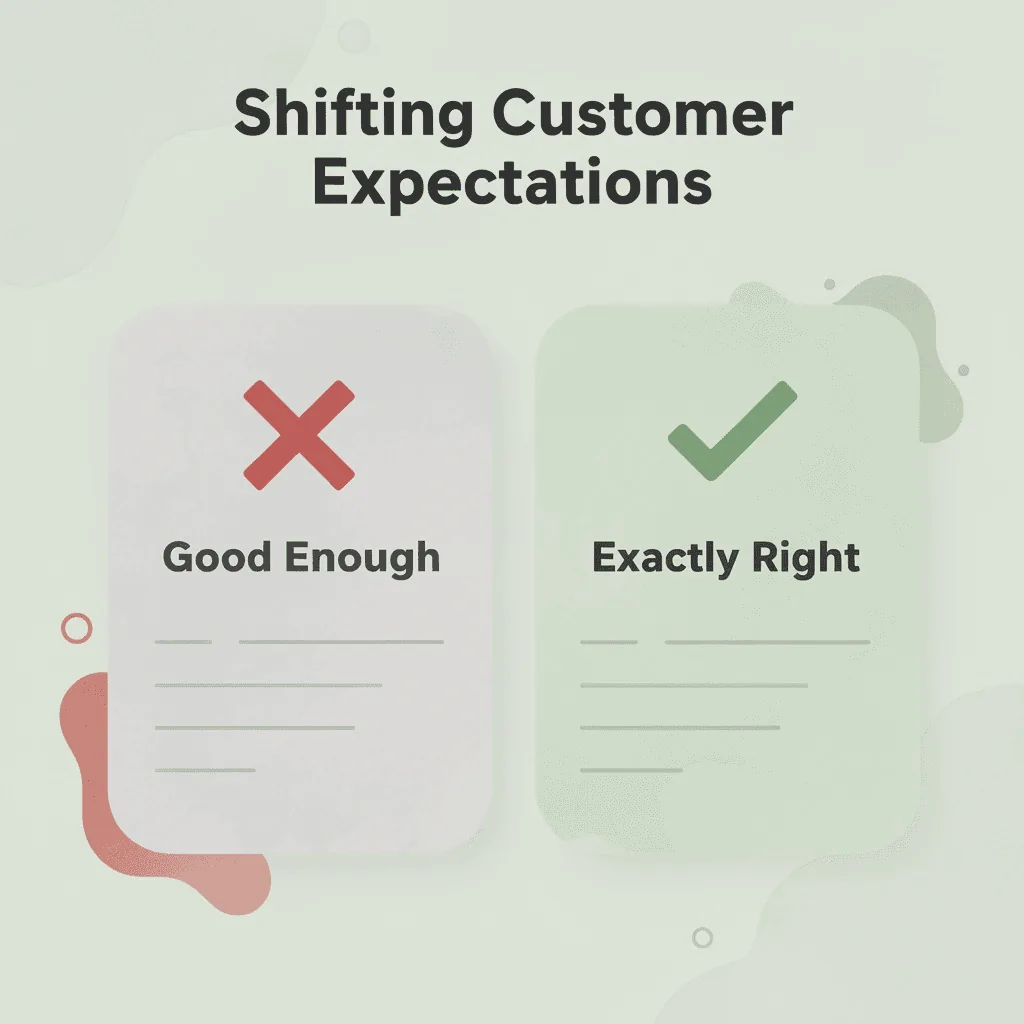
Running an ecommerce business today means handling more complexity with fewer resources than ever before. Customer expectations have shifted dramatically — from "good enough" to "exactly what I want, right now," — and brands that can't meet that standard are falling behind fast. AI is how serious operators are meeting this challenge head-on.
"Brands that can't meet rising customer expectations are falling behind — AI is how serious operators are closing that gap." — Caspa AI
🎯 Key Point: The gap between customer expectations and operational capacity is widening — and only brands leveraging AI-powered tools are keeping pace.
💡 Tip: If your ecommerce brand is still relying on manual processes to manage customer experience, inventory, and personalization, you're already behind your AI-enabled competitors.
| Challenge | Without AI | With AI |
|---|---|---|
| Customer Expectations | Slow, generic responses | Instant, personalized experiences |
| Resource Management | High overhead, manual effort | Automated workflows, leaner teams |
| Competitiveness | Falling behind | Staying ahead of the curve |
How does inconsistent product imagery hurt conversion rates?
A single product needs images for your website, Amazon listing, Instagram feed, TikTok ads, and email campaigns—each formatted differently, each competing for seconds of attention. Most teams batch shoots and reuse assets, but inconsistent imagery erodes trust when customers decide whether to buy. Product photography platforms like Caspa generate ultra-realistic product images and A+ content without traditional studio logistics, cutting production costs by up to 10x while maintaining conversion-driving quality.
Why content volume and quality both matter now
The same friction shows up in paid advertising and organic social: you need more creative assets, made faster, without sacrificing quality. According to Omnisend, 80% of consumers are more likely to buy from brands that offer personalized experiences. Generic visuals don't inspire and measurably leave revenue on the table. Personalization at scale requires content infrastructure that manual workflows cannot support. As more brands compete for the same customers, acquisition costs rise, and conversion rates fall. Brands producing targeted visual content for each audience segment outperform those relying on static product images, a gap that widens every quarter.
What does AI actually change about operations?
AI removes bottlenecks that force lean teams to choose between quality and volume. According to the SellersCommerce Blog, 84% of ecommerce businesses say AI is their top priority for improving customer experience. When a solo founder or five-person team can produce the content output of a much larger operation, the competitive advantage shifts dramatically. The brands winning right now identified where their workflows were breaking and replaced friction with scalable systems.
Related Reading
- Ecommerce Product Photography
- Ai Tools for E-commerce
- Printify Alternatives
- Photoroom Pricing
- Ecommerce Product Photography Services
- E-commerce AI Tools
- Printful Alternatives
- How To Sell On Shopify
- Redbubble Alternatives
- Ecommerce Product Videos
- Automated Product Photography
- Ecommerce Product Imagery
- Visual Merchandising Ecommerce
- Photoroom Cost
What Makes an AI Tool Worth Using for Ecommerce?
The best AI tools reduce the gap between effort and outcome. If a tool demands more from your team than it delivers, it's a problem.

Revenue impact beats feature count
Most teams ask, "what does this tool do?" The better question is "what does this change about our numbers?" According to Triple Whale's AI in Ecommerce Statistics, AI tools can improve conversion rates by as much as 20% for ecommerce brands, and retailers using AI report up to a 30% reduction in customer acquisition costs. These are business metrics, not feature metrics: the distinction matters more than any capability checklist.
Where the real friction lives
The failure point is usually invisible until it worsens. A brand schedules a product launch; the photography isn't ready, the listing goes up with placeholder images, and the conversion rate suffers for weeks before anyone connects cause and effect. Most teams book studio time in advance, which works until the catalog grows, the budget tightens, or the market demands faster iteration. Platforms like Caspa address this directly, generating ultra-realistic product images, lifestyle visuals, and A+ content without a studio, compressing what took weeks into hours while maintaining visual quality sufficient to improve product page performance.
Does the tool actually fit into how your team already works?
An AI tool that lives outside your existing workflow creates a new job: managing the tool itself. The best platforms integrate into systems your team already uses, reducing adoption friction. If your team needs three weeks of training before seeing output, the tool has already cost you something real.
Is the cost measured against what it actually replaces?
Cost should be measured against what it replaces, not what it charges. A platform that eliminates outsourced photography, reduces retouching hours, or cuts content production cycle time often pays for itself within the first month.
What does success look like sixty days after adoption?
The real test of any AI tool isn't what it promises in a demo, but whether, sixty days in, your team is faster, your content is stronger, and your margins reflect the difference.
15 Best AI Tools for Ecommerce in 2026
Fifteen tools consistently stand out in 2026, each solving a specific problem that costs ecommerce brands real money.
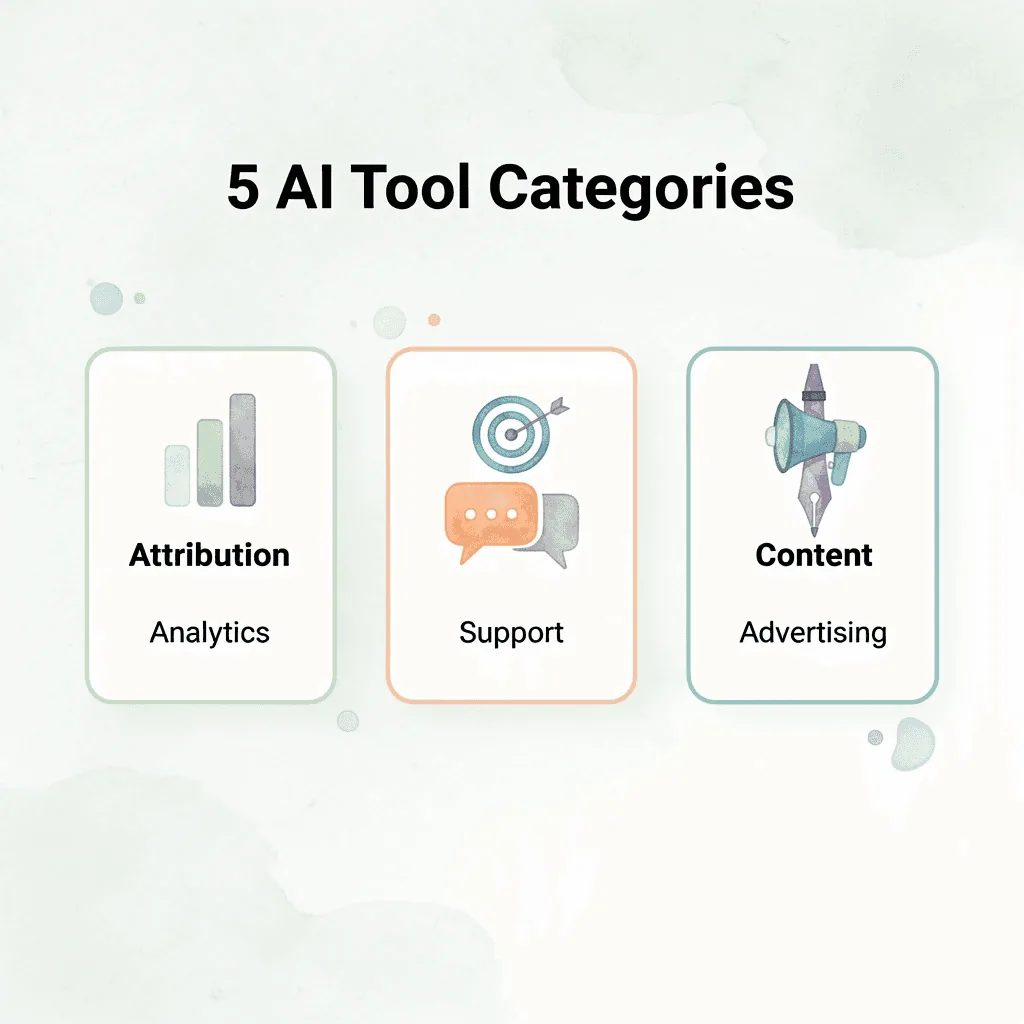
"AI tools for ecommerce brands in 2026 fall across five core categories: analytics, attribution, support, content, and advertising." — Saras Analytics, 2026
🎯 Key Point: Not every tool solves every problem. The best AI tools are purpose-built for a specific pain point, making tool selection a strategic decision, not a shopping exercise.
According to Saras Analytics, AI tools for ecommerce brands in 2026 fall across five core categories: analytics, attribution, support, content, and advertising. Match the category to your biggest problem area, and the decision becomes much easier.
| Category | Core Problem Solved |
|---|---|
| Analytics | Turning raw data into actionable insights |
| Attribution | Understanding which channels drive revenue |
| Support | Scaling customer service without scaling headcount |
| Content | Producing high-converting copy at speed |
| Advertising | Maximizing ROAS across paid channels |
🔑 Takeaway: Brands that align their AI tool selection to a specific category — rather than chasing every trend — see faster ROI and cleaner implementation.
1. Caspa
Most brands book a studio, hire a photographer, and wait two to three weeks before repeating the process for each new SKU or seasonal campaign. This model works only with a single product line and a generous timeline.
What happens when catalog volume grows and timelines compress?
When your catalog grows, or campaign timelines shrink, delays can push back launch dates, reshoots can consume your budget, and maintaining consistent image appearance across product pages, Amazon listings, and social ads becomes costly.
How does Caspa replace the traditional studio workflow?
Product photography platforms like Caspa replace that workflow with AI-generated studio-quality images, including realistic shots with human models, background removal, image upscaling, and full editing capabilities. Our platform helps brands achieve up to 40% more conversions and reduce production costs by up to 10x compared to traditional studio shoots. Brands with highly technical or tactile products, such as precision tools or fine jewelry with intricate detail, may still need occasional real shoots for hero images. For most ecommerce use cases, Caspa removes the bottleneck entirely.
2. Flair AI

Flair AI solves a narrower problem than Caspa, but it solves it well. If you have clean product images and need to place them in compelling lifestyle environments quickly, Flair generates branded scenes with strong output quality and fast turnaround. Its limitation is scope: it focuses on scene generation, not full creative production, so brands needing model imagery or post-production editing will require a second tool.
3. Midjourney

Midjourney fails as a product photography tool—it isn't designed for that purpose. It excels at creating original, high-concept images for brand campaigns, lookbooks, and creative direction that would otherwise require a full creative agency. The tradeoff: outputs demand prompt skill and iteration, and product accuracy isn't its strength.
4. ChatGPT

ChatGPT earns its place on this list because it handles multiple tasks well enough to replace slower processes: product descriptions, customer research summaries, email subject lines, and FAQ generation all move faster with it in the workflow. The main limitation is brand voice consistency at scale, which requires more deliberate prompting than tools built specifically for marketing copy.
5. Jasper
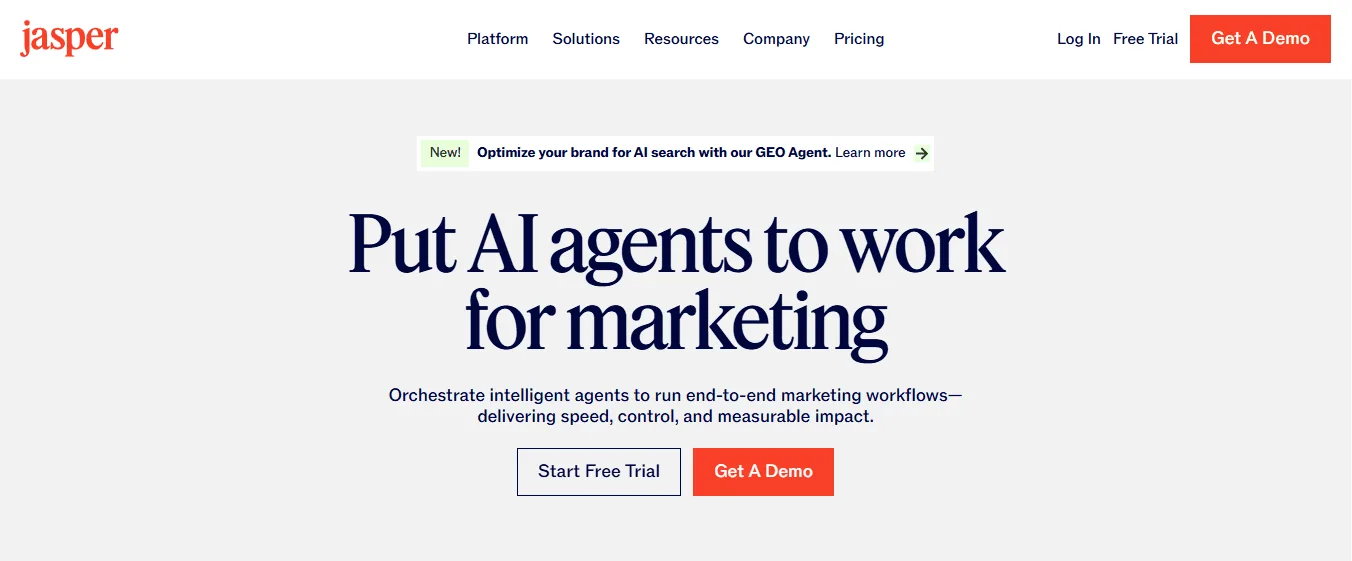
Content teams struggle to maintain consistency across high-volume output. Jasper solves this by learning your specific brand voices and generating marketing copy, product descriptions, and ad content that sounds cohesive across thousands of pieces. The higher price justifies itself for teams producing substantial content.
6. Copy.ai
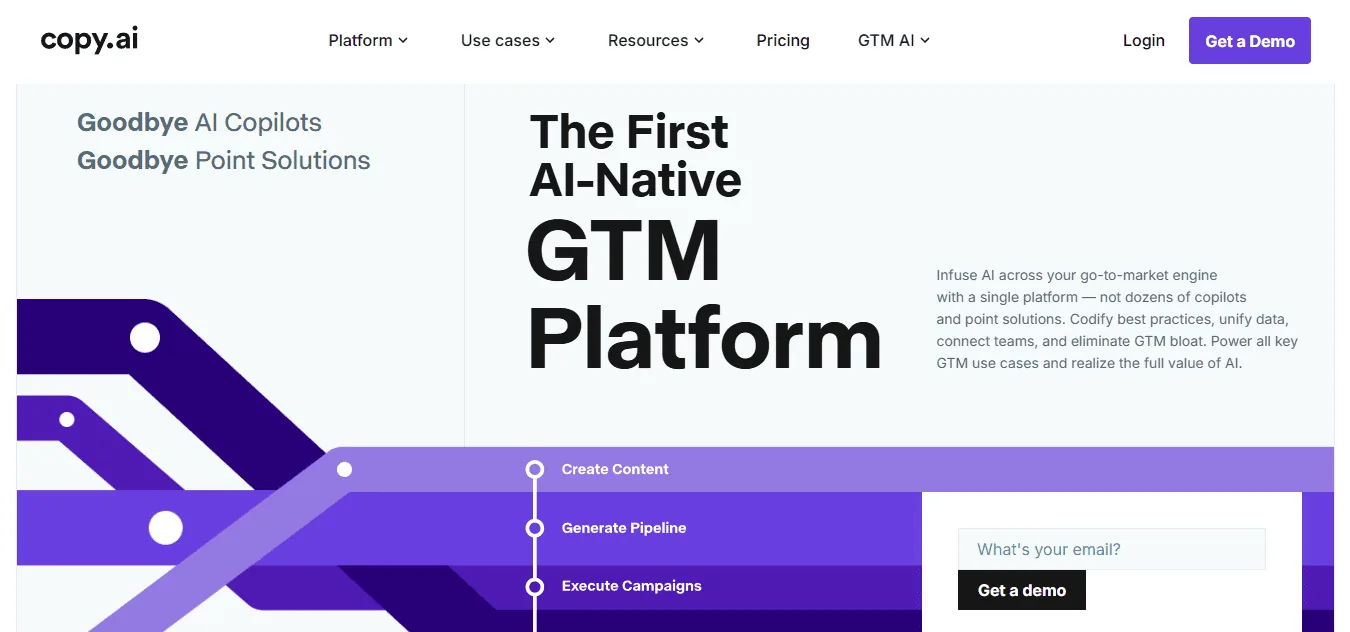
Copy.ai excels at generating short-form content quickly. It offers specialized templates for e-commerce, including ads, product descriptions, and promotional headlines. However, it struggles with longer-form writing requiring depth and nuance, which typically demands substantial revision. Copy.ai suits small teams prioritizing speed over meticulous detail.
7. Gorgias

After a store reaches 200 to 300 orders per month, shared inboxes and manual responses become unmanageable. Gorgias consolidates every support channel in one place, automates responses using real order data, and integrates with Shopify so agents can solve problems without switching between tabs. Pricing scales with ticket volume, making it high-cost for high-order stores, but the alternative—hiring additional staff—is even more expensive.
8. Tidio
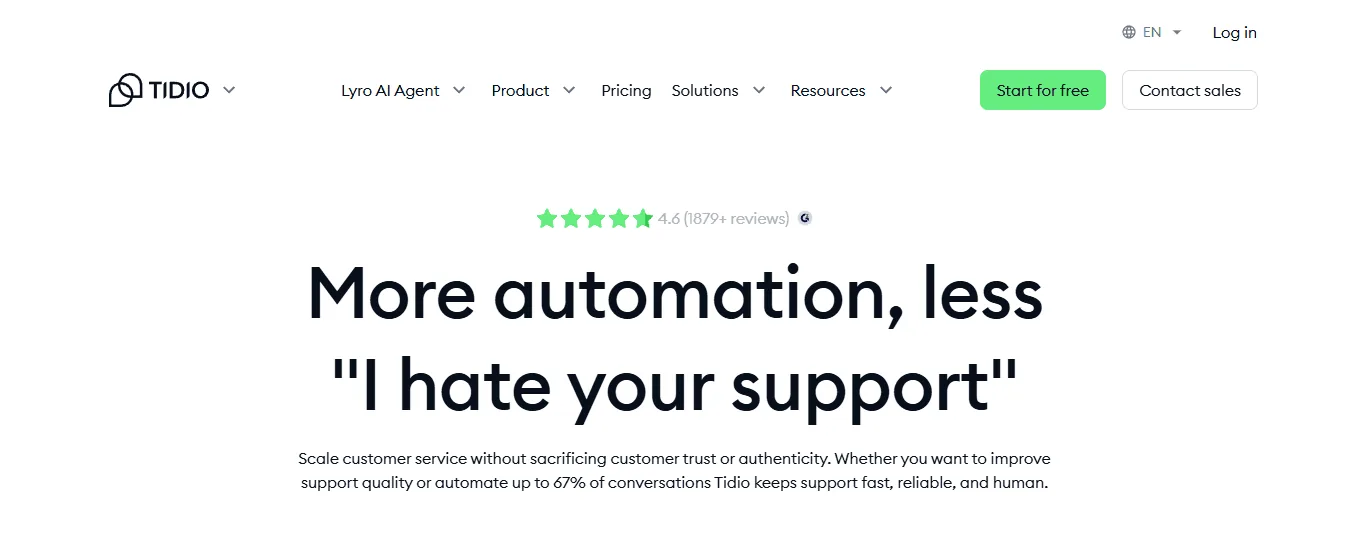
Tidio offers AI-powered chat coverage at a fraction of Gorgias's cost, making it ideal for budget-conscious businesses needing support. Its chatbot learns from existing store content and handles common questions effectively. However, advanced workflow automation and reporting lag behind Gorgias, a limitation that matters more as your business scales.
9. Triple Whale
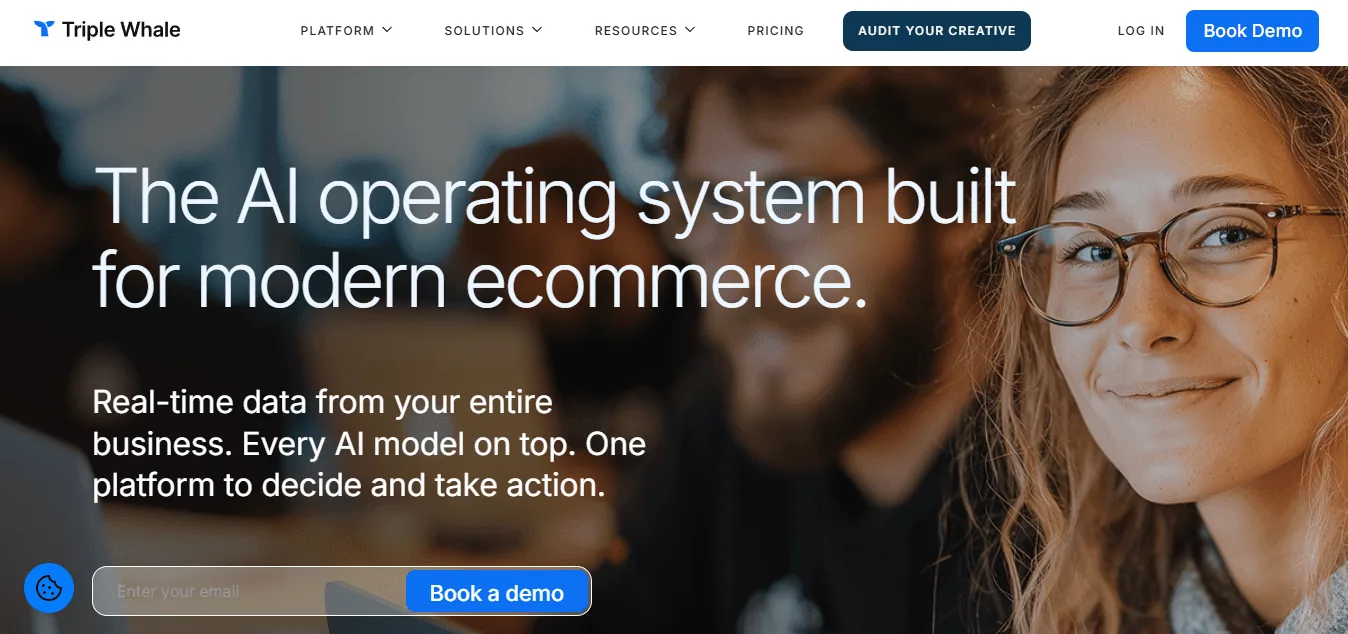
The critical difference between stores that grow profitable paid advertising and stores that lose profit is knowing which spending works. Triple Whale consolidates data from multiple ad platforms into a single profitability dashboard with AI-powered attribution modeling, giving merchants a clear view of true return on ad spend rather than the inflated numbers platform dashboards show. Its value scales with ad spend, making it less relevant for stores with minimal paid traffic.
10. Peel Insights
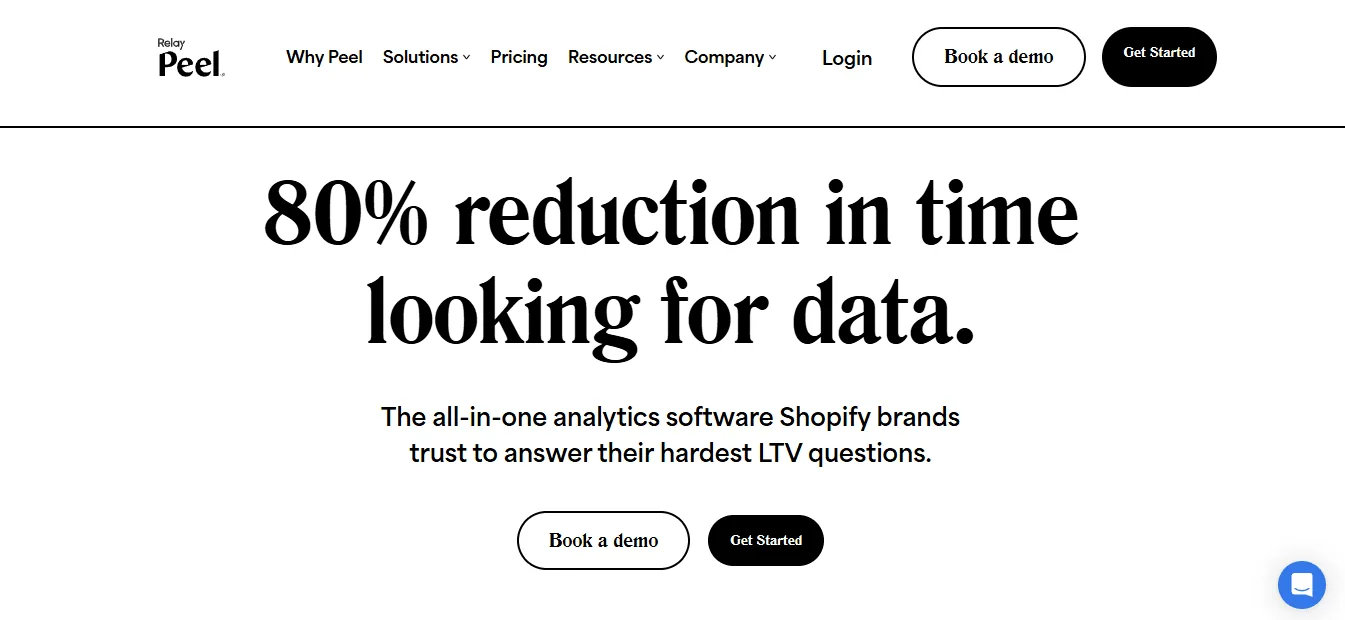
Retention strategies often fail due to incomplete data. Peel Insights provides cohort-level analysis and lifetime value reporting beyond Shopify's built-in analytics, showing which customer groups return and how their value grows over time. However, it requires meaningful historical order data, so newer stores will initially receive limited information.
11. Lifetimely
Lifetimely answers where to invest for growth—a question data alone cannot address. Its profit-focused reporting ties customer acquisition costs to long-term value, clarifying strategic decisions about channel investment and product development. It delivers the most value to stores with consistent repeat-purchase behavior and less value to one-time-purchase categories.
12. AdCreative.ai
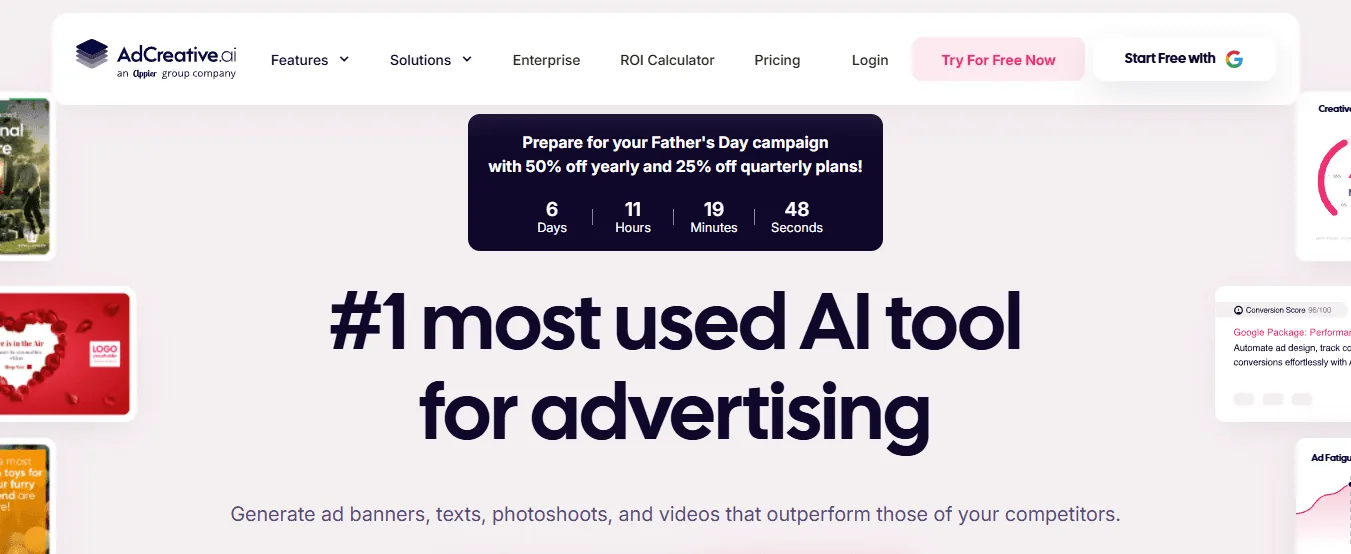
Performance marketers tire of the same creative ads faster than teams can produce new versions. AdCreative.ai generates multiple ad options quickly and scores their potential performance before spending money, accelerating testing cycles. People still need to refine output for brands with specific visual guidelines, but the speed improvement is substantial.
13. Rebuy

Most online stores leave money on the table due to poor planning, not poor product quality. Rebuy personalizes product recommendations and upsell offers across the customer journey, adapting in real time based on browsing and purchase behavior. Its impact is most visible for stores with larger catalogs; single-product brands will find limited application.
14. Smartly.io

Smartly.io automates budget allocation and the generation of creative variations across Meta and TikTok simultaneously. This matters for large campaigns; for smaller stores with modest budgets, the cost-to-value ratio doesn't justify the expense. For larger advertising operations, it removes a significant layer of manual work.
15. Octane AI
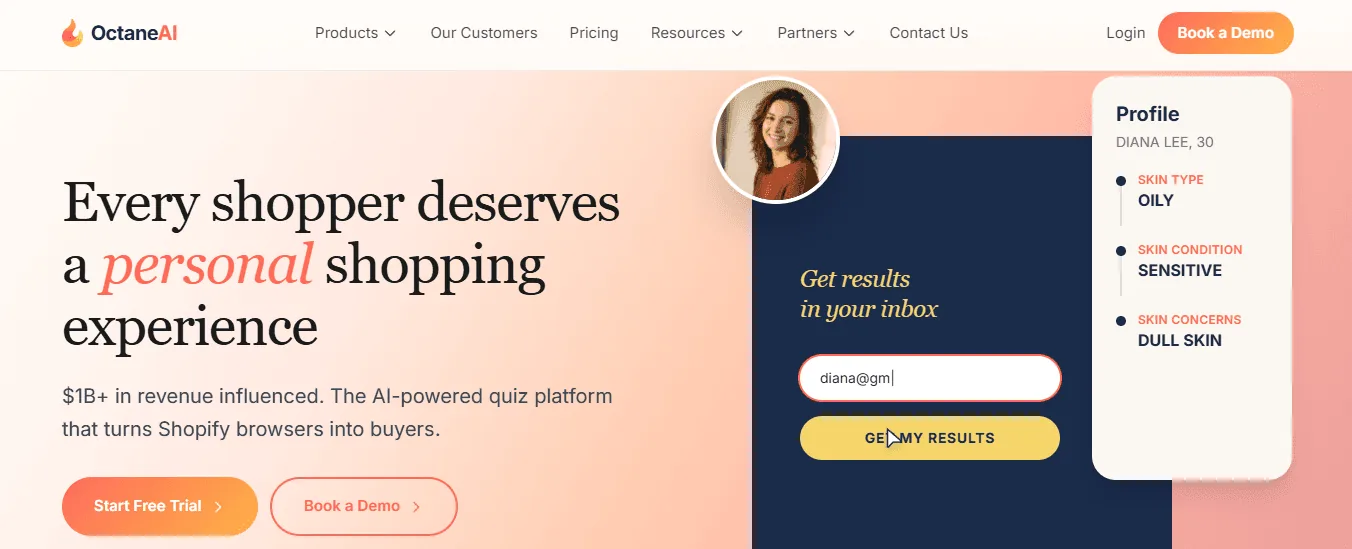
Product recommendation quizzes help turn visitors into buyers. Octane AI guides customers through a conversational experience that helps them discover products, making buyers feel more confident, reducing confusion about what to choose, and matching them with the right products. For stores with extensive product catalogs, the increase in sales is measurable. For stores with fewer product choices, the benefit is smaller.
Where does AI in ecommerce go from here?
According to the OdooPIM Blog, the AI in ecommerce market is expected to reach $22.60 billion by 2032. The tools on this list form the foundation of that growth. No single tool works for everyone. The right group of tools depends on where your growth is stuck. A brand losing time on visual content has different priorities than one losing customers to slow support or struggling with ad attribution. The most effective AI tool groups in 2026 are narrow by design: one or two tools solving the highest-cost problems first, with expansion only after they're in place and measurably working. Knowing which tools exist is only half the equation. The harder part is building your toolkit with a clear framework for what to add, what to skip, and what to avoid.
Common Mistakes Brands Make When Building Their AI Stack
Building an AI stack without a framework leaves you with tools scattered everywhere, no clear path forward, and a team spending more time searching than shipping.
"An AI stack without a framework isn't a stack — it's a pile. The difference between tools that scale and tools that stall is the structure you build around them." — AI Strategy Insight
⚠️ Warning: The most common mistake brands make is adopting point solutions reactively — solving one problem at a time with no regard for how tools integrate, overlap, or conflict down the line.
💡 Tip: Before adding any new tool to your stack, ask: Does this fit a defined layer of our framework, or are we just chasing a shiny object?
| Mistake | Impact |
|---|---|
| No unifying framework | Tools don't talk to each other |
| Reactive tool adoption | Redundant costs, wasted licenses |
| No clear ownership | Teams searching instead of shipping |
| Skipping integration planning | Broken workflows, lost data |

🎯 Key Point: A well-structured AI stack isn't about having more tools — it's about having the right tools, in the right order, serving a clear strategic purpose.
When more tools create more problems
Lenny's Newsletter reports that more than half of the people surveyed use three or more AI tools simultaneously. Brands collect tools faster than they integrate them. Each new platform solves one specific problem but creates two new ones: a new login, workflow, and training requirement. The stack grows heavier while the team moves more slowly. The failure point is usually not the tools themselves, but the lack of a decision filter before adoption. Brands get drawn in by demos showing best-case scenarios, not the daily reality of switching between tasks, matching outputs across platforms, or fixing problems when two tools interpret the same data differently.
The hidden cost of overlapping capabilities
Most teams handle product content using separate tools for image editing, background removal, copy generation, and listing formatting. At 500 SKUs, this becomes a coordination problem no individual tool can solve. Teams using product photography platforms like Caspa that integrate image generation, infographic creation, and A+ content into a single workflow recover hours per week from reduced context-switching alone, before accounting for studio production savings.
What happens when inconsistent inputs feed any AI tool?
Webvillee Technology reports that 77% of companies cite poor data quality as the biggest barrier to successful AI implementation. Most brands blame the wrong tool choice, but the real problem is feeding any tool messy information and expecting clean results. Garbage-in, garbage-out occurs when product data, image files, and copy information reside in separate systems without shared standards.
Why does chasing features create more friction than it solves?
The most expensive mistake is optimizing for impressiveness rather than impact. A brand drawn to an AI tool's forty-feature dashboard often avoids the harder question: which single bottleneck is costing us the most right now? Paying for capability you cannot operationalize is not an investment; it is a subscription to potential. The brands that build effective stacks start with one painful, measurable problem, solve it completely, and expand from there.
What does a bloated stack actually cost your team?
The cost of a bloated stack rarely appears on a single invoice. It manifests in slower campaign cycles, inconsistent product page quality, and a technically equipped but operationally exhausted team. This quiet drag on momentum is why scaling feels harder than it should.
How AI Helps Ecommerce Brands Scale Without Increasing Costs
When AI is used with discipline, output grows while costs stay the same. Triple Whale's AI in Ecommerce Statistics reports that retailers using AI see up to a 30% reduction in operational costs — not by cutting people, but by removing the friction that slows people down. Cost reduction through AI is a throughput story, not a headcount story.
"Retailers using AI see up to a 30% reduction in operational costs — not by cutting people, but by removing the friction that slows people down." — Triple Whale, AI in Ecommerce Statistics
🔑 Takeaway: That 30% cost reduction isn't about layoffs or budget slashing — it's about eliminating operational drag so your existing team can produce exponentially more output.
💡 Tip: If your ecommerce brand is still treating AI as a nice-to-have, you're leaving a measurable cost advantage on the table — one your competitors are already capturing.
| Scaling Approach | Cost Impact | Output Impact |
|---|---|---|
| Hiring more staff | Costs increase linearly | Output increases linearly |
| AI-assisted workflows | Costs stay flat | Output scales up to 30% more efficiently |
| No AI adoption | Costs remain high | Competitive disadvantage grows |

What happens when a content pipeline can't keep up with catalog growth?
A brand grows from 200 SKUs to 800, and suddenly the content pipeline that worked at a smaller scale becomes the bottleneck. Product listings sit incomplete. Campaign assets arrive late. The process isn't built for that volume. AI tools, applied at the right pressure points, stretch that pipeline without requiring proportional increases in resources.
How does AI keep support teams lean as order volume climbs?
Most teams hire more support staff as order volume climbs. According to Triple Whale's AI in Ecommerce Statistics, AI automation can handle up to 80% of routine customer service interactions without human intervention, allowing support teams to remain small while delivering fast, consistent responses across thousands of daily touchpoints.
How does AI break the linear cost relationship in product photography?
Product photography has traditionally scaled linearly: more products meant more shoots, more scheduling, and more editing hours. Platforms like Caspa break that linear relationship by generating studio-quality images, infographics, and A+ content at catalog scale. Our solution reduces production costs and accelerates time-to-listing, protecting revenue during product launches.
Why does removing multiple bottlenecks at once make AI so powerful for scaling?
What makes AI powerful for scaling is the compounding effect of removing multiple bottlenecks simultaneously. Faster content production, leaner customer support, and more consistent visual assets reduce the drag that normally makes growth expensive. Each efficiency gain creates capacity for the next. The brands that figure this out first are not necessarily the biggest. They are the ones who stopped asking "how do we afford to scale?" and started asking something far more interesting.
Related Reading
- How To Sell On Amazon
- Printful Vs Printify
- Shopify Vs Woocommerce
- Shopify Vs Bigcommerce
- Ai For Ecommerce
- Ai For Product Photos
- Ai Generated Product Images
- Ai Product Photo Generator
- Amazon Vs Shopify
- Ai Product Video Generator
- Ai Clothing Model
- Printful Review
- Shopify Vs Amazon
- Ai Model For Clothing
- Ai Product Video
- Ai Fashion Model
- Printful Pricing
- Best Amazon Seller Tools
How Caspa Helps Ecommerce Brands Create Better Product Content
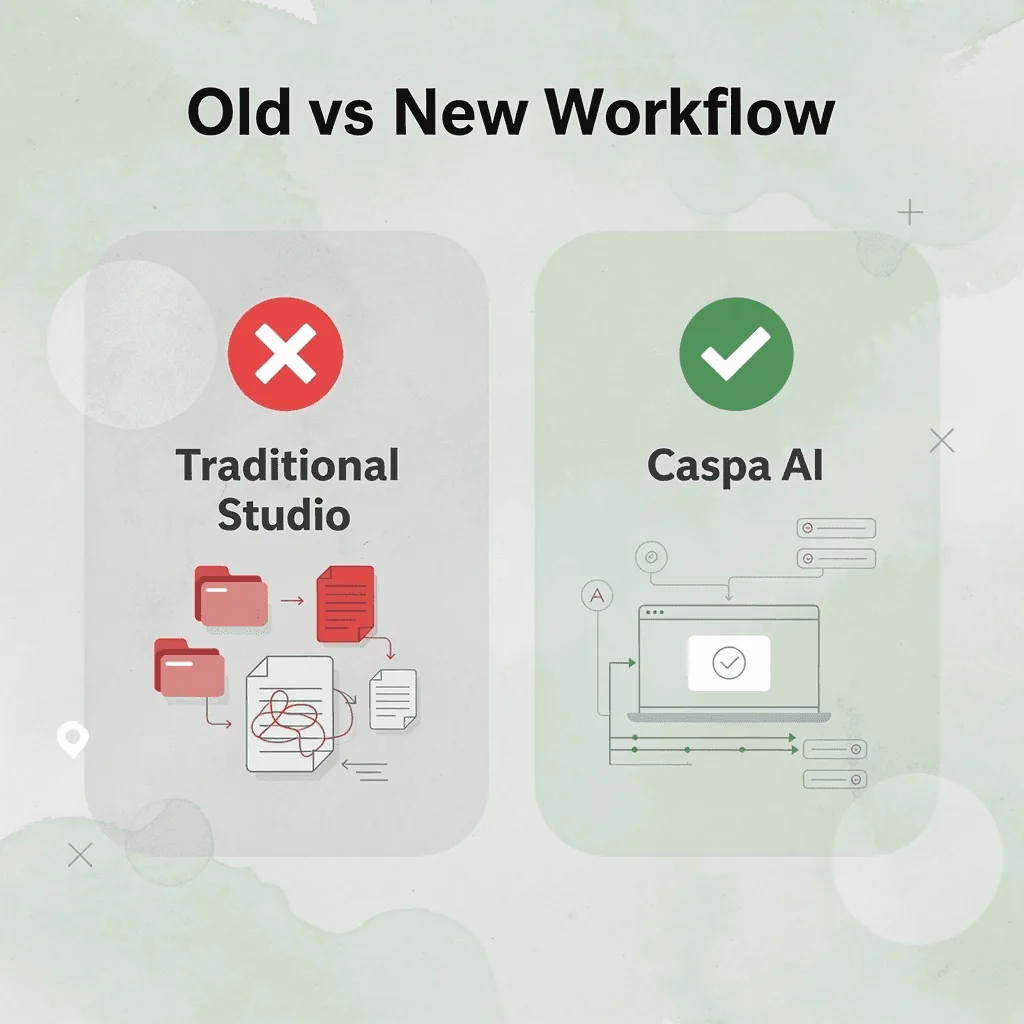
For many online shopping brands, product content is a major bottleneck. Traditional photography workflows involve photographers, studios, models, editing software, and multiple rounds of revisions, which consume resources and slow execution.
What does Caspa's all-in-one platform actually do?
Caspa makes this easier with an all-in-one AI product photography platform. Instead of using separate tools and paying for expensive studio shoots, our platform helps brands create realistic product images with human models, edit photos, remove backgrounds, enlarge images, and generate custom stock photography in seconds.
How does Caspa help ecommerce teams move faster?
Speed is a critical advantage. Ecommerce teams face constant pressure to launch products, refresh creative assets, and support campaigns across websites, marketplaces, email, and social media. Caspa enables brands to create professional visuals without waiting on photographers or designers, or on lengthy editing workflows. The platform reduces complexity by consolidating image editing, background removal, and product visualization in one place, keeping branding consistent and enabling scaled content production.
How does Caspa help growing brands scale without rising costs?
Caspa is especially useful for growing brands that want to expand without proportional increases in creative costs. By replacing fragmented workflows with a single platform, businesses create more assets while reducing coordination time across people and tools. Most importantly, Caspa frees teams to focus on creativity rather than repetitive production work. AI handles technical tasks while marketers and founders control the storytelling and brand experience that drive conversions.
Get Product Photos that Increase Your Sales Today
If your team treats product photography as a production task rather than a revenue input, that mindset is costing you conversions. Brands that scale efficiently closed that gap first by recognizing that every product image directly influences purchase decisions, bounce rates, and bottom-line growth.
"Brands that treat product photography as a revenue input — not just a production task — are the ones scaling efficiently and closing the conversion gap first."
💡 Tip: Audit your current product pages. If your images look like afterthoughts, your conversion rate is suffering.
⚠️ Warning: Treating product photography as a checkbox task rather than a sales asset is one of the most costly mistakes growing brands make.
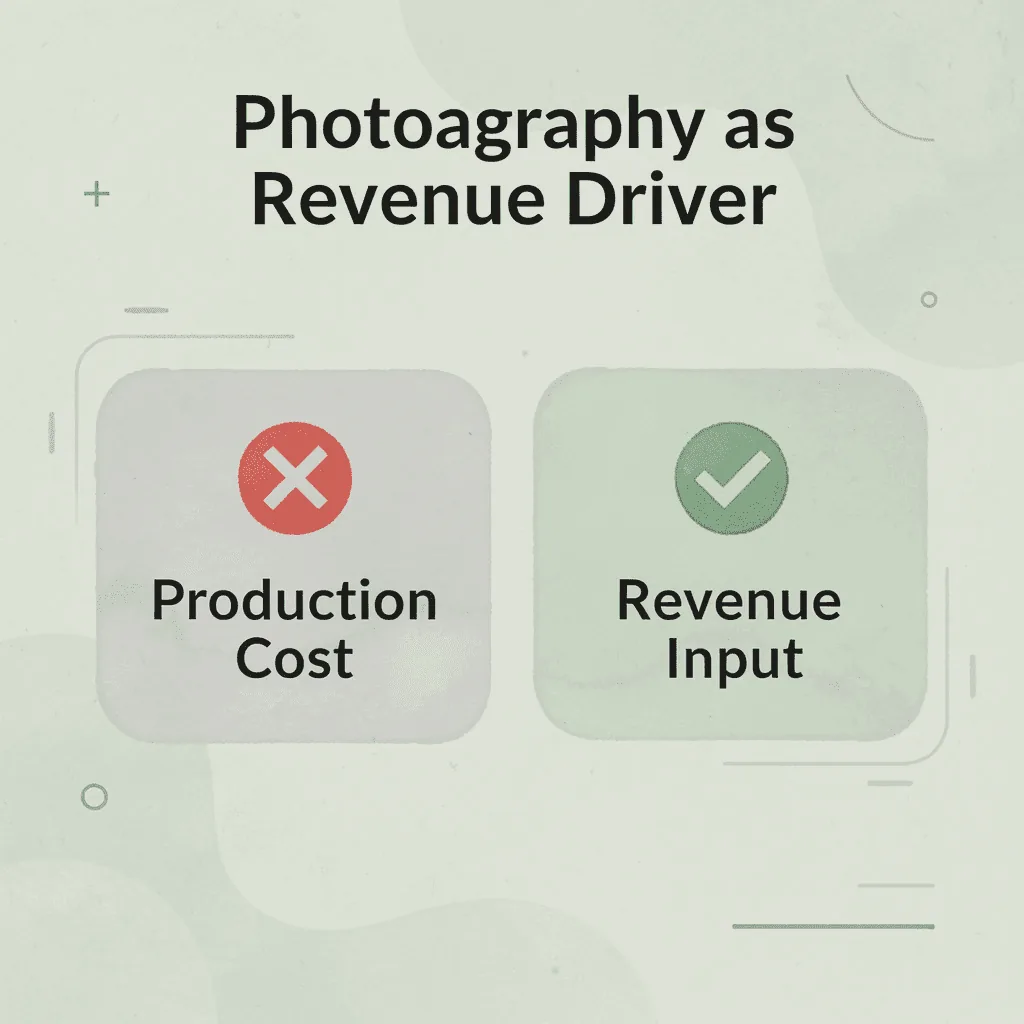
Caspa transforms existing product photos into studio-quality visuals, generates AI scenes with human models, and builds out your full content library — all without booking a single shoot. In your first session, you'll see how much faster your product pages move from concept to live, at a fraction of traditional production costs.
| Traditional Product Photography | Caspa AI |
|---|---|
| Expensive studio bookings | No shoots required |
| Slow concept-to-live timelines | First session results |
| Limited content library output | Full library generation |
| Requires human model coordination | AI-generated human model scenes |
🎯 Key Point: Caspa isn't just a faster way to produce images — it's a fundamentally more efficient revenue engine for your product pages.
✅ Best Practice: Use Caspa to upgrade your existing product photos first — you'll see immediate impact on your live pages before building out your broader content library.
Related Reading
- Merch On Demand
- Placeit Alternative
- Best Background For Product Photography
- Ai Product Video Maker
- Ai Fashion Model Generator
- Printify Vs Gelato
- Luxury Product Photography
- Amazon Merch On Demand
- Teespring Vs Printful
- Amazon Ai Tools
- Flat Lay Product Photography
- T-shirt Mockup Ai
- Advertising Product Photography
- Ai Product Photo Editor
- Ai Clothing Model Generator
- Ecommerce Product Video
- Redbubble Vs Printful
- Printful Vs Gelato
- Teespring Alternatives
- Ai Clothing Mockup Generator
- Placeit Pricing