

Running an online store demands fast decisions, and the right AI tools can mean the difference between scaling efficiently and falling behind. Sellers are now automating everything from product descriptions to ecommerce product photography, cutting costs and production time without sacrificing quality.
Caspa is one platform leading that shift, giving ecommerce sellers a way to generate professional product visuals in minutes rather than booking studios or photographers. Upload a product, and Caspa produces brand-ready images built for conversions. For sellers ready to move faster and spend smarter, it starts with better product photography.
Table of Contents
- Why Running an Ecommerce Store Has Become More Complicated
- What Types of Ecommerce AI Tools Are Available Today?
- 10 Best Ecommerce AI Tools for Different Business Needs
- Common Mistakes Brands Make When Using Ecommerce AI Tools
- How AI Can Improve Profitability Without Increasing Headcount
- How Caspa Helps Ecommerce Brands Create Better Product Content
- Get Product Photos that Increase Your Sales Today
Summary
- Most ecommerce brands underestimate how much their content burden has grown. A single product launch now requires platform-specific visuals for Amazon, lifestyle imagery for Instagram, short-form video for TikTok, and assets for email campaigns, each serving a different audience psychology. Traditional photography workflows, with studio bookings, model coordination, and post-production editing, create weeks of lead time before a product reaches market.
- Customer acquisition costs have increased by over 60% in the past five years, according to Rise Marketing, and the margin for error on creative quality has narrowed alongside that increase. A blurry product image or inconsistent visual identity does not just look unprofessional. It actively reduces conversions at a moment when every click costs more than it used to.
- Returns are a visual content problem as much as a logistics one. Online return rates average 20 to 30% compared to just 8 to 10% in physical retail, and a significant driver is the gap between what customers expect from product images and what they actually receive. When visuals fail to show a product in realistic context, customers guess, and when they guess wrong, they return.
- Most brands that adopt AI tools fail to see measurable results because they skip the strategic groundwork. Over 60% of ecommerce brands deploy AI without a clear strategy or defined success metrics, according to the Balkan eCommerce Summit, and only 37% see measurable ROI in the first year. That gap reflects not the limits of the technology but the absence of benchmarks set before deployment.
- The compounding efficiency gains from well-integrated AI tools are consistently underestimated. Companies using AI report operational cost reductions of 20% or more, according to Syracuse University iSchool research, and Accenture projects that AI could increase corporate profitability by an average of 38% by 2035. Those numbers reflect the removal of thousands of small friction points across every function, not a single dramatic improvement.
- Choosing AI tools based on trends rather than bottlenecks is one of the most common ways ecommerce brands waste their stack. A predictive analytics platform does not fix a broken content production workflow, and a support automation tool does not compensate for inconsistent product visuals. The sequence of adoption matters as much as the selection itself.
- Product photography addresses this directly by giving teams a way to generate channel-specific visuals, lifestyle scenes, and A+ content assets on demand, without the scheduling, coordination, and reformatting costs that make traditional production cycles so difficult to scale.
Why Running an Ecommerce Store Has Become More Complicated
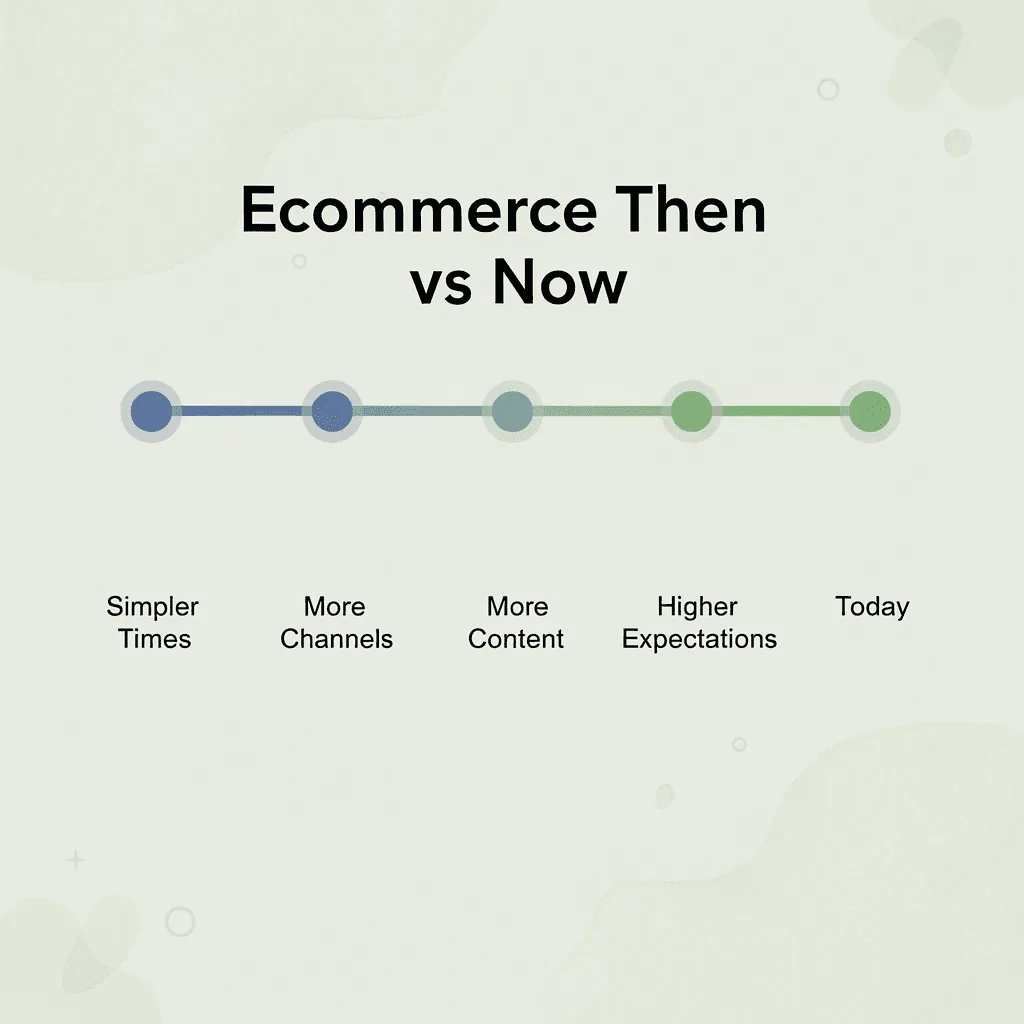
Running an ecommerce store today looks nothing like it did five years ago. The amount of work you have to manage has grown in every direction: more sales channels, more types of content, more things customers expect, and tougher competition. What used to be a job one person could handle by themselves now needs a whole team working together — even for brands that only sell one product line.
"The demands on ecommerce operators have multiplied across every dimension — from channel management to content production to customer expectations — making it one of the most operationally complex businesses to run today."
⚠️ Warning: If you're still running your store like it was five years ago, you're already falling behind. The operational complexity of modern ecommerce has fundamentally changed what it takes to compete.
💡 Key Insight: The shift from a solo operation to a team-dependent business isn't a sign of failure — it's a reflection of how dramatically the ecommerce landscape has evolved.
| Then (5 Years Ago) | Now (Today) |
|---|---|
| Single sales channel | Multiple sales channels |
| Basic content needs | Diverse, high-volume content |
| Low customer expectations | High, fast-moving expectations |
| One person could manage | Requires a full team |
Why has the content burden grown so much for product launches?
The content burden tells the story. A product launch that once required a handful of clean images now needs platform-specific visuals for Amazon listings, lifestyle shots for Instagram, short-form video for TikTok, and infographic-style assets for email campaigns. Each format engages a different audience psychology, and producing all of it through traditional photography workflows requires weeks of lead time and incurs high costs before a single unit ships.
The same pattern shows up across marketing and customer acquisition. According to Rise Marketing, customer acquisition costs have increased by over 60% in the past five years. This reflects a market where attention is scarce, brand trust takes longer to build, and creative quality demands precision. A blurry product image or inconsistent visual identity costs conversions.
How does piecing together vendors slow down ecommerce growth?
Most ecommerce teams assemble a team of vendors: a photographer, a retoucher, and a designer. This works until product lines expand or new sales channels require fresh images. Coordination costs escalate quickly, and teams spend more time managing production than planning growth. Platforms like Caspa address this by generating studio-quality product images, lifestyle visuals, and A+ content using AI, reducing production timelines from weeks to hours and cutting costs by up to 10x compared to traditional shoots.
How do poor product visuals drive up return rates and hurt margins?
The operational weight goes beyond content. Rise Marketing notes that ecommerce return rates average 20 to 30% for online purchases, compared to 8 to 10% in physical retail. A key reason is the gap between what customers expect from product images and what they receive. When visuals are inconsistent, poorly lit, or fail to show products in a realistic context, customers make poor choices and return items. Better visual content is not a creative nice-to-have—it is a logistics and profit problem.
Complexity in ecommerce builds quietly, one new channel at a time, one additional content format at a time, until systems that worked initially break under the weight of growth. The brands that grow through it are rarely those with the biggest budgets, but rather those that identified which bottlenecks to eliminate first.
What Types of Ecommerce AI Tools Are Available Today?
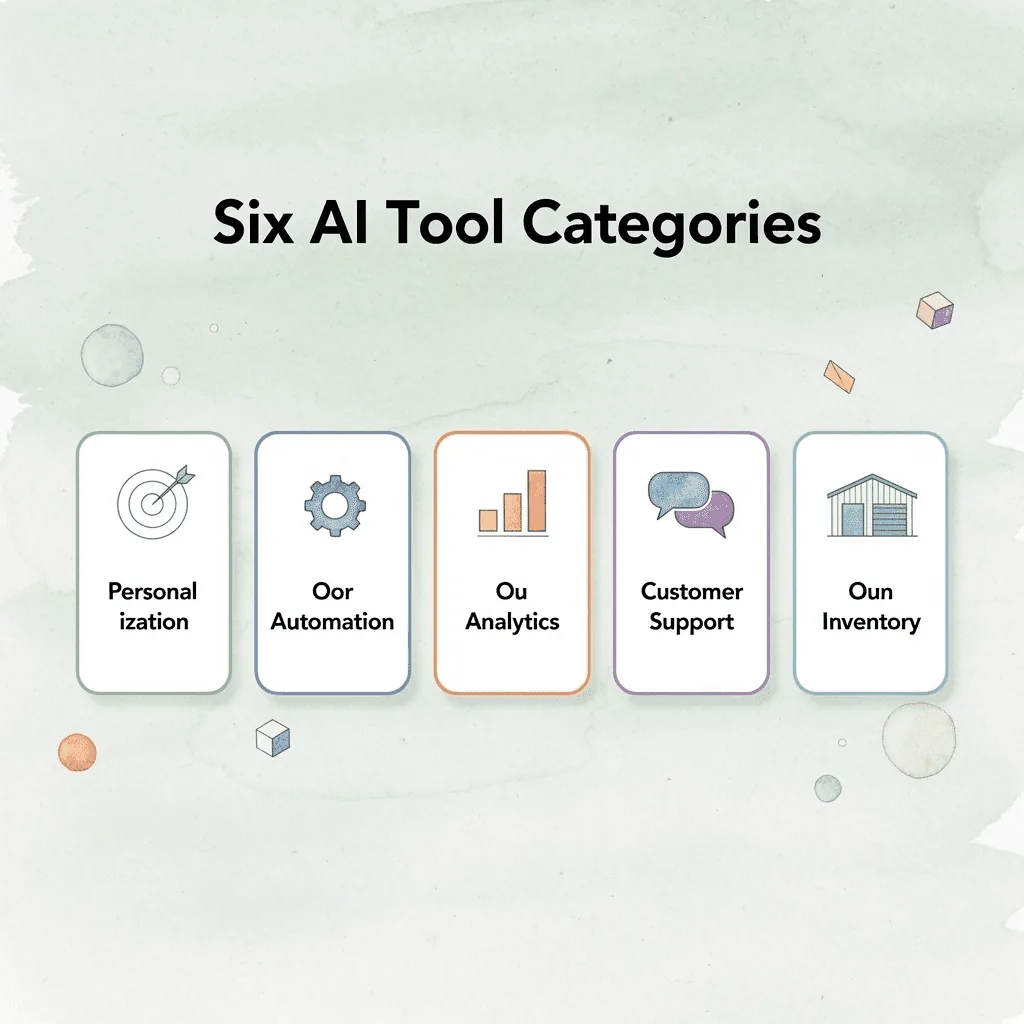
Ecommerce AI tools fall into six different categories, each one solving a different operational problem. The right tool depends on where your business is losing time or money.
"The right AI tool depends on where your business is losing time or money — and today, there are six distinct categories to choose from." — Key Industry Insight
| Category | Core Problem Solved |
|---|---|
| Personalization & Recommendations | Low conversion from generic shopping experiences |
| Customer Service & Chatbots | High support volume and slow response times |
| Inventory & Demand Forecasting | Overstocking, stockouts, and supply chain waste |
| Search & Discovery | Shoppers failing to find relevant products |
| Pricing Optimization | Leaving revenue on the table with static pricing |
| Marketing & Content Automation | Slow, costly content and campaign production |
🎯 Key Point: Not every ecommerce AI tool is built the same — each of the six categories targets a specific bottleneck in your operations.
💡 Tip: Before investing in any AI solution, audit your store to identify your biggest time or revenue drain — that's the category you should prioritize first.
Content and Visual Production
The most visible category is content creation, specifically product imagery and copy. Traditional photography workflows require booking studios, coordinating models, editing files across multiple applications, and repeating the process for each product change or new market. Teams using AI-powered product photography can generate studio-quality images featuring diverse human models across ethnicities, produce lifestyle scenes without physical shoots, and publish to Amazon, Shopify, and social platforms in a fraction of the time. Production costs can drop up to 10x compared to traditional methods, with significantly greater creative flexibility.
Customer Intelligence and Support Automation
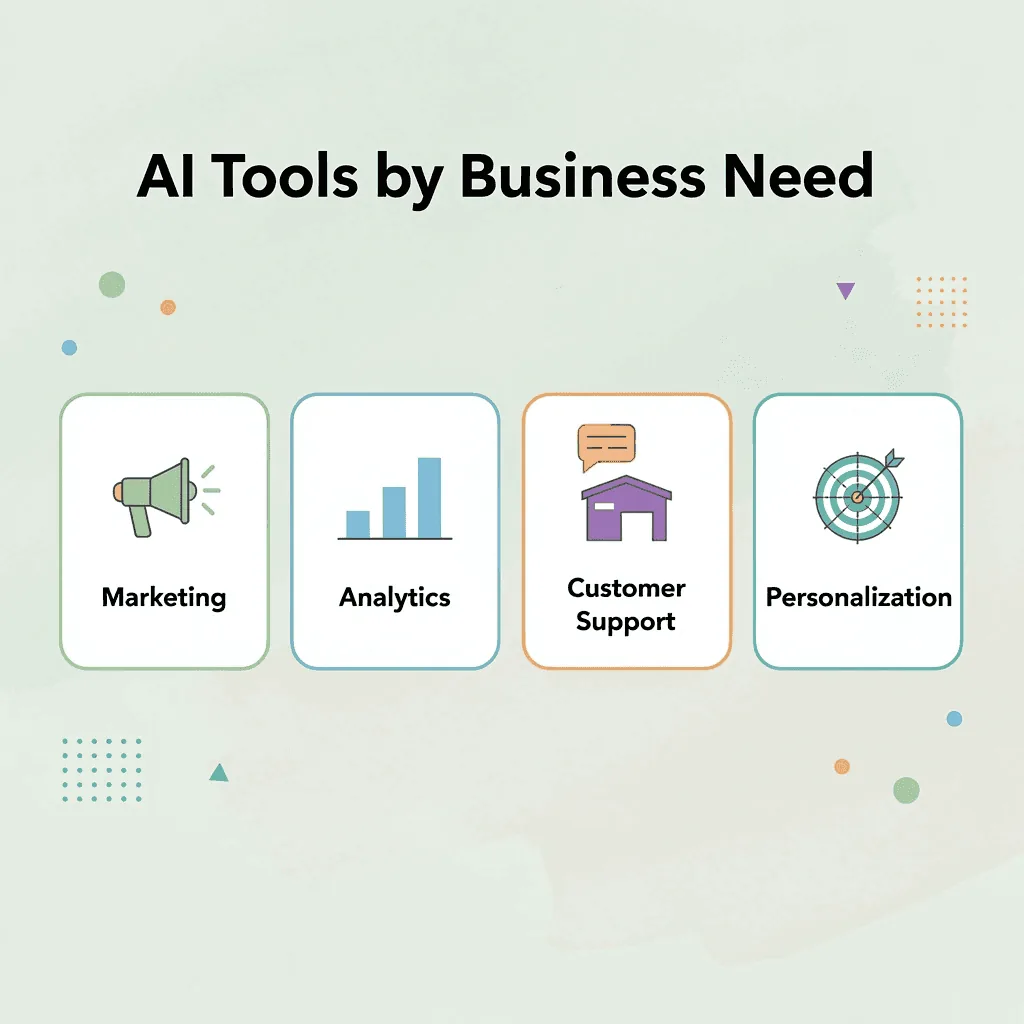
The second category covers customer-facing automation: chatbots, support routing, and conversational AI. According to Triple Whale's AI in Ecommerce Statistics, roughly 80% of ecommerce businesses are expected to use AI chatbots for customer interactions by 2026. Support volume grows faster than headcount, and customers resist waiting. AI support tools handle repetitive work, freeing human agents for conversations requiring judgment.
Personalization, Pricing, and Demand Forecasting
Personalization engines and inventory/pricing tools work closely together. Personalization platforms analyze browsing behavior, purchase history, and session data to show relevant products and customize email sequences in real time. Pricing tools monitor competitor data and market conditions to automatically adjust profit margins. Inventory forecasting tools use demand signals to reduce the risk of stockouts and overstock, both of which erode profit margins at scale. These tools protect the economics of growth in ways creative tools alone cannot.
Analytics and Advertising Optimization
The fifth category, AI-powered analytics and ad optimization, receives insufficient investment from many brands. Collecting data is easy; identifying which signals predict revenue is not. AI analytics platforms uncover patterns in customer acquisition costs, retention curves, and channel performance that would take human analysts days to find. AI tools generate creative variations, run multivariate tests, and automatically reallocate budgets toward the highest-performing combinations. The operational leverage is significant for brands running paid acquisition across multiple channels.
Choosing by Bottleneck, Not by Trend
The critical difference between brands that benefit from AI tools and those that accumulate them is specificity. Growing ecommerce teams often adopt tools reactively, chasing quarterly trends, then discover months later that the actual constraint lies elsewhere. If your conversion rate suffers because product images lack lifestyle context, an advanced analytics platform won't fix that. The bottleneck determines the solution, not the other way around. Knowing which tools exist is only half the picture; the more surprising part is which specific platforms are delivering results right now.
Related Reading
- Ecommerce Product Photography
- Ai Tools for E-commerce
- Printify Alternatives
- Photoroom Pricing
- Ecommerce Product Photography Services
- Printful Alternatives
- Best Ai Tools for E-commerce
- How To Sell On Shopify
- Redbubble Alternatives
- Ecommerce Product Videos
- Automated Product Photography
- Ecommerce Product Imagery
- Visual Merchandising Ecommerce
- Photoroom Cost
10 Best Ecommerce AI Tools for Different Business Needs
The platforms that deliver real results solve specific problems with enough precision that ROI shows up within weeks, not quarters.
"The best ecommerce AI tools don't just automate — they solve specific problems with enough precision that ROI shows up within weeks, not quarters." — Key Industry Insight
🎯 Key Point: The right AI tool targets a precise business problem — that's what separates tools that drive measurable ROI from ones that collect dust.
💡 Tip: When evaluating any ecommerce AI platform, ask yourself: Will this show results within weeks? If the answer isn't a confident yes, it may not be the right fit for your business needs.
| What Separates Top AI Tools | Weak Tools | High-Impact Tools |
|---|---|---|
| Problem Focus | Broad, generic features | Specific problem-solving precision |
| ROI Timeline | Quarters or longer | Weeks |
| Business Impact | Hard to measure | Clear, trackable results |
Product Photography and Creative Assets
The most common creative bottleneck in ecommerce is the sheer volume of visual content needed across Amazon listings, Shopify storefronts, and social channels. Most brands conduct periodic studio shoots in batches, hoping the output lasts long enough to justify the cost—until a product line expands, a seasonal campaign requires new imagery, or platform requirements shift.
1. Caspa
Product photography platforms like Caspa solve this problem directly by creating ultra-realistic product images, adding diverse AI human models from different ethnicities, and generating A+ content and infographics without requiring a photographer, studio, or editing delays. This enables faster testing of visual ideas and better conversion data over time. Caspa combines what previously required three or four separate tools into a single workflow, delivering results comparable to professionally shot images. It's designed for ecommerce brands and agencies that need to produce substantial volumes of content.
2. Flair AI

Flair AI uses a template-driven approach with AI-generated lifestyle backgrounds and pre-built scenes. It suits smaller operations that prioritize speed over customization, though teams with specific brand aesthetics may find the output difficult to tailor.
Content and Copywriting
The failure point in AI-assisted copywriting is usually not the tool, but the absence of a clear brand voice document. Without it, every output trends toward the generic, and generic copy does not convert.
3. ChatGPT

ChatGPT remains the most flexible option, handling product descriptions, email sequences, FAQ pages, and customer response templates with reasonable quality and minimal learning curve. The limitation is that it produces drafts, not finished copy. A human editor who understands brand voice and customer psychology must still be involved.
4. Jasper
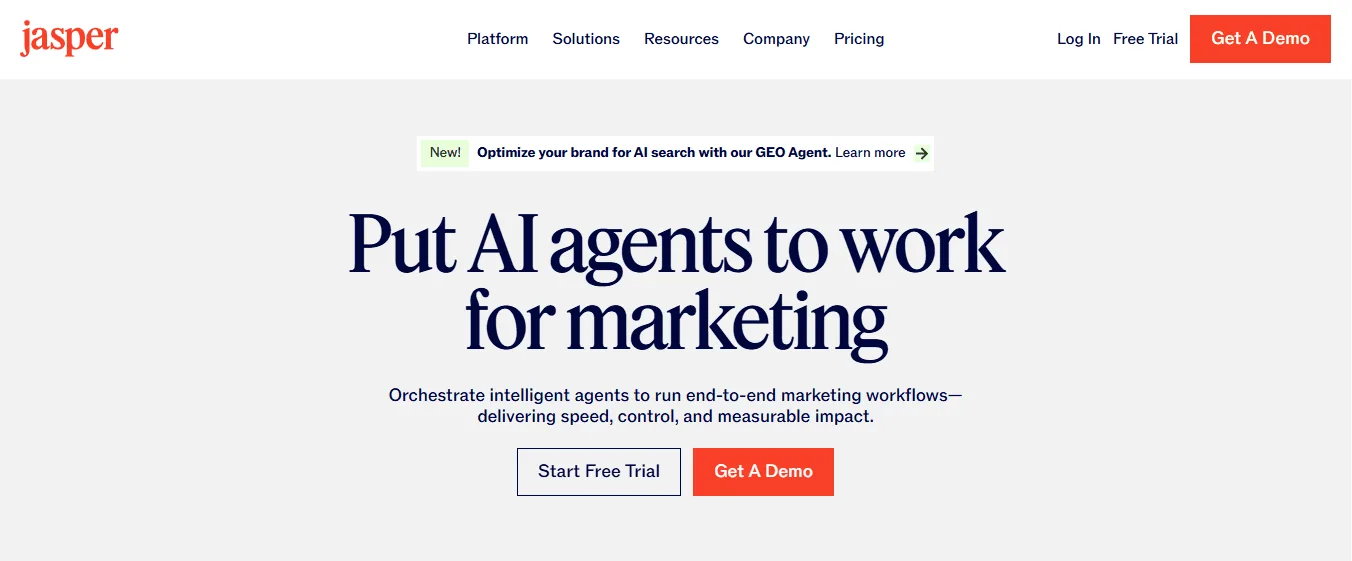
Jasper is built specifically for marketing copy and includes brand-voice training to help teams maintain consistency across channels. For growing brands with multiple contributors, this consistency layer proves valuable. For solo operators or small teams, weigh the subscription cost against your expected content output before committing.
Customer Support
Teams often report that the first 90 days after launching a customer support AI tool feel chaotic, not because the tool fails, but because existing support processes were never documented clearly enough for automation to follow. The tool reveals the gap rather than creating it.
5. Gorgias

Gorgias is the best choice for online stores. It consolidates support requests from email, chat, and social media into a single place. It integrates with Shopify, so support workers can view order history, tracking information, and purchase details without switching between screens. It's designed for medium-sized and large businesses where ticket volume justifies the cost.
6. Tidio
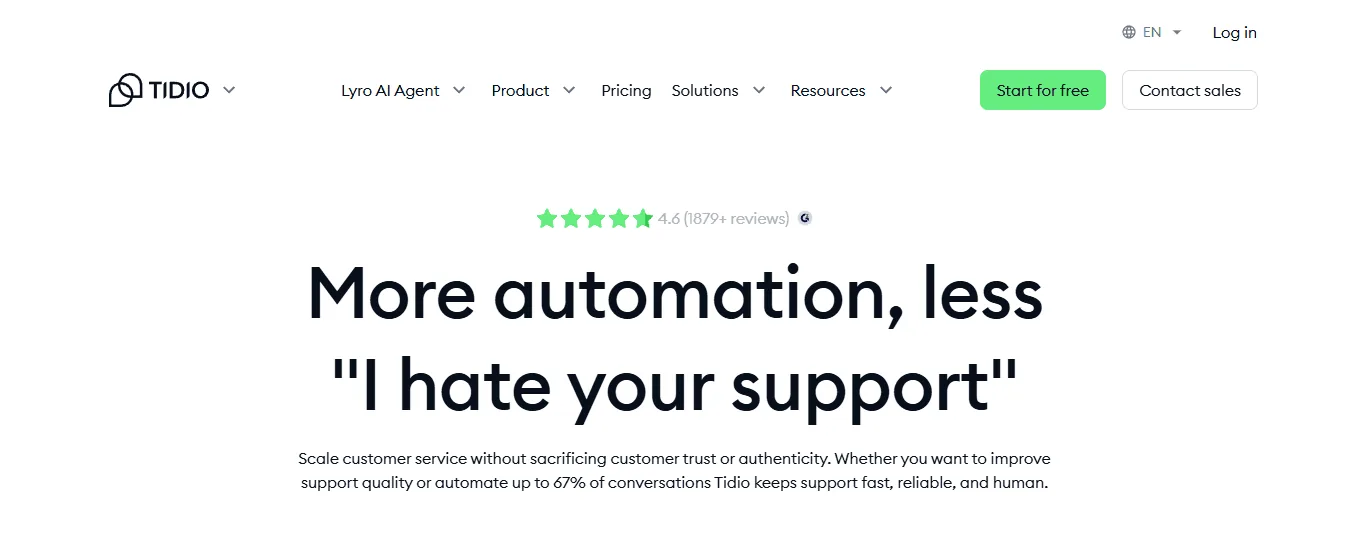
Tidio works well for small stores, combining live chat and AI chatbot features that are easy to set up without a dedicated support team. The cost is reasonable and delivers clear value. The tradeoff is that it offers less automation than Gorgias for larger businesses.
Analytics and Optimization
The same problem shows up in analytics tools as in creative tools: the output is only as useful as the question you bring to it. The best analytics platforms show you the answer before you know to ask the question.
7. Triple Whale

Triple Whale serves Shopify brands with substantial ad budgets well. Its attribution modeling consolidates data from paid channels, email, and organic sources into a single profitability view. According to Saras Analytics, AI-driven product recommendations account for 35% of Amazon's total revenue, demonstrating the scale of revenue flowing through AI-informed decisions. Triple Whale applies this logic to independent brands, though its value scales with ad budget: brands spending under a few thousand pounds monthly on paid acquisition may lack sufficient data to justify the cost.
8. Peel Insights
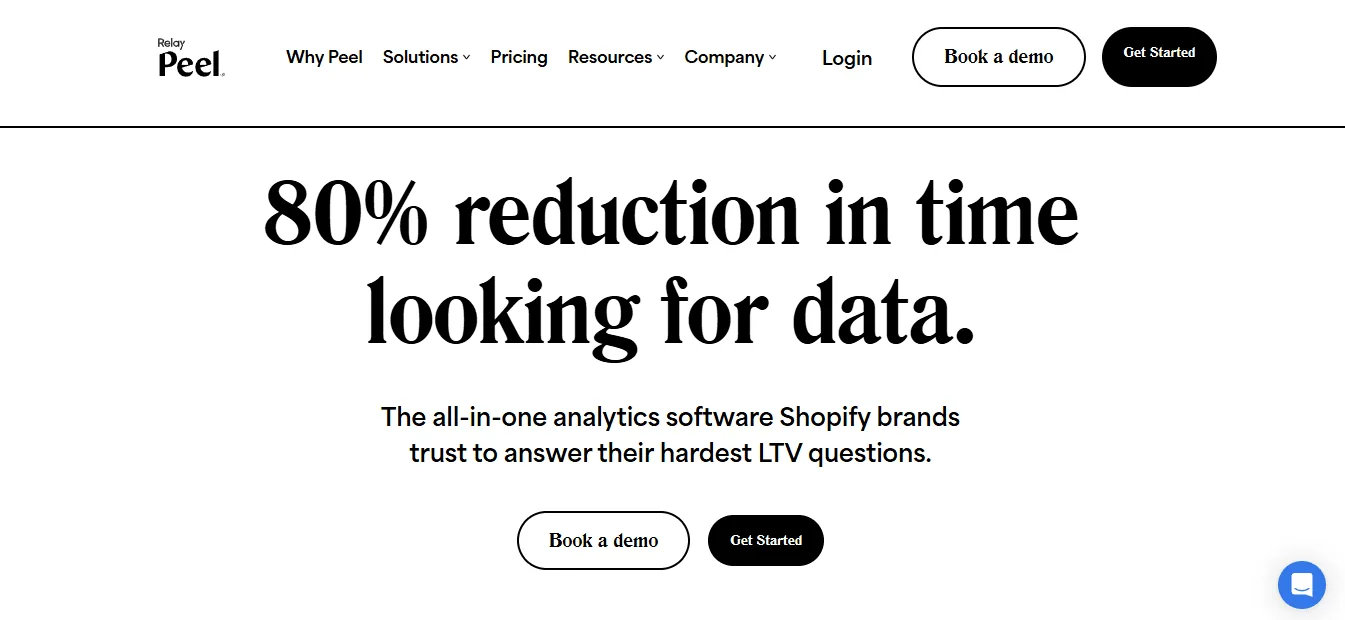
Automates group analysis, retention metrics, and trend identification in a format founders and small teams can act on. It does not replace a data analyst but fills a meaningful gap for businesses without one.
Advertising and Personalization
Creative testing is where most paid advertising programs get stuck. Brands know they need to test more ad variations, but design bottlenecks limit how many concepts reach the market. This reliance on a small number of creatives grows stale quickly and drives up cost per acquisition.
9. AdCreative.ai
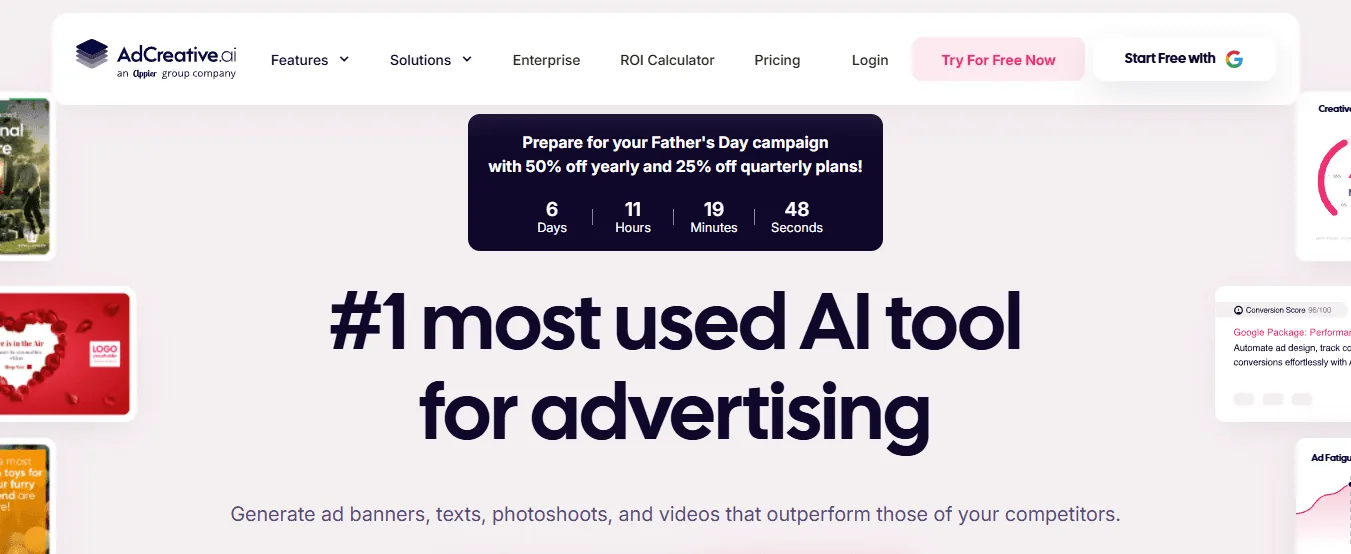
Solves this problem by creating high-performing ads faster than small design teams can produce by hand. AI-generated ads still require human direction: the tool accelerates production but does not replace the strategic thinking needed to determine which angles, offers, and audiences merit testing.
10. Rebuy

Works at the other end of the sales process, increasing customer lifetime value through personalized product suggestions, upgrades, and custom bundles. According to iThink Logistics, AI tools can help online stores boost sales by up to 30%. Personalization engines require data to function effectively; stores with low order volumes will see limited results until they accumulate sufficient transaction history.
Choosing based on bottleneck, not buzz
The critical difference between brands that gain real value from AI tools and those that accumulate subscriptions without results is sequencing. The right tool removes your most expensive constraint first, not the one that looks most impressive in a product demo.
How do you identify which constraint to solve first?
If your photography workflow consumes 20+ hours per week and yields inconsistent results, that's where you should invest your money. If your support queue overwhelms a two-person team, automation will outpace any analytics upgrade. Build your stack around how your business works, not around trending tools.
What happens after you choose the right tool?
Picking the right choice is only half the challenge. What happens after you put your plan into action is where most brands lose their progress.
Common Mistakes Brands Make When Using Ecommerce AI Tools
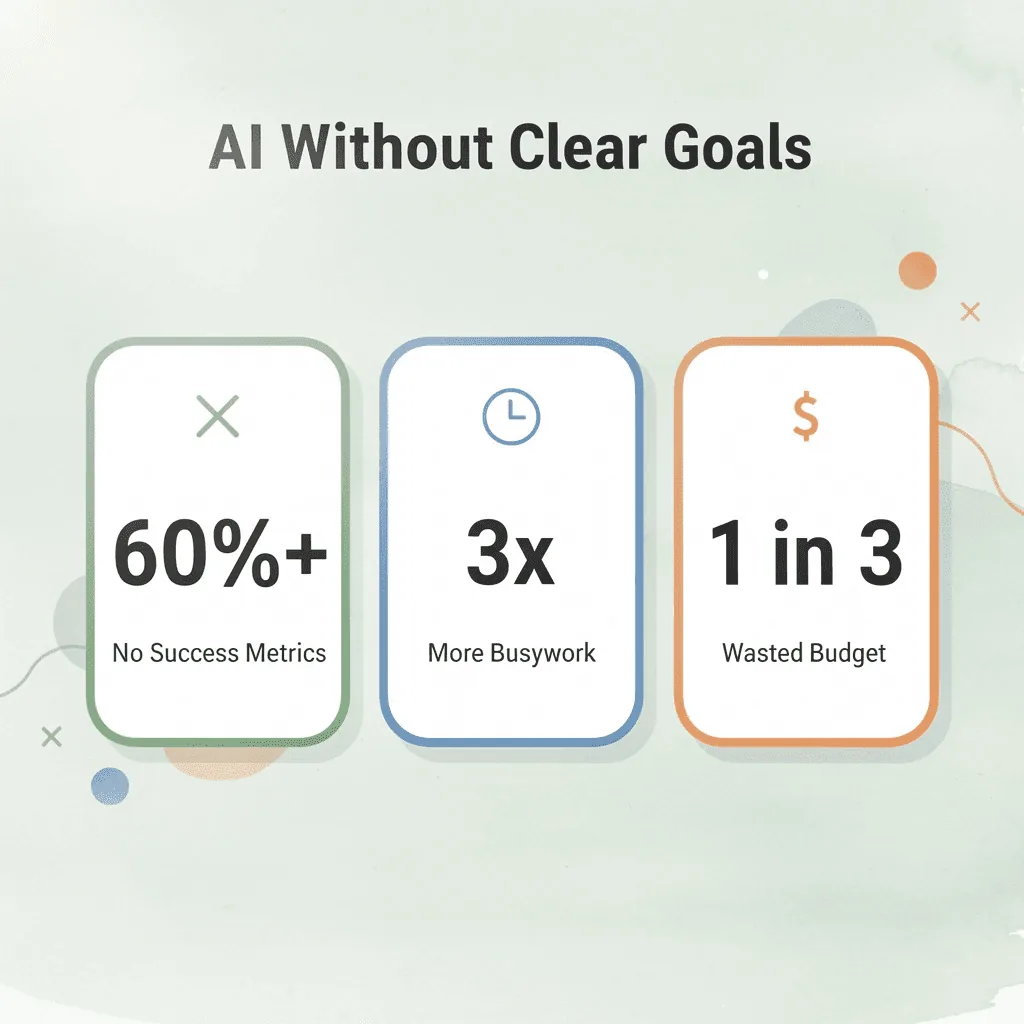
Using AI tools without a clear plan makes brands busier than before, not more efficient. According to the Balkan eCommerce Summit, more than 60% of brands use AI without clear success metrics, meaning most implementations have no way to measure if they work or fail. The lack of a clear plan is the real problem, not the tools themselves.
"More than 60% of brands use AI without clear success metrics, meaning most implementations have no way to measure if they work or fail." — Balkan eCommerce Summit
⚠️ Warning: Adopting AI without defined KPIs is one of the most common and costly mistakes ecommerce brands make. If you can't measure it, you can't improve it.
🔑 Takeaway: Before deploying AI tools, brands must establish clear success metrics: conversion rate lift, time saved, or revenue impact. Without benchmarks, even the best AI implementation is flying blind.
What happens when AI tools are deployed in silos?
Brands use separate platforms for photography, copywriting, customer support, and advertising without considering how they work together. Teams enter the same data repeatedly across different dashboards and manually fix gaps that shouldn't exist, spending more time managing software than helping customers.
Why does relying on a single asset set hurt performance across channels?
Brands stick with what they know instead of what works better. The usual approach involves taking product photos once every few months, then reusing those same images everywhere. However, different platforms have different requirements: Amazon prefers white backgrounds, Instagram favors lifestyle photos, and TikTok favors videos with movement. Using identical images across platforms diminishes their effectiveness. Our Caspa platform solves this problem by enabling teams to generate platform-specific photos, infographics, and lifestyle images on demand using AI tools. This reduces image production time from weeks to hours.
Does the order in which you adopt AI tools actually matter?
Chasing new features costs money. A brand that adds a predictive analytics layer before fixing its content production bottleneck solves the wrong problem first. The order matters as much as what you choose. Fixing the biggest workflow problem yields faster results than improving something that already works.
Why do so few brands see measurable ROI from AI in the first year?
The Balkan eCommerce Summit reports that only 37% of ecommerce brands using AI tools see clear results in the first year, largely because companies fail to set clear goals beforehand. If you can't define success in week one, you won't recognise it in month six. Plan how you'll measure success before launch.
When does automating customer touchpoints do more harm than good?
Over-automating customer touchpoints costs the most. Automation handles volume well, but customers contacting support during a return dispute or delayed shipment want acknowledgment, not efficiency. Brands that replace human judgment entirely with automated flows often see satisfaction scores drop. The goal is to free people for moments where their presence changes the outcome.
How AI Can Improve Profitability Without Increasing Headcount
Making more money without hiring a lot more people is the real benefit that AI offers to online stores. The brands that are figuring this out are treating AI as a way to redesign how they work — not just as software they buy.
"The brands winning with AI aren't using it as a tool — they're using it as a blueprint for redesigning operations and unlocking profitability without headcount growth."
💡 Tip: If your team is using AI only to automate small tasks, you're leaving the biggest gains on the table. The real leverage comes from rethinking entire workflows — not just patching them.
🔑 Takeaway: The difference between AI as a cost and AI as a profit engine comes down to intent — are you buying software, or redesigning your business model?
| Approach | Outcome |
|---|---|
| AI as a software purchase | Marginal efficiency gains |
| AI as a workflow redesign tool | Scalable profitability without added headcount |
Where does the margin actually come from?
The failure point is usually invisible until you measure it. Teams spend enormous amounts of time on tasks that produce outputs, not outcomes: writing product descriptions for 200 SKUs, resizing images for six platforms, drafting email sequences, responding to repetitive customer questions. Collectively, these consume hours that should be devoted to strategy, creative direction, and conversion optimization. According to Syracuse University iSchool's research on AI benefits, companies using AI report cost reductions of 20% or more in operational expenses, reflecting the removal of this friction at scale.
The same pattern recurs in content production and customer operations: the work that fills the day rarely moves the business forward. AI eliminates repetitive scaffolding around judgment, freeing your people to work where they matter most.
How does AI change the economics of product photography?
Most brands handle product photography traditionally: booking shoots, briefing photographers, waiting on edits, then reformatting assets for each channel. This approach breaks down as catalogs grow or deadlines tighten. Platforms like Caspa generate studio-quality product images, lifestyle visuals with diverse AI models, and A+ content without a shoot, cutting production costs by up to 10x and saving teams more than 20 hours per week on visual content.
What scale looks like without adding headcount
The key difference between brands that grow quickly and those that do not is workflow architecture. AI tools built into daily operations compound over time. A team of five working with well-integrated AI automation can match the output of a team of eight or ten, not because individuals work harder, but because fewer hours are lost to coordination, formatting, and repetition. Accenture's analysis, cited by Vena Solutions, projects that AI could increase corporate profitability by an average of 38% by 2035—a figure that makes sense only as the cumulative effect of thousands of small efficiency gains across every function.
How do short-term savings add up to structural profitability gains?
A product description tool saves 20 minutes per SKU. Multiply that across a seasonal catalog refresh, and you recover days, not hours. Redirect those days toward testing new ad creative or improving conversion rate on existing pages, and the profitability impact becomes permanent, not a one-time gain.
Are you treating AI as a lever on margin or just a shortcut on effort?
The brands that will look back on this period and feel they made the right moves are the ones treating AI as a margin lever, not a shortcut to effort. The next question worth asking is whether the tools you choose produce the kind of output that moves customers from browsing to buying.
Related Reading
- How To Sell On Amazon
- Printful Vs Printify
- Shopify Vs Woocommerce
- Shopify Vs Bigcommerce
- Ai For Ecommerce
- Ai For Product Photos
- Ai Generated Product Images
- Ai Product Photo Generator
- Amazon Vs Shopify
- Ai Product Video Generator
- Ai Clothing Model
- Printful Review
- Shopify Vs Amazon
- Ai Model For Clothing
- Ai Product Video
- Ai Fashion Model
- Printful Pricing
- Best Amazon Seller Tools
How Caspa Helps Ecommerce Brands Create Better Product Content
Finding the right ecommerce AI tools means eliminating costly bottlenecks. For many ecommerce brands, product photography is a major one: traditional workflows involve photographers, studios, models, editing software, and multiple rounds of changes.
"For many ecommerce brands, product photography is a major bottleneck—traditional workflows involve photographers, studios, models, editing software, and multiple rounds of changes."
⚠️ Warning: Sticking with traditional photography workflows means paying for each round of edits, studio booking, and model shoot. These costs accumulate quickly and slow your time to market.
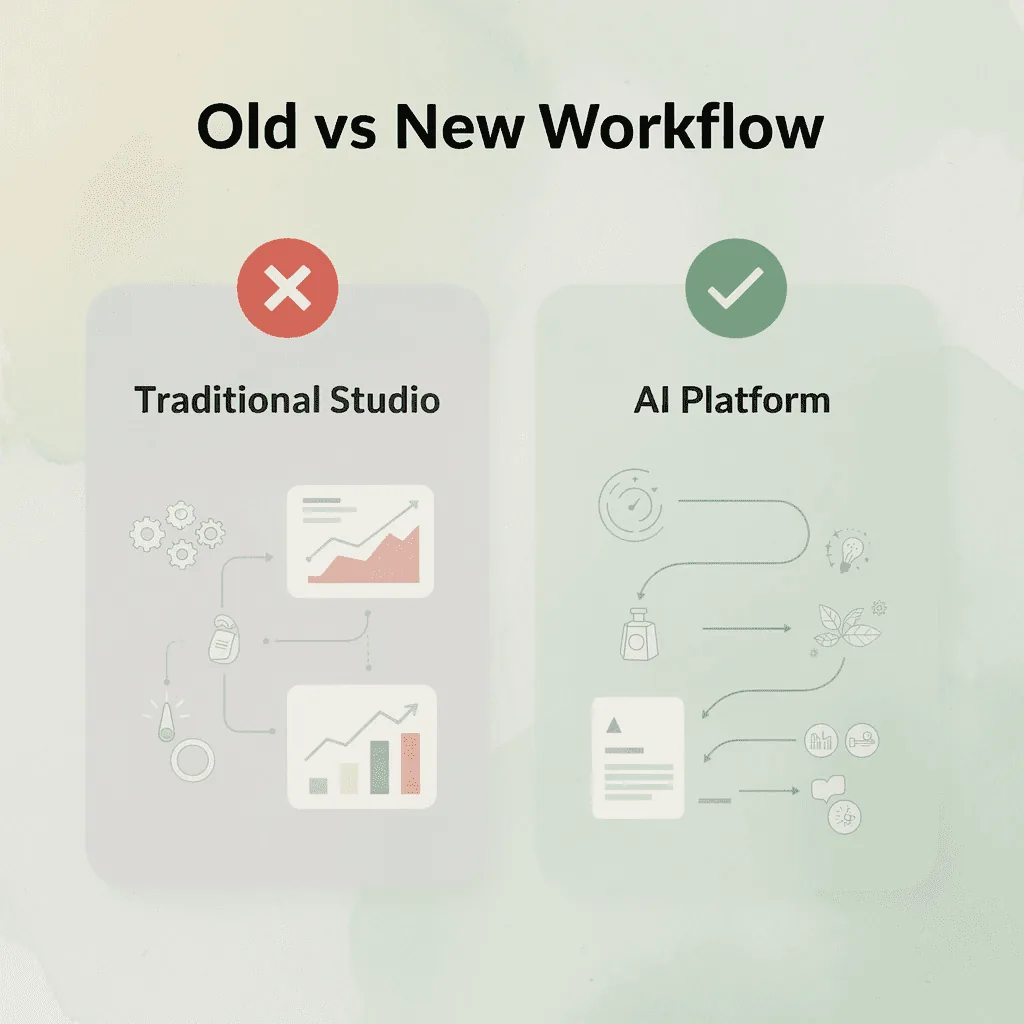
Caspa simplifies this with an all-in-one AI product photography platform. Our platform helps brands create ultra-realistic product images, edit existing photos, remove backgrounds, upscale images, and generate custom stock photography—all from a single solution, rather than juggling multiple tools.
| Traditional Workflow | Caspa AI Platform |
|---|---|
| Hire photographers & studios | AI-generated product images |
| Book models for shoots | Custom AI model generation |
| Use separate editing software | Built-in editing tools |
| Pay per revision round | Unlimited iterations |
| Manage multiple vendors | Single all-in-one solution |
💡 Tip: With Caspa, ecommerce brands can go from zero to publish-ready product images without ever setting foot in a studio—saving significant time and budget on every launch.
🎯 Key Point: One platform replacing photographers, studios, editors, and stock libraries is not just a convenience—it's a competitive advantage for scaling brands.
What can Caspa produce for ecommerce teams?
Caspa creates professional product shots with human models and realistic environments in seconds, enabling brands to produce content for websites, Amazon listings, social media, email marketing, and ads without scheduling photoshoots or hiring additional resources. Caspa keeps things consistent across channels by centralizing product visualization workflows on a single platform. Teams produce high-quality assets faster while ensuring the brand looks uniform everywhere, which matters more and more as ecommerce businesses scale.
How does Caspa help brands move faster without sacrificing quality?
For growing brands, speed matters as much as quality. Product launches, seasonal promotions, and campaigns require fresh creative assets. Caspa lets teams quickly test different scenes, styles, and variations, reducing delays inherent in traditional photography and editing. Most importantly, Caspa simplifies workflows by consolidating multiple creative tasks. Teams spend less time managing content production and more time on marketing, customer experience, and growth.
Get Product Photos that Increase Your Sales Today
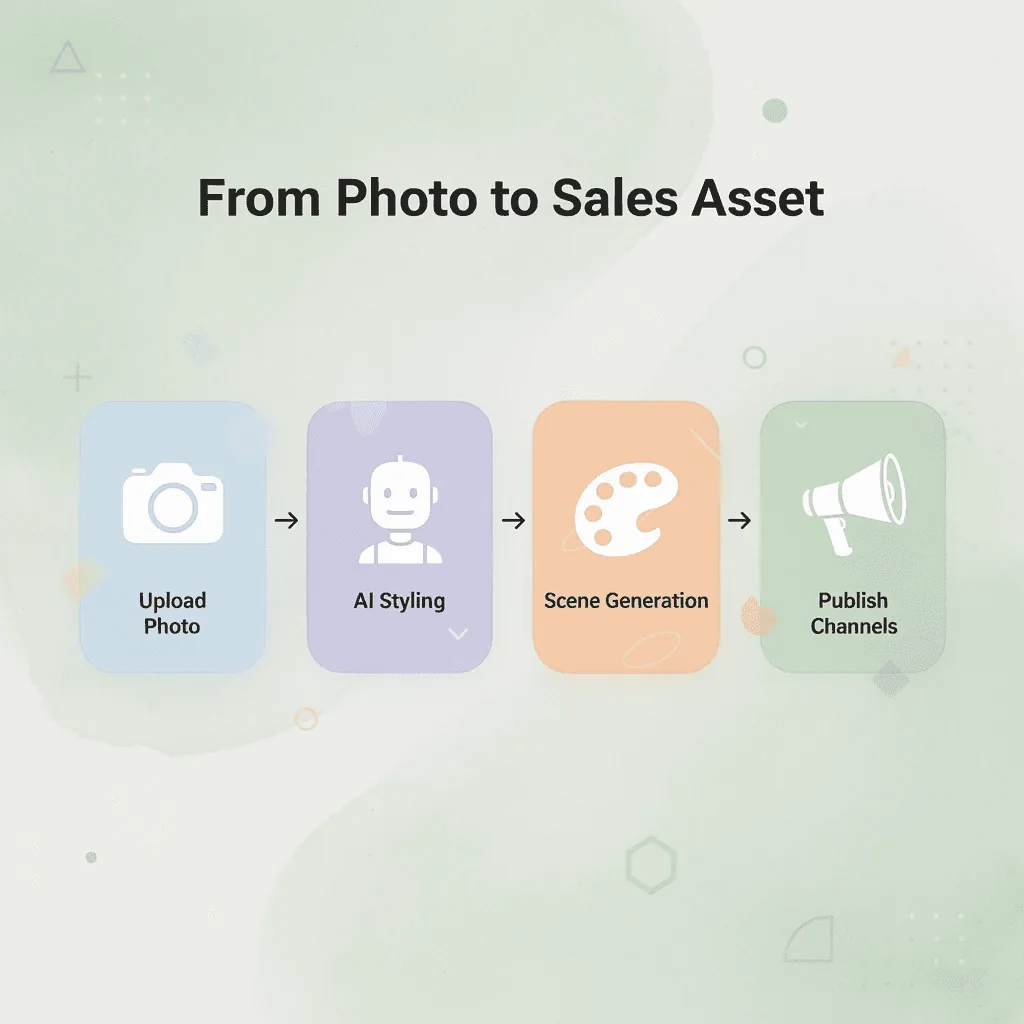
Caspa transforms existing product photos into studio-quality marketing visuals, tries out AI-generated scenes and different human models, and creates content across Amazon, Shopify, and social channels—getting rid of hours spent on shoot scheduling, freelancer coordination, and resizing assets for every platform.
"The fastest-moving brands are closing the gap between what they need and what they can produce today—without adding headcount or budget."
💡 Tip: Use Caspa to repurpose your existing product library into platform-ready visuals for Amazon, Shopify, and social—without a single new photoshoot.
| Traditional Workflow | With Caspa |
|---|---|
| Shoot scheduling (days/weeks) | Instant AI scene generation |
| Freelancer coordination | Fully automated visual creation |
| Manual resizing per platform | Multi-channel output in one step |
| High production costs | Works from existing product photos |
The fastest-moving brands aren't spending more on visual content—they're using tools built to close the gap between what they need and what they can produce today. If that gap is costing you conversions, close it now.
⚠️ Warning: Every day you rely on slow, expensive production workflows costs your conversion rate. The gap between need and output is a direct revenue leak.
🎯 Key Point: The brands winning on visual content aren't outspending competitors—they're outproducing them with smarter tools like Caspa.
Related Reading
- Teespring Alternatives
- Luxury Product Photography
- Amazon Merch On Demand
- Ai Fashion Model Generator
- Ai Product Video Maker
- Advertising Product Photography
- Merch On Demand
- T-shirt Mockup Ai
- Placeit Pricing
- Ai Clothing Mockup Generator
- Teespring Vs Printful
- Ai Product Photo Editor
- Redbubble Vs Printful
- Printify Vs Gelato
- Placeit Alternative
- Amazon Ai Tools
- Best Background For Product Photography
- Ecommerce Product Video
- Flat Lay Product Photography
- Ai Clothing Model Generator
- Printful Vs Gelato