

Choosing the right print-on-demand supplier directly impacts margins, fulfillment speed, and customer satisfaction. Printify works well for many sellers, but it is not the only option, and for some businesses, it simply falls short on pricing, product range, or print quality. The alternatives available today cover a wide range of needs, from global fulfillment networks to niche product catalogues.
Finding a better platform is only part of the equation. How products look in listings plays an equally important role in whether shoppers convert, which means switching suppliers is a good moment to revisit visuals too. Sellers who want professional results without a studio budget can get started with Caspa's AI-powered product photography.
Table of Contents
- Why More Sellers Are Looking for Printify Alternatives
- Why There Is No Single Best Printify Alternative
- 10 Best Printify Alternatives by Use Case
- Fast-Growing Ecommerce Brands Compete on More Than Fulfilment
- Strong Ecommerce Brands Win Through Better Product Presentation
- How Caspa Helps Ecommerce Brands Create Better Product Visuals
- Get Product Photos that Increase Your Sales Today
Summary
- Print-on-demand is a high-growth market, but that growth brings more competition into the space every quarter. The industry is projected to reach $39.4 billion by 2030 and is growing at a compound annual growth rate of approximately 25.8%, meaning sellers who rely on generic products and average presentation are increasingly competing against more sellers for the same buyer attention.
- Platform selection in print-on-demand is a constraint-matching problem, not a ranking exercise. Sellers optimizing for global delivery speed have different needs from those building premium apparel brands or monetizing a creator audience, and applying the same evaluation criteria across these scenarios yields decisions that look confident on paper but fail in practice.
- Most sellers switch print-on-demand platforms because they outgrow the original fit, not because the platform failed outright. Stores doing around $3,000 per month can run on a single supplier, but at roughly $10,000 per month, a multi-supplier setup typically becomes necessary because no single provider covers every product category, shipping region, and quality tier a scaling brand requires.
- Visual content is consistently underweighted during platform migrations. Sellers tend to fix the supplier, reuse existing photos, and revisit imagery months later, but that delay means listings run with inconsistent or low-quality visuals during a period when conversion rates are already under pressure from the transition itself.
- Product presentation is a measurable revenue variable, not a finishing touch. Research from Salsify found that 87% of shoppers rate product content as extremely or very important when deciding to buy, and 40% have returned a product because it looked different in person than it did online, making accurate and consistent imagery a direct factor in both conversion rates and return rates.
- Lifestyle imagery does specific persuasive work that plain backgrounds cannot. A product shown in context answers the customer's unspoken question about whether it belongs in their life, and consistent visual branding across a full catalog builds the kind of coherence that makes a store feel like a brand to someone who has never purchased from it before.
- Product photography addresses this gap directly by giving sellers a way to update visuals at the same pace they update suppliers, without the six-week timelines and high costs that make traditional studio production a bottleneck for fast-moving ecommerce brands.
Why More Sellers Are Looking for Printify Alternatives
Printify is growing fast. According to the Printify Blog, the print-on-demand market is expected to reach $39.4 billion by 2030. However, company growth creates its own challenges that don't always benefit sellers.
"The print on demand market is expected to reach $39.4 billion by 2030 — but rapid growth doesn't always mean a better experience for sellers." — Printify Blog
🔑 Takeaway: A $39.4 billion market sounds promising, but larger platforms often mean more competition, slower support, and less seller-focused decisions. This is why many sellers actively search for Printify alternatives.
⚠️ Warning: A platform's rapid growth doesn't automatically translate into better tools or margins for you as a seller. Scale and seller success are not the same thing.
What makes Printify's supplier model a structural problem?
The core tension is this: Printify's marketplace model gives you access to dozens of suppliers, but you're constantly managing differences among them. Print quality shifts between providers. Fulfillment timelines depend on which facility handles your order. A t-shirt that photographs beautifully from one supplier looks noticeably different when a second provider fulfills the same SKU. For a seller building a consistent brand, that unpredictability is a structural problem.
Margin pressure compounds the challenge. Print-on-demand's convenience comes at a per-unit cost that makes profitability difficult as order volume grows. Sellers often find themselves, twelve months later, questioning whether the convenience justifies the margin they're sacrificing. That calculation pushes them toward alternatives with different fulfillment models, better branding options, or lower base costs.
Why does leaving sourcing and visuals unsolved compound the cost?
Most sellers treat product sourcing and visual content as separate issues, fixing the supplier, then circling back to photography later. The hidden cost is that "later" often means months of listings running with inconsistent or low-quality images, which directly reduces conversion rates. Platforms like Caspa address that second problem without a studio or long production timeline, generating professional product visuals at a fraction of traditional costs and cutting editing time by more than 20 hours per week. Solving sourcing and visuals together compounds revenue impact.
Is competition the real reason sellers are accelerating their search?
The search for Printify alternatives is accelerating as competition on Amazon and Shopify intensifies. According to the Printify Blog, the industry is growing at a CAGR of approximately 25.8% through the 2030s. In this environment, a generic product with average photography is not neutral—it signals decline. Most sellers are not leaving Printify because it failed them, but because they outgrew what it was designed to do. The gap between where they are and where they want to be is no longer a sourcing gap; it is a brand gap. Figuring out which alternative closes that gap proves far more complicated than most sellers expect.
Related Reading
- Ecommerce Product Photography
- Ai Tools for E-commerce
- Photoroom Pricing
- Ecommerce Product Photography Services
- E-commerce AI Tools
- Printful Alternatives
- Best Ai Tools for E-commerce
- How To Sell On Shopify
- Redbubble Alternatives
- Ecommerce Product Videos
- Automated Product Photography
- Ecommerce Product Video
- Ecommerce Product Imagery
- Visual Merchandising Ecommerce
- Photoroom Cost
Why There Is No Single Best Printify Alternative
Finding the right supplier requires understanding that every print-on-demand platform involves specific tradeoffs. The question isn't "which is best?" but "best for what?"
🎯 Key Point: There is no universal winner in print-on-demand, only the right fit for your specific business model, goals, and priorities.
No single platform leads across every dimension. Printful wins on branding infrastructure. Gelato wins on global fulfillment speed. Gooten and CustomCat compete on a per-unit basis. Apliiq owns the premium streetwear and embroidery space. According to PodVector AI's complete comparison of Printify alternatives, credible alternatives include Printful, Gelato, Gooten, CustomCat, Sellfy, SPOD, Fourthwall, Teelaunch, Apliiq, and Amazon Merch — each reflecting a different philosophy about what sellers care about most.
"Credible alternatives to Printify include 10+ platforms — Printful, Gelato, Gooten, CustomCat, Sellfy, SPOD, Fourthwall, Teelaunch, Apliiq, and Amazon Merch — each reflecting a different philosophy about what sellers care about most." — PodVector AI
| Platform | Wins On |
|---|---|
| Printful | Branding infrastructure |
| Gelato | Global fulfillment speed |
| Gooten | Competitive price per unit |
| CustomCat | Competitive price per unit |
| Apliiq | Premium streetwear & embroidery |
| Sellfy | Simplicity & digital products |
| SPOD | Fast production turnaround |
| Fourthwall | Creator-focused storefronts |
| Teelaunch | Product variety |
| Amazon Merch | Built-in marketplace traffic |
🔑 Takeaway: Choosing a Printify alternative isn't about finding the objectively best platform — it's about matching a platform's core strength to your biggest business priority.
⚠️ Warning: Defaulting to the most popular platform without evaluating your specific needs is one of the most costly mistakes POD sellers make.
What your business actually optimizes for
The failure point is usually a mismatch between what a seller measures and what a platform delivers. A business selling personalized gifts to US customers during Q4 needs fast domestic fulfillment above all else. A brand building a premium lifestyle identity needs custom packaging, branded inserts, and consistent product quality across every order. Those two businesses could evaluate the same platform and reach opposite conclusions, both correctly.
Why do most platform comparisons miss the point?
Most platform comparisons rank alternatives as if all sellers share the same priorities, producing lists that are practically useless for anyone with a specific business model. Identify your single biggest constraint first—whether margin, speed, quality consistency, or branding depth—and filter from there.
When does a single supplier stop being enough?
Most sellers underestimate how quickly their needs change. A store making $3,000 a month can work with one supplier, but higher sales levels demand different approaches. PodVector AI notes that using multiple suppliers becomes standard practice above $10,000 per month, since no single provider offers every product type, shipping area, and quality level a growing brand requires.
What do sellers overlook when switching platforms?
Most sellers switching platforms focus entirely on production and overlook visual content. The common approach is to move suppliers and reuse existing product photos. Generic, inconsistent imagery lowers conversion rates regardless of supplier quality. Platforms like Caspa generate studio-quality product photos and A+ content with AI at a fraction of traditional costs, enabling sellers to update visuals as they update suppliers. The right platform aligns with your specific bottleneck, not the one with the most products or the lowest price. Most sellers misjudge which bottleneck to solve first.
10 Best Printify Alternatives by Use Case
Choosing the right print-on-demand supplier depends on your specific use case, not popularity. The ten platforms below each solve a particular problem — matching the platform to your actual constraint separates a profitable store from a frustrating one.
"The right POD platform isn't the most popular one — it's the one that solves your specific constraint and fits your business model."
🎯 Key Point: There is no single best Printify alternative — the best platform is the one that directly addresses your biggest bottleneck, whether that's product variety, profit margins, fulfillment speed, or print quality.
| Use Case | What to Prioritize |
|---|---|
| Maximum product variety | Catalog size & niche items |
| Higher profit margins | Base costs & pricing flexibility |
| Fast fulfillment | Production & shipping speed |
| Premium print quality | Print method & material standards |
| Ease of setup | Platform integrations & UX |
💡 Tip: Before comparing platforms, identify your #1 constraint first — then use the ten alternatives below as a targeted solution map, not just a popularity ranking.
1. Best Overall Alternative Printful
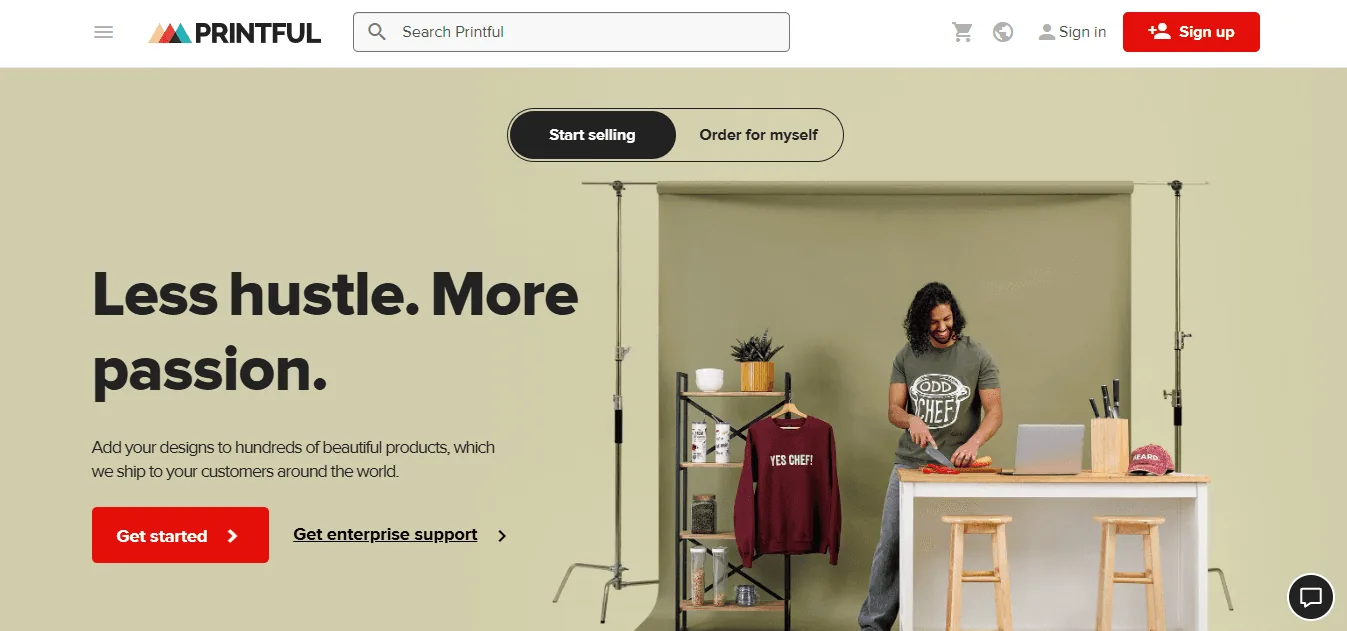
Printful has a strong reputation because it controls production in-house, eliminating the unpredictability of marketplace-style supplier networks. It owns much of its fulfillment infrastructure, maintaining consistent quality standards at scale. Combined with warehousing, custom branding, and deep integrations with Shopify, Amazon, Etsy, and WooCommerce, it offers a platform built for sellers who prioritize consistency as a competitive advantage.
2. Best for Global Fulfillment Gelato
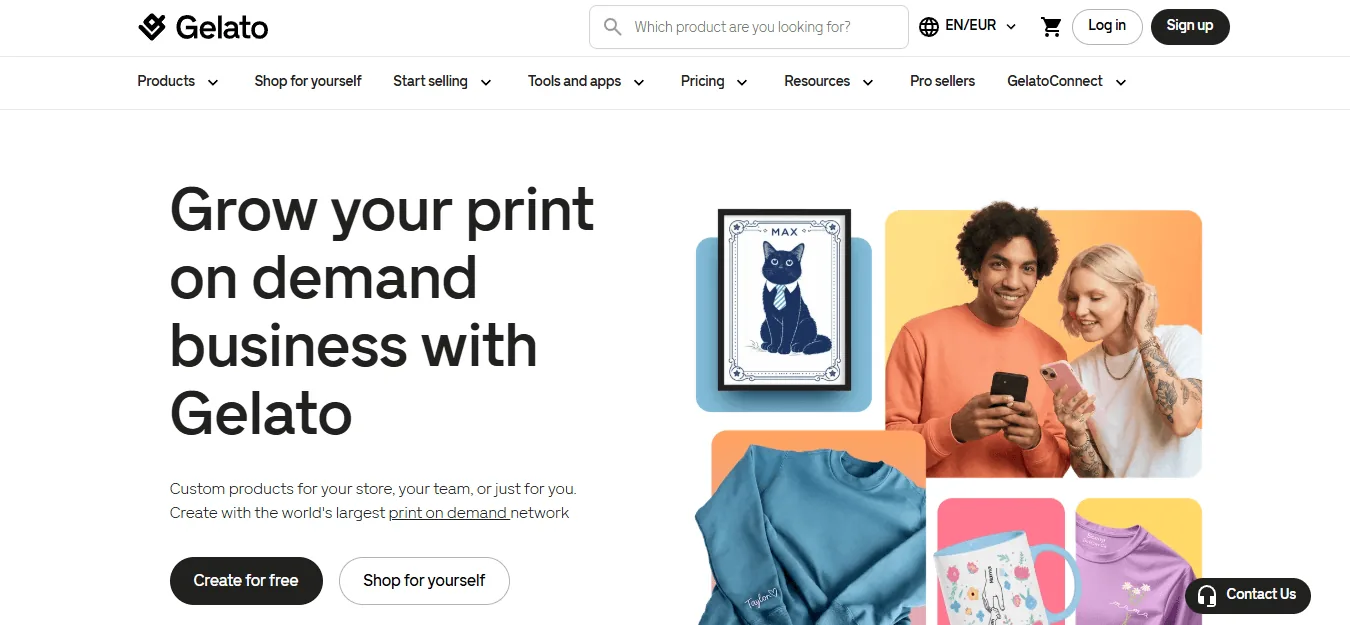
The main reason most print-on-demand brands fail when trying to grow globally is shipping time, not product quality. Gelato solves this problem through distributed manufacturing: making orders close to where customers live rather than sending everything through a single warehouse. This approach reduces shipping distance, lowers carbon emissions, and enables faster delivery in ways a single fulfillment center cannot match.
3. Best for Premium Apparel Brands Apliiq
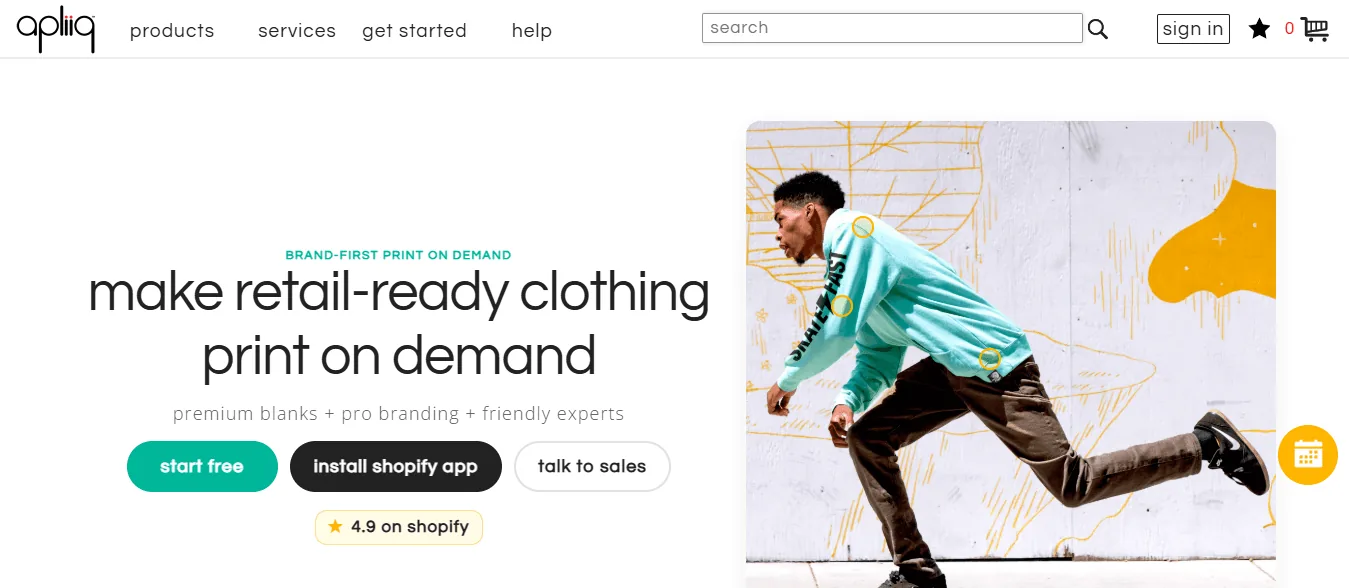
Apliiq closes the gap between generic and premium by offering woven labels, custom neck labels, embroidery, and premium fabric options that transform merchandise into fashion products. For streetwear and lifestyle brands, the difference between a $28 shirt and a $58 shirt often comes down to these finishing details.
4. Best for Etsy Sellers Gooten

Gooten's strength is automation, with order routing and fulfillment logic designed to handle growth without manual intervention. Sellers managing five storefronts simultaneously will find Gooten's infrastructure easier to work with than platforms built primarily for single-channel use. Most established POD sellers eventually run both Printify and Printful simultaneously. According to PodVector AI, mature sellers use Printify for a wider product selection and Printful for their main branded products, typically at stores generating $10K or more per month.
5. Best for Artists and Designers Redbubble

If your main problem is finding customers rather than fulfilling orders, Redbubble changes how things work. Artists upload designs and gain immediate access to buyers already searching for products. They don't need to build a store, run ads, or handle customer service. The tradeoff is earning less per sale and having less brand control, but for creators whose strength lies in design rather than business operations, that tradeoff often makes sense.
6. Best for White-Label Products Print Aura
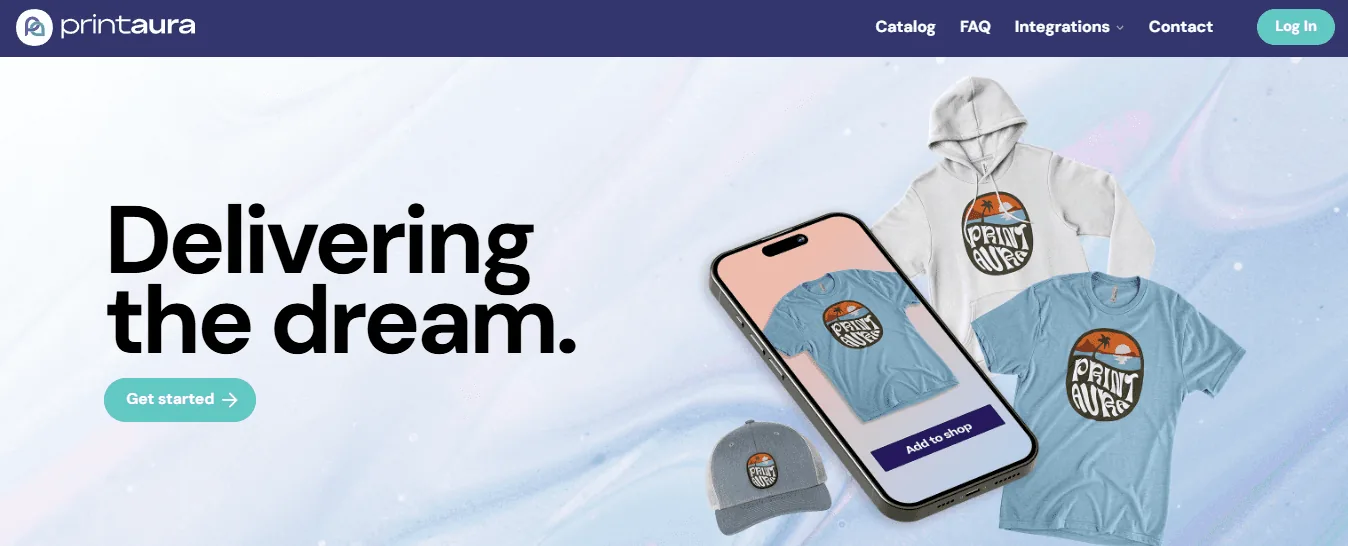
The main difference between a commodity seller and a brand is whether the customer remembers who shipped the package. Print Aura focuses on white-label shipping, custom packing slips, and branded packaging options that keep your name front and center throughout the unboxing experience. For businesses where post-purchase brand recall matters, this approach delivers measurable value.
Why does product photography become a hidden cost when suppliers change?
Most sellers treat product photography as a one-time setup task rather than an ongoing competitive tool. Hidden costs emerge when supplier changes require new lifestyle images or when product launches stall because studio shoots take six weeks and cost $3,000 to schedule. Platforms like Caspa solve this directly, enabling sellers to create studio-quality product photos and A+ content with AI models at a fraction of traditional production costs, allowing visuals to update as quickly as suppliers change.
7. Best for Fast Production SPOD
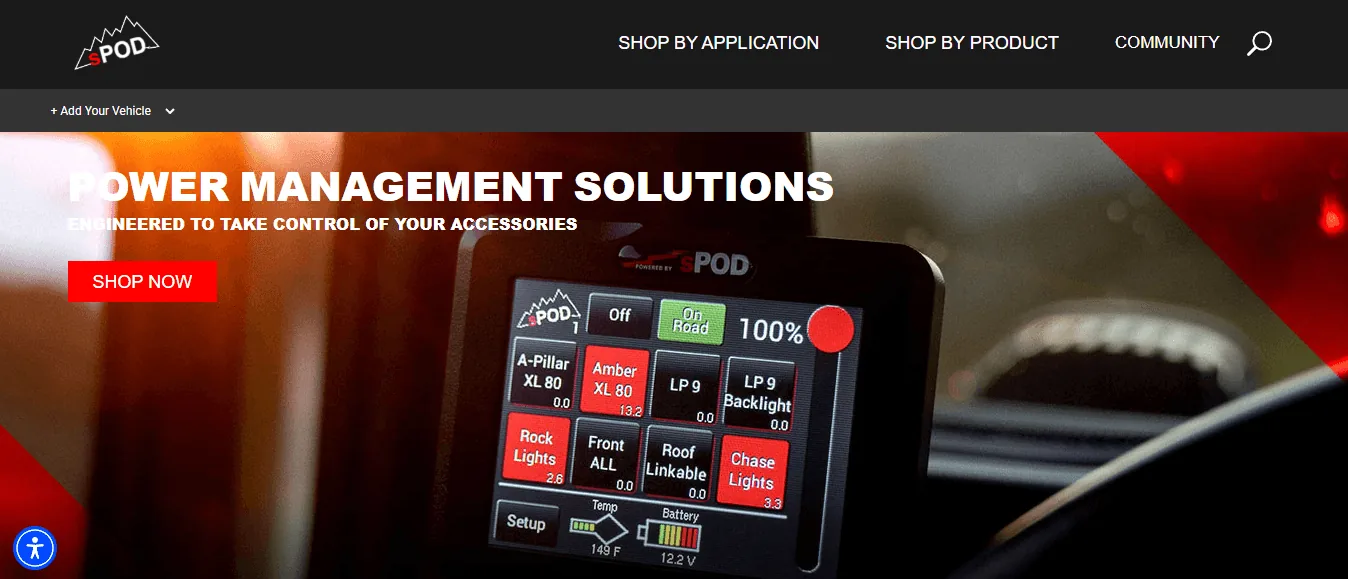
If your customer base expects two-day delivery, production speed becomes a sourcing requirement. SPOD claims to produce many orders within 48 hours, compressing the total fulfillment window for sellers competing on delivery promises. Its clothing catalog is strong, and the Shopify integration is straightforward.
8. Best for Beginners and Creators Spring
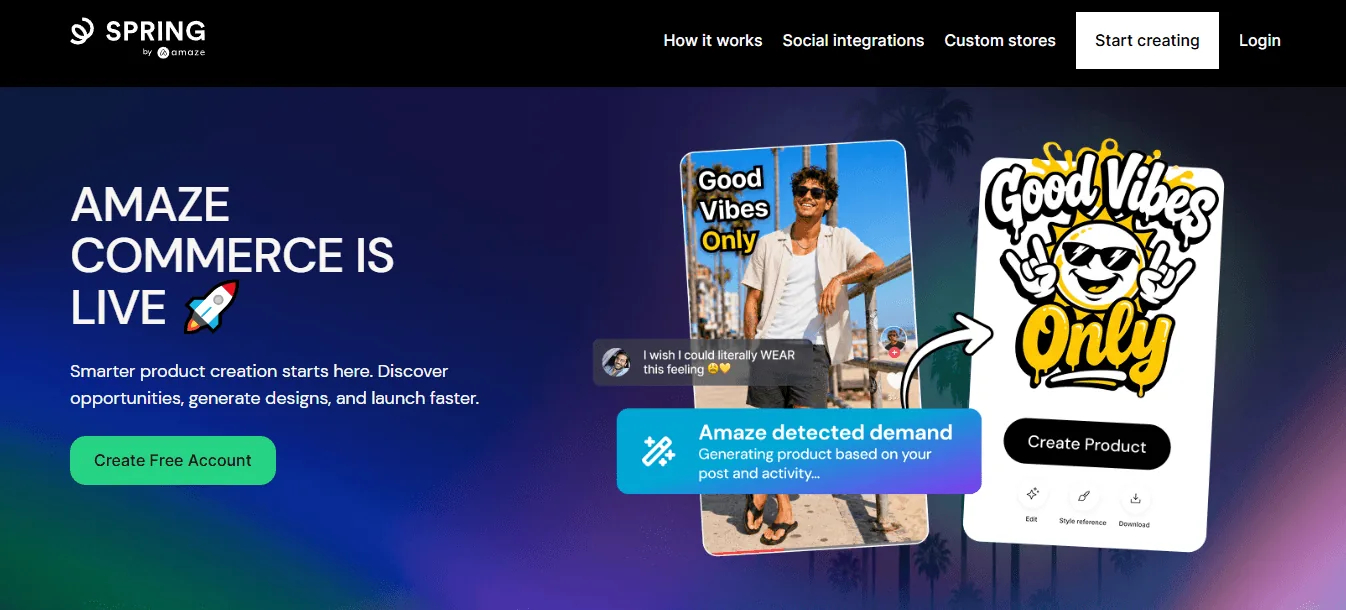
Spring, formerly Teespring, is built for creators who want to monetize an audience before building a store. Its integrations with YouTube, Twitch, and social commerce platforms let creators launch merchandise without coding or ecommerce knowledge. The platform trades margin and customization depth for speed and simplicity: the right tradeoff for early-stage creator businesses.
9. Best for Sustainable Brands T-Pop
Sustainability is now expected, not exceptional, for thoughtful buyers. T-Pop uses plastic-free packaging, eco-conscious production, and European fulfillment, which shortens shipping distances for EU customers. For brands where environmental values matter, T-Pop transforms the supply chain into a selling point.
10. Best for Niche Products JetPrint
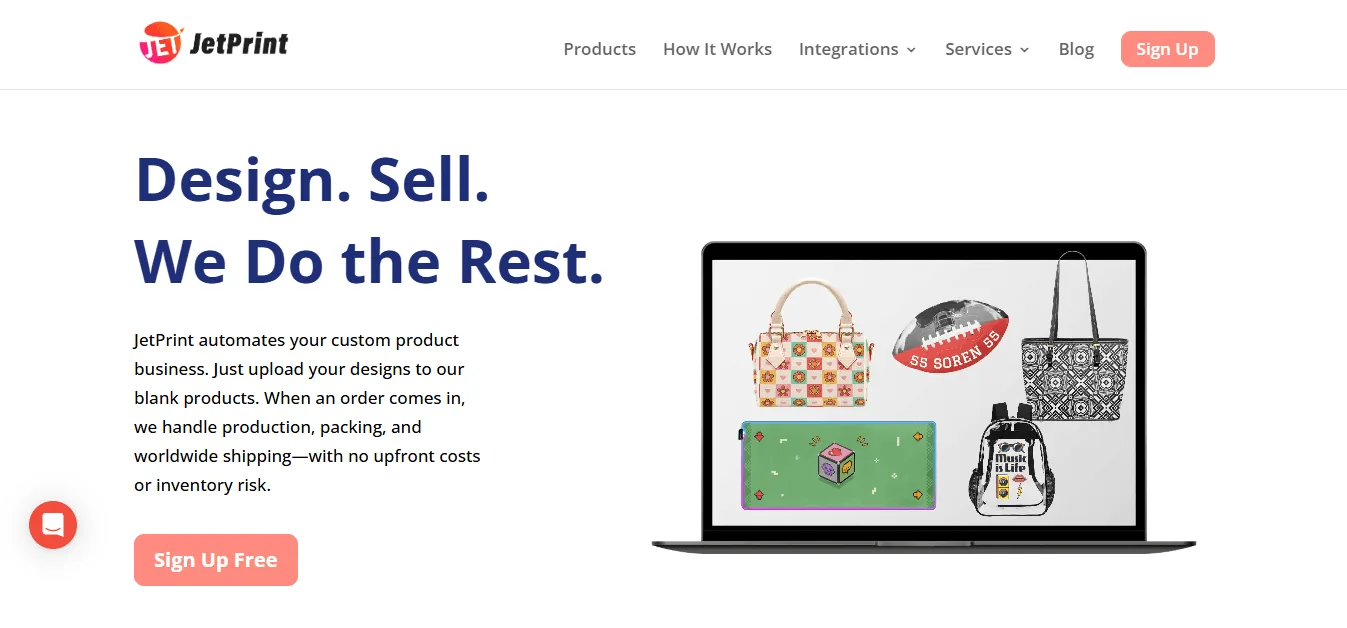
Most POD platforms offer the same core catalog: t-shirts, hoodies, mugs, and phone cases. JetPrint specializes in watches, shoes, and customizable accessories that competitors don't offer. According to Dynamic Mockups, Printify integrates with 90+ print providers worldwide, yet niche categories such as footwear and timepieces remain underserved. Sellers who build around a distinctive product gain a structural advantage that catalog depth alone cannot replicate.
How does your business stage shape platform selection?
How you choose a print-on-demand service depends on your business stage. A creator launching their first 10 products has different priorities than a brand processing 500 orders weekly across three channels. Spring or Redbubble suits the early stages because they simplify operations. Printful or Gelato suit scale because they reduce inconsistency. The mistake is applying early-stage thinking to late-stage problems, or vice versa.
Why do platform choice and visual strategy need to evolve together?
If you are running a high-end clothing brand, your fulfillment platform and visual content strategy must grow together. An Apliiq garment photographed on a plain white background loses perceived value before the customer reads the product description. The platform you choose sets the limit for product quality; your imagery determines whether customers believe you've reached it. Choosing the right platform and visual strategy still leaves one question unanswered: the one that separates brands that grow from brands that stagnate.
Related Reading
- How To Sell On Amazon
- Printful Vs Printify
- Shopify Vs Woocommerce
- Ai For Product Photos
- Ai Generated Product Images
- Ai Product Photo Generator
- Amazon Vs Shopify
- Ai Product Video Generator
- Ai For Ecommerce
- Ai Clothing Model
- Shopify Vs Bigcommerce
- Printful Review
- Shopify Vs Amazon
- Ai Model For Clothing
- Ai Product Video
- Ai Fashion Model
- Printful Pricing
- Best Amazon Seller Tools
Fast-Growing Ecommerce Brands Compete on More Than Fulfillment
Thousands of ecommerce sellers use the same print-on-demand suppliers, product catalogs, and Shopify integrations. What separates growing brands from those that stop growing is harder to copy: how they make customers feel before the purchase happens.
"The infrastructure is commoditized — print-on-demand suppliers, product catalogs, and platform integrations are available to everyone. The real competitive edge lives in the pre-purchase experience." — Industry Insight
🎯 Key Point: When fulfillment and technology are table stakes, brand experience becomes the true differentiator that drives sustainable growth.
💡 Tip: Audit your pre-purchase touchpoints — your copy, visuals, and messaging — because that's where customer loyalty is actually won or lost.
| What Everyone Has | What Growing Brands Build |
|---|---|
| Print-on-demand suppliers | Distinctive brand voice |
| Shared product catalogs | Emotional connection before purchase |
| Shopify integrations | Customer experience that's hard to copy |
Positioning creates pricing power
Customers compare stories, not products. Two sellers can list the same heavyweight hoodie at the same price from the same supplier, and one outsells the other by a factor of 3 because its brand speaks to a specific identity: trail runners, rescue dog owners, or zero-waste households. Positioning lets you charge more, earn loyalty faster, and reduce dependence on paid traffic over time. Without it, you compete on price—a race with no finish line worth crossing.
Where most sellers lose the conversion
The failure point is usually not the product but the gap between what it is and what customers can imagine it to be in their lives. According to Netguru, 88% of online shoppers won't return after a bad user experience, and poor imagery is one of the fastest ways to create that friction. Most sellers use supplier mockups or basic flat-lay photos, but as stores grow, these placeholder visuals erode trust on every product page, costing conversions that paid ads already delivered.
How do AI photography platforms close the gap?
AI product photography platforms like Caspa solve this problem directly. Instead of booking studio time or waiting weeks for edits, AI models create ultra-realistic product images, cutting production costs by up to 10x and saving more than 20 hours per week in editing. Brands using Caspa report up to 40% more conversions on product pages, making visual content a primary conversion tool most sellers overlook.
Marketing brings people in; conversion keeps them
Getting traffic costs money. Turning visitors into customers is where profit lies. Baymard Institute's large-scale ecommerce research found that the average large ecommerce site could improve conversion rates by 35.26% through better checkout usability alone. Most stores leave money on the table from sales they've already paid to generate. Fast-growing brands treat conversion optimization as a continuous practice, testing product page headlines, review placement, image sequencing, and calls to action with the same rigor they apply to ad creative. The compounding effect of small improvements across those touchpoints makes a brand feel inevitable to its customers.
Why does presentation matter as much as marketing?
Marketing helps people find your product, but how you present it makes them buy. A brand can excel at targeting, copy, and community, yet fail at the product page if the pictures don't match what the ad promised. Everything before purchase is the brand's responsibility. The fastest-growing brands know that how you present your product is fundamental to getting people to buy.
Strong Ecommerce Brands Win Through Better Product Presentation
Strong brands treat product presentation as infrastructure, not decoration. The visual layer of your store is the critical mechanism through which every other investment—ad spend, positioning, supplier relationships—either pays off or leaks.
"The visual layer of your store is the mechanism through which every other investment either pays off or leaks." — Core Ecommerce Principle
🎯 Key Point: Product presentation isn't a cosmetic afterthought. It's the foundation that determines whether your ad spend, positioning, and supplier relationships convert into revenue.
💡 Tip: Audit your visual layer before scaling paid traffic. If your product presentation is weak, every dollar spent on ads works against you.
What does the data actually show about visual content?
According to Salsify's 2025 ecommerce research, 87% of shoppers say product content is extremely or very important when deciding to buy. The product page is where customers decide to purchase or abandon the sale. Two stores selling identical items from the same print-on-demand supplier can generate vastly different revenue based solely on product presentation.
Why do returns signal a visual content problem?
The same research found that 40% of consumers have returned a product because it looked different in person than online. Returns damage brand trust: every return chips away at the relationship a brand spent money to build. The root cause is a gap between what the image promised and what the customer received. Accurate, high-quality visuals close that gap before it becomes a problem.
How does the traditional photography workflow create a bottleneck?
Most brands follow a traditional workflow: hire a photographer, book a studio, wait for edits, pay the invoice, repeat. This process creates bottlenecks when brands face seasonal drops, platform-specific creative requirements, and constant demand for fresh ad creatives. Platforms like Caspa offer an alternative, generating studio-quality product photos, lifestyle imagery, and A+ content using AI, reducing production costs by up to 10x and cutting manual editing time by more than 20 hours per week.
Why does the context around a product matter more than the product itself?
The failure point is usually not the product itself, but the situation around it. Lifestyle imagery answers the customer's unspoken question: Does this product belong in my life? A hoodie styled on a model in a specific setting communicates fit, texture, and identity in a single frame. A mug placed in a home office tells a story about the kind of person who buys it. That context is not decoration—it is persuasion.
How does consistent visual branding build trust across a catalog?
When you use the same visual style across all your product photos, it makes a bigger impact over time than individual great photos. When every image shares the same color choices, lighting style, and composition, your store feels like a real brand rather than a random collection of products. Customers notice consistency, even if they can't articulate why. That consistency builds trust with first-time visitors—and trust converts them into buyers.
What changes when you treat presentation as a growth lever?
The brands that perform well understand that product presentation drives growth, not something to address later. Once you see how much better your sales can be when you get this right, the way you build your store will transform.
How Caspa Helps Ecommerce Brands Create Better Product Visuals
Fulfillment determines how products reach customers, but branding and presentation determine whether customers buy in the first place. Stores using the same print-on-demand supplier often achieve dramatically different results — the difference lies not in the products themselves, but in how they're presented.
"The difference between stores using the same supplier often comes down to one thing: how products are presented — not what the products are." — Industry Insight
🎯 Key Point: Two stores can sell the exact same product from the same supplier and see completely different conversion rates — visual presentation is the deciding factor.
💡 Tip: Investing in high-quality product visuals is one of the highest-leverage moves an ecommerce brand can make — it directly impacts whether a visitor becomes a paying customer.
| Factor | Impact on Sales |
|---|---|
| Fulfillment & Logistics | Determines how products arrive |
| Branding & Presentation | Determines if customers buy |
| Product Visuals | The #1 differentiator between competing stores |
How does Caspa help brands produce studio-quality product images?
Caspa helps online stores bridge that gap by making professional product photography and image editing faster, easier, and more accessible. Using AI product-photography capabilities, our platform lets brands create ultra-realistic, studio-quality images for new collections or refreshed listings without relying on generic mockups or juggling multiple creative tools. Lifestyle images are another strength. Caspa generates realistic photos featuring human models, helping customers visualize products in real-world situations and creating stronger emotional connections with shoppers.
How does Caspa improve and extend existing visual assets?
Caspa also improves existing assets. Brands can edit current product photos, remove backgrounds, and upscale images to higher quality, maximizing existing content while maintaining visual consistency. For additional creative assets, Caspa generates custom stock images tailored to products and aesthetics, eliminating generic imagery and creating a more distinctive brand experience.
Why does an all-in-one workflow matter for ecommerce brands?
Most importantly, Caspa brings all of these abilities into one complete studio workflow. Instead of paying photographers, coordinating models, and switching between separate tools, the platform lets businesses manage the entire product visualization process in a single place. The result is faster content creation, more efficient workflows, and greater flexibility to test campaigns and refresh creatives regularly. In ecommerce, brands are built through experiences, and those experiences often begin with visuals.
Get Product Photos that Increase Your Sales Today
Switching print-on-demand platforms solves one problem, but brands that turn browsers into buyers have already solved another: their products look amazing before anyone reads a single word of copy.
"The brands that win aren't just on the right platform — they're the ones whose products look so good that customers stop scrolling before they've read a word." — Industry Insight
💡 Tip: Great visuals do the selling before your copy gets a chance. Don't let a weak product photo cause customers to keep scrolling.
⚠️ Warning: Platform-switching alone won't fix low conversion rates if your product images lack professional appeal. The real lever is visual quality.
If platform selection is only part of the equation, try product photography with Caspa. In your first session, our product photography transforms existing product photos into professional lifestyle images and helps you build branded visuals that perform on Amazon, Shopify, or wherever your customers find you.
🎯 Key Point: Caspa's AI-powered product photography turns ordinary product shots into high-converting lifestyle images — no expensive photoshoot required.
| Visual Type | Best For | Impact |
|---|---|---|
| Lifestyle Images | Amazon, Shopify listings | Higher click-through rates |
| Branded Visuals | Social media & ads | Stronger brand recognition |
| Professional Photos | All sales channels | Increased buyer trust |
Related Reading
- Placeit Alternative
- Ai Clothing Mockup Generator
- Amazon Ai Tools
- Luxury Product Photography
- Ai Product Photo Editor
- Printful Vs Gelato
- Printify Vs Gelato
- Best Background For Product Photography
- Teespring Alternatives
- Ai Product Video Maker
- Amazon Merch On Demand
- T-shirt Mockup Ai
- Teespring Vs Printful
- Ecommerce Product Video
- Ai Clothing Model Generator
- Placeit Pricing
- Advertising Product Photography
- Ai Fashion Model Generator
- Redbubble Vs Printful
- Merch On Demand
- Flat Lay Product Photography