
Printful vs Printify: Which Print-on-Demand Platform Is Better?
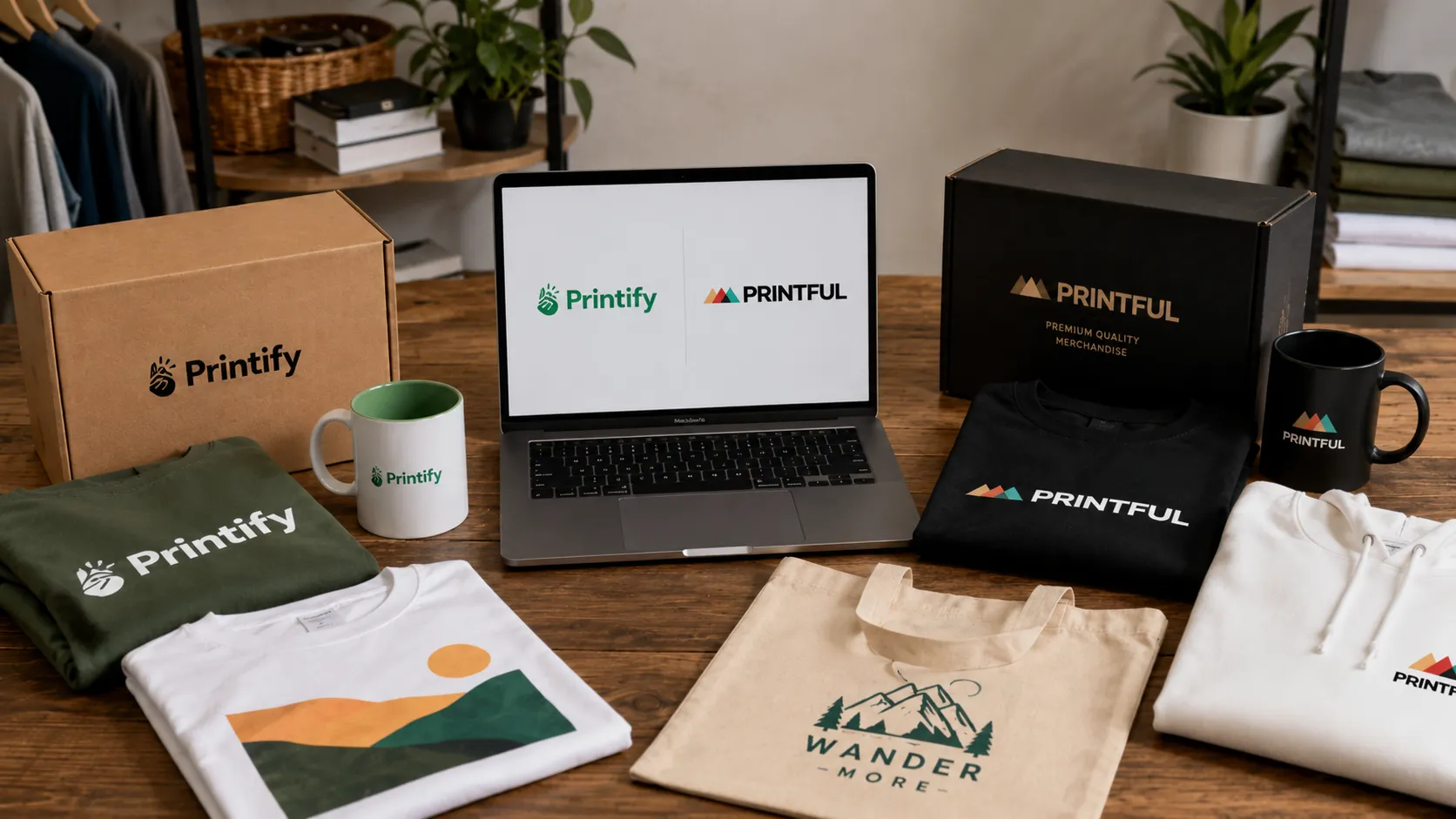
Choosing between Printful and Printify is one of the first real decisions a print-on-demand seller faces, and it carries more weight than it might seem. Both platforms handle printing, shipping, and fulfillment, but they differ in pricing structure, supplier networks, and overall control. Understanding those differences clearly helps sellers avoid costly mismatches between their business model and the platform they commit to.
Beyond platform mechanics, how products look to potential buyers plays a significant role in driving sales. Even the best fulfillment setup loses ground if the store's visuals fail to build trust or show the product well. Sellers who want polished, studio-quality images without the overhead can use Caspa for product photography that makes custom products stand out from the first click.
Table of Contents
Why Choosing the Wrong POD Partner Can Hurt Your Business
What Are Printful and Printify?
Printful vs Printify: Feature-by-Feature Comparison
Printful vs Printify Pricing: Which Offers Better Value?
Which Platform Is Best for Different Types of Sellers?
How Caspa Helps Printful and Printify Sellers Create Better Product Images
Get Product Photos that Increase Your Sales Today
Summary
The global print-on-demand market was valued at approximately $10.8 billion in 2025 and is projected to reach $57.5 billion by 2033, according to Grand View Research. That growth means more competition, and in a saturated market, operational failures quickly become brand failures. When fulfillment goes wrong, customers leave reviews against the seller's name, not the supplier's.
Choosing a print-on-demand partner based on base product price alone is one of the most common and costly mistakes sellers make. A provider charging $2 less per unit but generating three times as many reprints, refunds, and complaints will cost more at any meaningful sales volume. Total business impact is the only honest way to measure fulfillment cost.
Printful and Printify operate on fundamentally different models. Printful owns most of its production facilities and serves over 1 million active users, offering consistency at the cost of pricing flexibility. Printify connects sellers to a network of over 90 independent print providers worldwide, offering lower base costs (starting around $7.47 for a t-shirt versus Printful's $14.95) but requiring active supplier vetting to maintain quality across orders.
Branding capabilities differ significantly between the two platforms. Printful supports custom packing slips, branded inserts, and inside label printing directly through the platform. Printify's branding options depend entirely on the individual provider, meaning two sellers on the same platform can deliver completely different unboxing experiences even within the same product category.
The value equation between platforms is not static. At low volumes, the per-unit price difference is nearly negligible in absolute dollars. At scale, a $2 to $3 difference across thousands of monthly orders becomes a meaningful line on a profit and loss statement. Experienced sellers often respond by running both platforms simultaneously, routing premium products through Printful and higher-volume, price-sensitive items through Printify.
Over 60% of Amazon sales come from third-party sellers, according to Analyzer Tools, and Amazon accounts for 37.8% of all US ecommerce sales. These figures reflect how much consumer trust has shifted toward platforms with reliable fulfillment standards, and they set the baseline expectation that any print-on-demand seller competing in that environment needs to meet.
Product photography addresses this directly, since the listing image is doing the heaviest conversion work regardless of which fulfillment platform a seller chooses, and Caspa helps sellers generate studio-quality product photos and lifestyle imagery at scale without the overhead of traditional shoots.
Why Choosing the Wrong POD Partner Can Hurt Your Business
Picking the wrong print-on-demand partner costs you money and erodes the hardest thing to rebuild: customer trust.
⚠️ Warning: A single bad POD partner can undo months of brand-building, and most sellers don't realize the damage until it's too late.

The global print-on-demand market was valued at approximately $10.8 billion in 2025 and is projected to reach $57.5 billion by 2033, according to Grand View Research. This explosive growth means more competition, and in a crowded market, operational failures quickly become brand failures. When a customer receives a faded print or waits three weeks for a basic t-shirt, they don't blame the supplier — they leave a one-star review under your store's name.
"The global print-on-demand market is projected to surge from $10.8 billion in 2025 to $57.5 billion by 2033 — making quality and reliability more critical than ever." — Grand View Research
🔑 Takeaway: In a market growing at this pace, supplier mistakes become your reputation problem.
💡 Key Point: Customers associate every fulfillment failure — slow shipping, poor print quality, wrong sizing — directly with your brand, making POD partner selection one of your most critical business decisions.
Why is the base price the wrong way to choose a fulfillment partner?
A pattern emerges consistently among sellers who've switched POD providers after early struggles: the initial decision was based solely on base product price. A provider charging $2 less per unit but generating three times as many reprint requests and refund demands will cost far more than that margin difference at meaningful sales volume. Total business impact is the only honest measure of fulfillment cost.
Most sellers treat product visuals as secondary to design and marketing, dropping a mockup onto a white background and moving on. As order volume grows and competition sharpens, this approach quietly drags on conversion rates. Our Caspa platform lets print-on-demand sellers generate studio-quality product photos and lifestyle imagery at scale without the overhead of a traditional shoot, so your listings look polished from day one rather than after your first profitable quarter.
How does failing to plan for scale make the wrong choice painful?
Scalability is where the wrong choice becomes painful. A fulfillment partner that handles 10 orders per month without friction may struggle with fewer than 1,000, especially if it lacks reliable international shipping, consistent quality control across product categories, or integrations with your ecommerce platform. Sellers who don't evaluate for scale upfront often find themselves mid-growth, moving stores, reshooting products, and managing the operational chaos of switching providers under pressure.
What separates a confident POD decision from an expensive guess?
The cheapest supplier is not always the most profitable, and the most popular platform is not always the right fit for your specific business model. Both Printful and Printify have built successful businesses with different approaches, and understanding those differences helps you make a confident decision rather than an expensive guess.
But before you can weigh those trade-offs clearly, you need to understand what each platform is at its core.
Related Reading
What Are Printful and Printify?
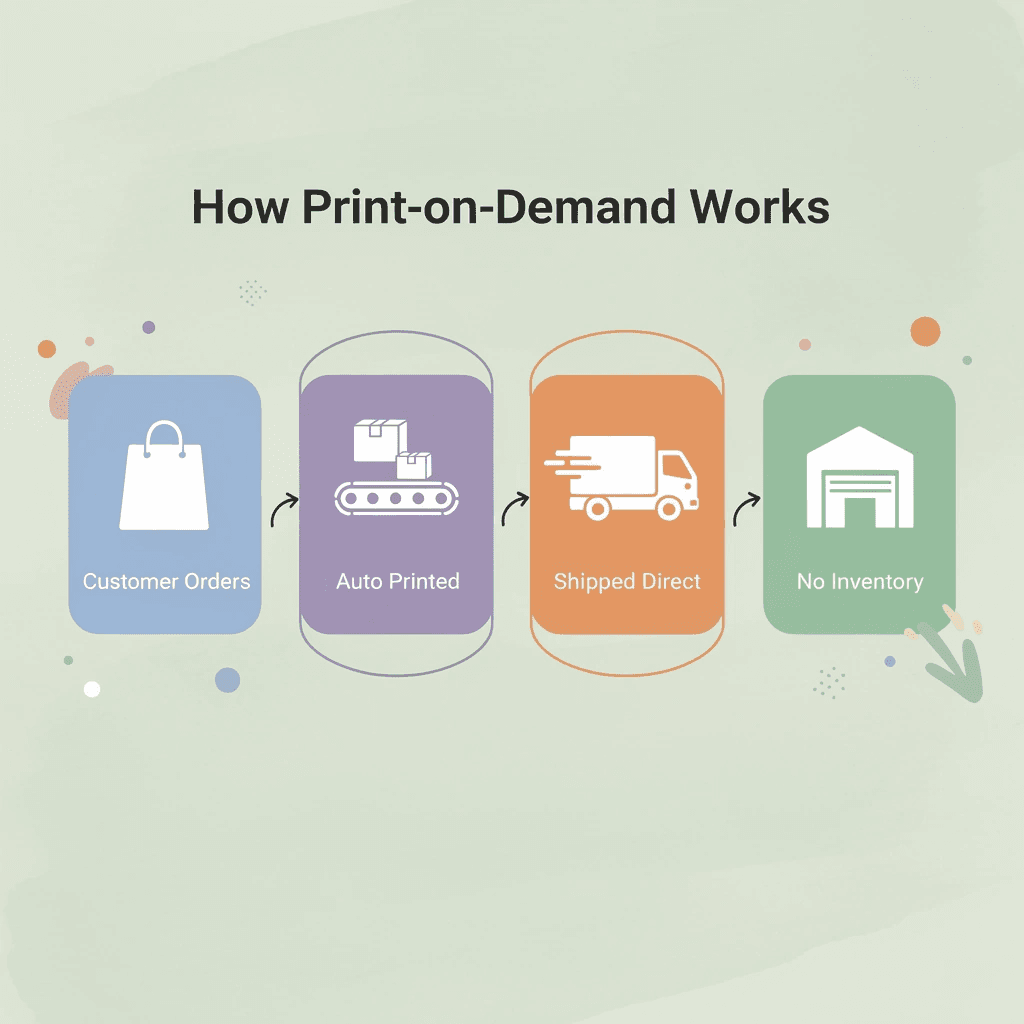
Printful and Printify are print-on-demand platforms that automatically print and ship custom products when customers order, eliminating inventory and logistics management entirely. Beyond this core function, however, they operate quite differently — and understanding those differences is essential before choosing one for your business.
💡 What Is Print-on-Demand? A print-on-demand platform means zero upfront inventory costs — products are only printed and shipped after a customer places an order, making it one of the lowest-risk ways to launch a product business.
"Print-on-demand removes the two biggest barriers to selling custom products: upfront inventory investment and logistics management — letting sellers focus entirely on design and marketing." — Industry Overview
Feature | What It Means for You |
|---|---|
Automatic Fulfillment | Orders are printed and shipped without manual intervention |
No Inventory Required | Zero stock to buy, store, or manage upfront |
Custom Products | Full control over designs on hundreds of product types |
Logistics Handled | Shipping, packaging, and tracking are managed for you |
⚠️ Don't Assume They're the Same: While Printful and Printify share the same core concept, their pricing models, supplier networks, and quality controls differ significantly — making the wrong choice a costly mistake.
How Printful works
Printful owns and operates most of its own production facilities. Orders flow directly from your store into Printful's fulfillment centers, where the company controls printing, packaging, and shipping in one location. According to Printful, the platform serves over 1 million active users. The tradeoff is less pricing flexibility, since you're paying for that centralized control.
How Printify works
Printify connects merchants with a global network of over 90 independent print providers worldwide. Merchize's comparison of Printful vs Printify notes that this network allows sellers to compare providers based on price, location, and product availability. Quality and fulfillment speed vary by provider.
How does Printify compare to Printful in day-to-day decisions?
With Printful, you trust one system to handle everything. With Printify, you make active choices about which supplier fits your product and profit goals. They demand different things from you as a business owner.
The choice between Printful and Printify depends on how you want to run your business.
Why does product imagery matter more than most sellers expect?
Most print-on-demand sellers prioritize platform selection and store setup, treating product imagery as secondary. Yet imagery drives conversion. Most sellers default to supplier mockups or expensive studio shoots, neither of which scales well. Platforms like Caspa generate studio-quality product photos and lifestyle imagery with AI at a fraction of traditional production costs, which matters more than new sellers expect once orders arrive.
Printful vs Printify Feature-by-Feature Comparison
Printful and Printify cover the same basic ground, but key differences show up across four critical areas: fulfillment speed, branding options, profit margins, and overall customer experience.
Feature | Printful | Printify |
|---|---|---|
Fulfillment Speed | ✅ Fast, in-house production | ⚠️ Varies by print provider |
Branding Options | ✅ Robust custom branding | ❌ Limited branding control |
Profit Margins | ⚠️ Higher base prices | ✅ Lower base costs |
Customer Experience | ✅ Consistent quality control | ⚠️ Inconsistent across providers |
"The platform you choose isn't just a vendor — it's a core part of your brand's fulfillment infrastructure and directly impacts customer satisfaction." — E-Commerce Best Practices
🔑 Takeaway: Choosing between Printful and Printify comes down to your priorities — if brand consistency and reliable fulfillment matter most, the differences between these two platforms are far from minor.
💡 Tip: Before committing to either platform, map out your profit margins at your target price point — base product costs can make or break your store's profitability.
⚠️ Warning: Don't assume both platforms deliver identical results just because they offer similar product catalogs — fulfillment speed and branding flexibility vary significantly between the two.

How does product selection actually compare?
According to Printify, the platform offers 900+ products through its network of independent print providers. Printful's catalog is narrower but deliberately curated, with every product passing quality filters before reaching sellers. For businesses building a focused product line, that curation is a feature, not a limitation.
Why does production control matter more than catalog size?
The critical difference is not how many products are available but who controls production. Printful manages much of its manufacturing itself, ensuring a t-shirt ordered today matches one ordered six months from now. Printify's quality depends on which print provider fulfills the order—a significant factor when building brand trust through repeat purchases. Experienced Printify sellers typically order samples from three to five providers before committing to one, treating supplier vetting as a regular operational task.
How do sellers handle visual production when product variants multiply?
Most print-on-demand sellers photograph a single sample on a kitchen table and use the same image for every listing. The problem compounds as product variants multiply, each requiring its own visual treatment. Platforms like Caspa let sellers generate studio-quality product photos and infographics using AI models without scheduling shoots or obtaining physical samples for every color option, cutting visual production costs by up to 10x compared to traditional photography workflows.
Does fulfillment location change your shipping math?
Printful operates 16 fulfillment centers across 5 continents, routing orders to facilities near customers to reduce shipping time and cost. Printify's network of independent providers spans multiple countries, allowing you to select suppliers close to your primary market. The key difference: Printful routes orders automatically, while Printify requires you to choose a provider with favorable shipping coverage for your audience.
Which platform supports brand building better?
Printful leads on built-in branding with custom packing slips, branded inserts, and inside label printing available directly through the platform. Printify's branding options depend entirely on individual providers, so two sellers can have completely different unboxing experiences for the same product category. For businesses where the post-purchase moment is part of the brand story, this inconsistency presents an operational risk worth considering.
The next question proves more complicated than most sellers expect.
Related Reading
Ai For Product Photos
Ai Generated Product Images
Ai Product Photo Generator
Amazon Vs Shopify
Ai Product Video Generator
Ai Clothing Model
Printful Review
Shopify Vs Amazon
Ai Model For Clothing
Ai Product Video
Ai Fashion Model
Printful Pricing
Best Amazon Seller Tools
Printful vs Printify Pricing: Which Offers Better Value?
Printify often has lower costs for basic products, but Printful usually wins when you look at the total cost of running your business. This includes quality control, consistent order fulfillment, and fewer customer service problems. Which one gives you better value depends on where your business is right now and where you want it to go.
"The true cost of a print-on-demand partner isn't just the base product price — it's the hidden cost of returns, reprints, and lost customers from inconsistent quality." — POD Industry Insight
Cost Factor | Printify | Printful |
|---|---|---|
Base Product Price | ✅ Lower | ❌ Higher |
Quality Consistency | ❌ Varies by provider | ✅ More reliable |
Order Fulfillment | ❌ Inconsistent | ✅ Consistent |
Customer Service Issues | ❌ More frequent | ✅ Fewer problems |
Overall Business Value | ✅ Budget-friendly | ✅ Long-term scalability |
💡 Tip: If you're just starting out and need to minimize upfront costs, Printify can be a smart entry point — but budget for potential quality control headaches.
🔑 Takeaway: Printful's higher base prices often translate into lower total operational costs over time, making it the stronger choice for businesses focused on long-term growth and brand reputation.

Where the real cost gap lives
According to Merchize's 2026 Printful vs. Printify comparison, Printful's base price for a t-shirt starts at $14.95, while Printify's starts at $7.47. However, base price alone doesn't determine true cost. Sellers chasing the lowest unit cost often see their savings disappear once shipping, quality issues that require reprints, and customer refunds enter the equation. A lower unit cost that generates even one extra return per ten orders can eliminate the margin advantage.
When subscriptions actually pay for themselves
Both platforms offer paid plans worth considering as your order volume grows. The Printify Premium plan at $24.99/month offers up to 20% off all products, which compounds significantly for sellers moving hundreds of units per month. Printful's Growth membership works similarly, offering discounts to higher-volume sellers. Divide your monthly subscription cost by your per-unit savings to find your break-even point. If you fall below that number, the free plan is the smarter choice.
The visual cost nobody prices in
There's a problem most pricing comparisons ignore. Once you've chosen your fulfillment partner and set product costs, your listing images determine whether browsers become buyers. Most sellers order physical samples, photograph them manually, and repeat this for every new version or color option—a slow, expensive process that fails at scale. Teams switching to product photography made through AI platforms like Caspa create professional-quality images for every variant without booking photo shoots, cutting visual production costs while maintaining consistency across your entire catalog.
Volume changes the math completely
The value equation between Printful and Printify isn't static. At low volumes, the pricing difference is negligible in actual dollars. At scale, even a $2-$3 difference per unit across thousands of monthly orders becomes significant on a profit-and-loss statement. Experienced sellers often run both platforms simultaneously, routing premium or brand-sensitive products through Printful and higher-volume, price-sensitive items through Printify's supplier network.
Hidden costs that don't appear in any comparison table
The failure point is usually the costs absent from side-by-side feature comparisons: international shipping fees, branding upgrade costs, design software subscriptions, and time spent managing quality disputes with inconsistent suppliers. A common pattern among sellers who switch between Printify and Printful is that the decision stems from cumulative friction rather than base price. The cheapest product price is a starting point, not the conclusion.
Once you understand the pricing dynamics, the next question proves more personal than most sellers expect.
Which Platform Is Best for Different Types of Sellers?
The right choice depends on what you're trying to improve and where your business is right now. Whether you're a first-time seller looking for simplicity, an established brand chasing scale, or a niche retailer targeting a specific audience, not every platform will serve you equally well.
"The best platform isn't the most popular one — it's the one most aligned with your product type, target customer, and growth stage." — Platform Strategy Insight
Seller Type | Best Platform Fit | Key Advantage |
|---|---|---|
New/Beginner Sellers | Established marketplaces | Built-in traffic and trust |
Brand-Focused Sellers | Owned storefronts | Full control over experience |
Niche Product Sellers | Specialty platforms | Targeted audience alignment |
High-Volume Retailers | Multi-channel approach | Maximum reach and revenue |
🎯 Key Point: There is no single "best" platform — the right fit is determined by your unique business goals, not by popularity alone.
💡 Tip: Before committing to a platform, audit your product type, target audience, and current growth stage to ensure your choice delivers the highest possible return.

Beginners and Etsy Sellers
For new sellers, Printful simplifies production by centralizing all decisions in one place, letting you focus on what grows a business: selecting products, setting prices, and finding customers. Etsy sellers building a premium brand benefit similarly—consistent fulfillment quality drives better reviews and reputation. If you're competing on price and need tighter margins, Printify's lower base costs and broader supplier network provide more flexibility.
How does volume change the cost equation for high-margin sellers?
The math changes as order volume increases. A $3-$5 per-unit difference becomes a strategic advantage at 500 orders. Printify's network model lets experienced sellers compare providers, optimize by geography, and reduce production costs in ways Printful's standardized pricing structure doesn't allow. According to Analyzer Tools' Amazon Statistics, over 60% of Amazon sales come from third-party sellers, creating structural competitive pressure on margins. Sellers who treat cost optimization as a core discipline find Printify's flexibility increasingly valuable as they scale.
How do growing catalogs create a listing image problem at scale?
Most sellers focused on building a recognizable brand face a challenge that neither platform fully solves. Mockup generators work at launch, but as your catalog grows across variants, colors, and product types, listing images become generic—and generic images convert poorly. Platforms like Caspa address this by generating studio-quality product photos and lifestyle imagery using AI models, reducing production costs by up to 10x compared to traditional shoots, so your listings stay polished at scale without booking photographers for every new SKU.
Sellers prioritizing brand consistency
Customers who receive a product matching their listing expectations and whose second order looks as good as the first leave reviews and return. Printful's in-house production model creates a tighter feedback loop on quality, which is critical when brand consistency is your promise. Analyzer Tools' Amazon Statistics report shows that Amazon accounts for 37.8% of all US ecommerce sales, indicating that consumer trust has shifted toward platforms with reliable fulfillment standards. Sellers competing at that level of expectation often find Printful's model worth the higher base cost.
Which platform should you choose based on your business model?
Choose Printful if your competitive advantage is customer experience and brand trust; choose Printify if it's pricing flexibility and catalog breadth. Neither is wrong—they're different bets on different business models.
But choosing the right fulfillment partner is only half the equation. The second half is where most sellers leave money on the table.
How Caspa Helps Printful and Printify Sellers Create Better Product Images
Choosing between Printful and Printify matters, but fulfillment is only one piece of building a successful print-on-demand business. Customers rarely see your fulfillment provider. What they see are your product images.
"In print-on-demand, your product images are your storefront — they're the first and most powerful signal of quality that customers ever receive." — Caspa
💡 Tip: No matter which fulfillment platform you choose — Printful or Printify — your visual presentation is the competitive edge that drives conversions.

Before a shopper thinks about pricing, shipping, or reviews, they look at how your products are presented visually. Strong product images build trust, show quality, and convince customers to buy. This is especially important in print-on-demand, where many sellers offer similar products and compete for attention on platforms like Etsy, Shopify, Amazon, and social media.
🎯 Key Point: In a crowded marketplace, product photography isn't just a nice-to-have — it's the single biggest factor separating sellers who convert browsers into buyers from those who don't.
Platform | Why Visuals Matter |
|---|---|
Etsy | Thumbnail images drive click-through rates in search results |
Shopify | High-quality images reduce bounce rates and build brand trust |
Amazon | Strict image standards directly impact Buy Box eligibility |
Social Media | Scroll-stopping visuals are essential for organic and paid reach |
Why is professional product photography so difficult for POD sellers?
Creating professional product visuals at scale is difficult and expensive. Traditional product photography requires professional photographers, studio space, models, editing software, multiple mockup tools, and significant time and budget. For POD sellers regularly launching new designs, creating fresh visual assets quickly becomes a bottleneck.
How does Caspa help sellers generate unique product visuals?
Caspa's AI-powered product photography platform allows Printful and Printify sellers to create professional product images without traditional photoshoots or multiple design tools. Instead of generic mockups used by thousands of other sellers, brands can generate unique product images that showcase their products and brand identity.
Caspa's lifestyle image generation places products in realistic environments, helping customers envision owning and using them while creating stronger emotional connections and a premium feel. The platform also supports AI-generated human models, allowing sellers to showcase products on realistic figures without costly model shoots, particularly for apparel and accessories.
What editing and enhancement tools does Caspa offer existing sellers?
For businesses with existing product images, Caspa offers tools to replace backgrounds and edit images for different campaigns and sales channels. Image improvement and upscaling features enhance quality and sharpen details without requiring advanced editing skills, allowing assets to be repurposed rather than created from scratch.
How does Caspa streamline visuals across multiple sales channels?
The platform creates visuals optimized for multiple channels: Shopify stores, Etsy listings, Amazon product pages, WooCommerce stores, social media campaigns, and paid advertising. Rather than producing separate images for each platform using different tools, sellers can generate store-ready, marketplace-ready, and ad-ready visuals from a single workflow.
While Printful and Printify handle production and shipping, Caspa ensures products look great before customers buy them. By reducing the cost, time, and effort of traditional product photography, Caspa helps POD sellers create higher-quality visuals, launch products faster, and stand out in competitive marketplaces.
Get Product Photos that Increase Your Sales Today
That second half is your product listings, and specifically the images that make someone stop scrolling and click.

Most print-on-demand sellers spend weeks comparing base costs and fulfillment speeds, then upload flat mockups and wonder why conversion rates stay low. The product photo is the handshake before the sale: if it looks generic, the price becomes irrelevant. Platforms like Caspa generate studio-quality product photos with AI models and lifestyle imagery, cutting production costs by up to 10 times compared to traditional shoots.
Your fulfillment partner ships the product; our visuals sell it. Get your product photos today at caspa.ai.
Related Reading
Printful Vs Gelato
Teespring Vs Printful
Luxury Product Photography
Amazon Merch On Demand
Advertising Product Photography
Placeit Alternative
Best Ai For Clothing Brands
Ai Product Photo Editor
Amazon Ai Tools
Flat Lay Product Photography
Ai Clothing Model Generator
Ai Product Video Maker
Best Background For Product Photography
Ai Clothing Mockup Generator
T-shirt Mockup Ai
Ecommerce Product Video
Redbubble Vs Printful
Merch On Demand
Printify Vs Gelato
Teespring Alternatives
Placeit Pricing
Ai Fashion Model Generator