

How products look online directly affects whether shoppers buy or move on. AI tools for ecommerce are reshaping how sellers handle everything from customer support to visuals, and ecommerce product photography sits at the center of that shift. Sellers who adopt the right tools are cutting costs, saving time, and producing better results without the overhead of traditional workflows.
Among the tools gaining traction is Caspa, an AI platform built specifically for ecommerce sellers who need professional images without expensive shoots or complex editing software. Clean, conversion-ready visuals are now accessible in minutes, not days. For sellers ready to move faster without stretching their budgets, Caspa offers a practical starting point for smarter product photography.
Table of Contents
- Why Finding the Right AI Tools for Ecommerce Is Harder Than It Seems
- Why Many Ecommerce Brands Struggle Despite Using More Software
- 17 Best AI Tools for Ecommerce
- What Makes AI Tools Actually Valuable?
- Speed and Iteration Have Become Competitive Advantages
- How Caspa Helps Ecommerce Brands Create Better Content Faster
- Get Product Photos that Increase Your Sales Today
Summary
- Software tool overload is one of the most common growth blockers in ecommerce, despite seeming like a solution. According to Capterra's 2024 research, 59% of global businesses regret at least one software purchase made in the past 18 months. The problem is rarely the individual tool. It is the friction created between tools, where data stops syncing, approvals stall, and creative assets pile up in drives nobody fully manages.
- AI adoption rates among ecommerce brands are high, but confidence in the tools being used is not. According to SellersCommerce, 84% of ecommerce businesses say AI is their top priority, yet only 25% feel they have the right tools in place. That gap reflects a selection problem, not a technology problem. Brands are adopting under competitive pressure and discovering months later that their results have not kept pace with their stack.
- Integration complexity, not capability gaps, is the most cited barrier to AI adoption in retail. According to Triple Whale, 54% of retailers cite integration difficulties as the primary obstacle to implementing AI tools. A tool that works well in isolation but requires significant manual work to connect with the rest of a workflow often adds more friction than it removes.
- Speed of iteration has become a measurable commercial advantage, particularly for smaller ecommerce operators. Research cited by TriNet found that smaller businesses benefit disproportionately from speed because they can redirect quickly without the approval layers that slow larger organizations. When a creative test takes an afternoon rather than two weeks, failure becomes information rather than a loss, which changes how often teams are willing to test.
- Repetitive task volume has a direct and often underestimated impact on ecommerce revenue. According to the Stanford HAI 2025 AI Index Report, 77% of workers say AI tools help them save time on repetitive tasks, and in ecommerce those tasks sit directly in the path of revenue generation. Writing product descriptions, editing images, generating ad variants, and responding to customer queries each represent a small but compounding drain on execution capacity.
- The brands scaling most effectively with AI are not running the largest tool stacks. They are running fewer, more focused tools matched to specific, measurable friction points, with clean data flows connecting them rather than manual workarounds. Gartner projects that 80% of customer interactions will be handled by AI by 2025, and the brands positioned to benefit are those that were built with intention rather than impulse.
- Product photography fits into this directly, as it is one of the highest-friction production bottlenecks in ecommerce and one of the clearest examples of where slow output delays not just one launch but every downstream test tied to that visual asset.
Why Finding the Right AI Tools for Ecommerce Is Harder Than It Seems
Choosing the right AI tools for ecommerce is difficult because there is too much information, and most of it looks identical.
"When every solution promises identical outcomes, the real differentiator isn't the technology — it's knowing which questions to ask before you commit." — The Decision Lab
⚠️ Warning: Information overload is a critical decision-making trap that causes teams to stall, second-guess, and ultimately settle for the wrong tool.

Every platform promises to automate workflows, accelerate growth, and eliminate manual work entirely. When every tool claims the same results, evaluation becomes a guessing game. Teams adopt tools based on which demo impressed them last, not which solution fits their actual workflow.
🎯 Key Point: The problem isn't a lack of AI tools — it's that surface-level similarities make it nearly impossible to identify which platform will deliver real, measurable impact for your specific operation.
| What Tools Promise | What Teams Actually Need |
|---|---|
| Automated workflows | Workflows that fit existing processes |
| Accelerated growth | Measurable ROI tied to real metrics |
| Eliminated manual work | Reduced friction without added complexity |
💡 Tip: Before your next tool evaluation, define your top 3 workflow pain points in writing — this forces objective comparison instead of demo-driven decisions.
Why do so many brands end up with the wrong tools?
According to the SellersCommerce Blog's AI in Ecommerce Statistics, 84% of ecommerce businesses say AI is their top priority, yet only 25% feel they have the right tools in place. This gap reflects a selection problem: brands adopt tools to keep pace with competitors, then discover months later that their stack has grown without corresponding results.
The familiar approach of searching for comprehensive tool lists and picking platforms with the most features results in fragmented systems where content lives on one platform, customer data on another, and teams spend energy managing subscriptions rather than executing campaigns. Platforms like Caspa address this by functioning as a complete visual content production stack, generating product images, infographics, and A+ content in one place, cutting fragmentation at the source.
What filter should brands actually use when evaluating AI tools?
The real filter most brands need is simpler than any feature comparison: Does this tool save meaningful time? Does it directly improve a revenue-driving output? Does it reduce friction without creating new complexity elsewhere? According to Triple Whale, 54% of retailers cite integration complexity as a top barrier to AI adoption. The tool itself is often not the obstacle; connecting it to everything else is.
How do the best ecommerce brands get more from fewer tools?
The ecommerce brands that get the most from AI choose fewer tools that do specific jobs well, build repeatable workflows around them, and measure results rather than activity. That discipline is harder when a new platform launches every week, each promising to be the last tool you'll ever need. Adding more software does not fix the underlying problem.
Why Many Ecommerce Brands Struggle Despite Using More Software
Collecting software is not a strategy. It is what happens when teams mistake activity for progress, and the cost of that confusion shows up in ways that are easy to miss until the damage is already done.
"Mistaking tool accumulation for strategic progress is one of the most costly and invisible traps in ecommerce operations." — Industry Insight
⚠️ Warning: Adding more software to a broken process doesn't fix the process — it amplifies the dysfunction and increases operational overhead.
🔑 Takeaway: The real problem isn't a lack of tools — it's the absence of a clear strategy that makes those tools work together toward a measurable outcome.
| Approach | What It Looks Like | Outcome |
|---|---|---|
| Tool-first thinking | Buy software, hope for results | Fragmented workflows, wasted spend |
| Strategy-first thinking | Define goals, then select tools | Aligned operations, measurable ROI |
| Activity vs. Progress | Busy teams, no clear direction | Hidden costs, compounding damage |

Where does the real failure point in a tool-heavy stack appear?
The failure point is almost never the individual tool. It is the space between tools, where data stops syncing, approvals stall, and creative assets pile up in unmanaged shared drives. A brand might run separate platforms for inventory, email automation, ad creative, customer reviews, and product content—each functional on its own, each creating its own queue of tasks. The result is not a tech stack, but a relay race where the baton drops between every handoff.
According to Capterra's 2024 research, 59% of global businesses regret at least one software purchase made in the past 18 months. Tools bought to solve one problem often create two new ones. Subscriptions get renewed because switching costs feel high, but the original friction never disappears; it shifts elsewhere in the workflow.
Why is content production the most expensive bottleneck for ecommerce brands?
The most expensive bottleneck for ecommerce brands is content production. Most teams source supplier images, run them through Photoshop, and hope the result converts. The hidden cost is the delay between having a product ready to sell and having content good enough to sell it confidently. Platforms like Caspa address that gap directly, generating studio-quality product images and A+ content with AI in seconds, not days. Brands report this translates into up to a 40% lift in conversions and a 10x reduction in production costs.
How does slow execution keep brands stuck at the same conversion rate?
Most ecommerce growth problems are execution problems masquerading as technology problems. When a team cannot test new creative concepts quickly, they run fewer experiments. Fewer experiments mean slower learning, which leaves the brand stuck at the same conversion rate while competitors iterate ahead. No amount of additional software fixes a broken workflow. What separates brands that scale from those that stall is not their tool budget, but the discipline to ask whether each platform removes friction or simply relocates it.
Related Reading
- Ecommerce Product Photography
- Printify Alternatives
- Photoroom Pricing
- Ecommerce Product Photography Services
- E-commerce AI Tools
- Printful Alternatives
- Best Ai Tools for E-commerce
- How To Sell On Shopify
- Redbubble Alternatives
- Ecommerce Product Videos
- Automated Product Photography
- Ecommerce Product Imagery
- Visual Merchandising Ecommerce
- Photoroom Cost
17 Best AI Tools for Ecommerce
The best AI tools for ecommerce solve specific problems in your operation, not promise to do everything. A tool that removes one real problem from your workflow is worth ten that claim to solve all of them.
"The best AI tools for ecommerce solve specific problems in your operation — a tool that removes one real problem from your workflow is worth ten that claim to solve all of them."
💡 Tip: When evaluating any AI ecommerce tool, ask yourself: Does this eliminate a specific bottleneck in my workflow? If the answer isn't yes, move on.
🎯 Key Point: The most valuable AI tools aren't those with the longest feature lists. They're the ones that make one critical part of your operation dramatically easier, faster, or more profitable.

| What to Look For | What to Avoid |
|---|---|
| Solves a specific workflow problem | Promises to do everything |
| Measurable impact on operations | Vague or generic benefits |
| Easy integration with existing tools | Requires a full platform overhaul |
| Focused feature set | Bloated, overlapping capabilities |
1. Caspa
Most ecommerce brands hire photographers, book studios, and wait days for edited files, repeating this cycle whenever inventory changes or new markets need different models. The real cost is the delay between product readiness and listing launch, which compresses revenue windows on platforms like Amazon and Shopify. Product photography platforms like Caspa generate ultra-realistic product images with AI human models, background removal, and upscaling, collapsing weeks into minutes. Our platform cuts production costs by up to 10x while boosting conversions by up to 40%.
2. Klaviyo
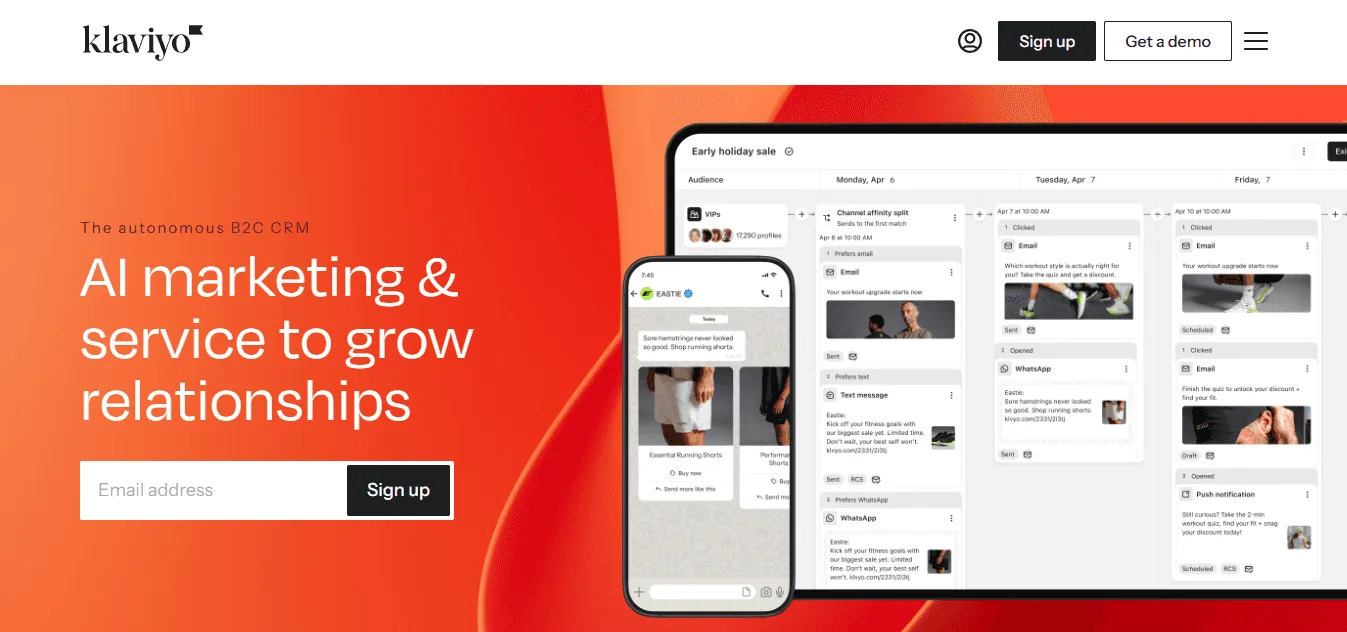
When a customer views your products three times without buying, Klaviyo captures that signal. The platform uses AI to send personalized email and text message flows based on browsing history, purchase behavior, and customer lifetime value. This converts existing data into sales without manual campaign setup.
3. Triple Whale

Most multi-channel advertisers struggle not with creating ads, but with attribution: knowing which channel drove the sale. Triple Whale consolidates ad platform data, email performance, and store analytics into a single dashboard, revealing true profitability rather than platform-reported vanity metrics.
4. Gorgias

Gorgias solves the common ecommerce challenge of scaling customer support without hiring additional staff. It consolidates support from email, chat, and social media in one platform, then uses AI to answer common questions instantly using live order information, enabling faster response times without expanding your support team.
5. Jasper
Jasper creates product descriptions, ad copy, and email content based on training from a brand's specific voice. This helps small teams maintain consistent, on-brand writing while producing substantial content without hiring dedicated copywriting staff.
6. Shopify Magic

Shopify Magic removes workflow friction by building AI directly into the Shopify admin, offering product description generation and automated customer responses without requiring extra apps or additional configuration.
7. Rebuy

Rebuy powers personalized upsell offers, smart product recommendations, and post-purchase prompts across the customer lifecycle, growing average order value without increasing ad spend.
8. AdCreative.ai
Testing ad creative usually takes a long time. AdCreative.ai generates multiple ad versions and predicts their performance before launch, helping performance marketers running campaigns on Meta and TikTok accelerate results by reducing feedback cycles.
9. Surfer SEO

Organic traffic grows over time in ways paid traffic cannot. Surfer SEO analyzes top-ranking content and provides data-driven recommendations for blog posts and product pages, giving ecommerce brands a structured path to search visibility without relying on ad budgets.
10. ChatGPT

ChatGPT is a flexible thinking partner, not a specialized ecommerce solution. It excels at brainstorming, drafting, research, and rapid ideation across business operations, but should complement specialized tools rather than replace them.
11. Octane AI

When product catalogs are too complex, customers become confused and struggle to make purchases. Octane AI solves this by building AI-powered recommendation quizzes that help customers find what they need, guide them through the selection process, and turn uncertainty into confident purchases.
12. Yotpo
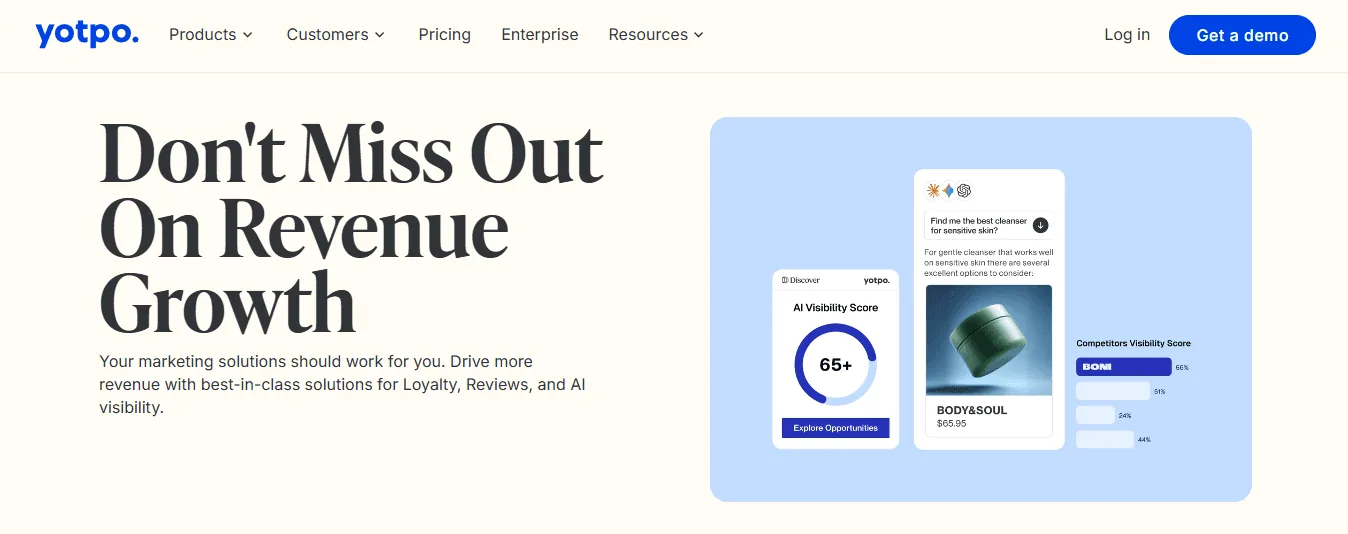
Trust is a conversion lever that most brands underinvest in. Yotpo uses AI to collect reviews at scale, summarize customer feedback into actionable themes, and power loyalty programs that drive repeat purchases. According to fin.ai, AI-driven personalization can increase ecommerce revenue by up to 15%.
13. Tidio
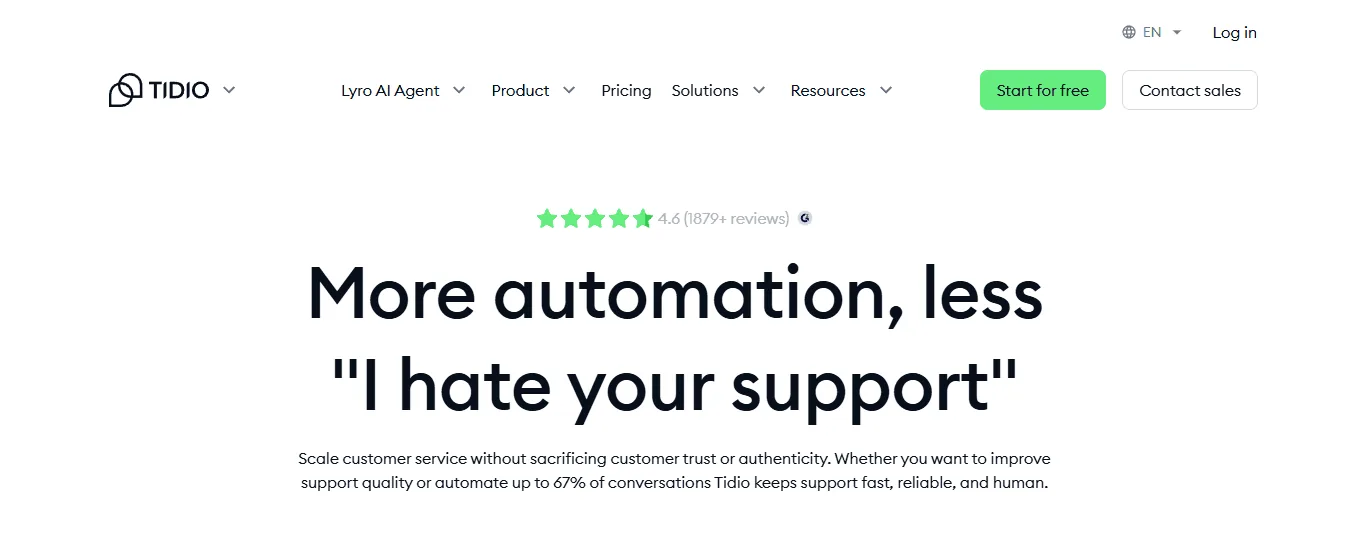
Smaller stores often face a specific problem: shoppers have questions at 11 PM with no one available to answer them. Tidio combines live chat with an AI chatbot that handles common questions around the clock, using your store's existing content to provide consistent support coverage without the cost of a full support team.
14. Smartly.io

When you spend heavily on ads, manual budget management becomes problematic. Smartly.io automatically creates campaigns and distributes your budget across Meta and TikTok, adjusting in real time based on ad performance. It's designed for brands where daily losses from poor budget allocation exceed platform fees.
15. ReConvert

The thank-you page is one of the most underused surfaces in ecommerce. ReConvert transforms it into a revenue moment by presenting personalized upsell offers immediately after purchase, capturing value at the highest-intent point in the customer journey.
16. Visually AI

Continuous A/B testing typically requires development resources that most merchants lack. Visually, AI runs ongoing conversion tests on product and landing pages without manual setup, enabling optimization despite limited development capacity.
17. Midjourney

Midjourney fills the gap between standard product photography and unique brand visual identity by generating original AI artwork and lifestyle imagery for campaigns, social content, and brand storytelling that transcend basic product shots.
How to build a stack that actually works
Brands typically add tools reactively, one bottleneck at a time, without understanding how the pieces connect. This creates stacks that solve individual problems while creating new handoff failures. A stronger approach: identify your single biggest constraint, then select the tool designed specifically for that constraint before adding anything else.
What do the most effective ecommerce AI stacks have in common?
Gartner projects that 80% of customer interactions will be handled by AI technologies by 2025. The brands that benefit most won't have the most tools; they'll have matched each tool to a specific, measurable problem and built their stack with intention. The strongest ecommerce AI stacks share a common design: focused, single-purpose tools that solve different problems, connected by clean data flows rather than manual workarounds. Photography handled by one platform, retention by another, attribution by a third, support by a fourth. Each tool does one thing well, rather than one tool doing everything adequately. Knowing which tools are worth adding is only part of the answer. The harder question is understanding what separates a tool that makes a difference from one that merely adds another dashboard to your morning routine.
What Makes AI Tools Actually Valuable?
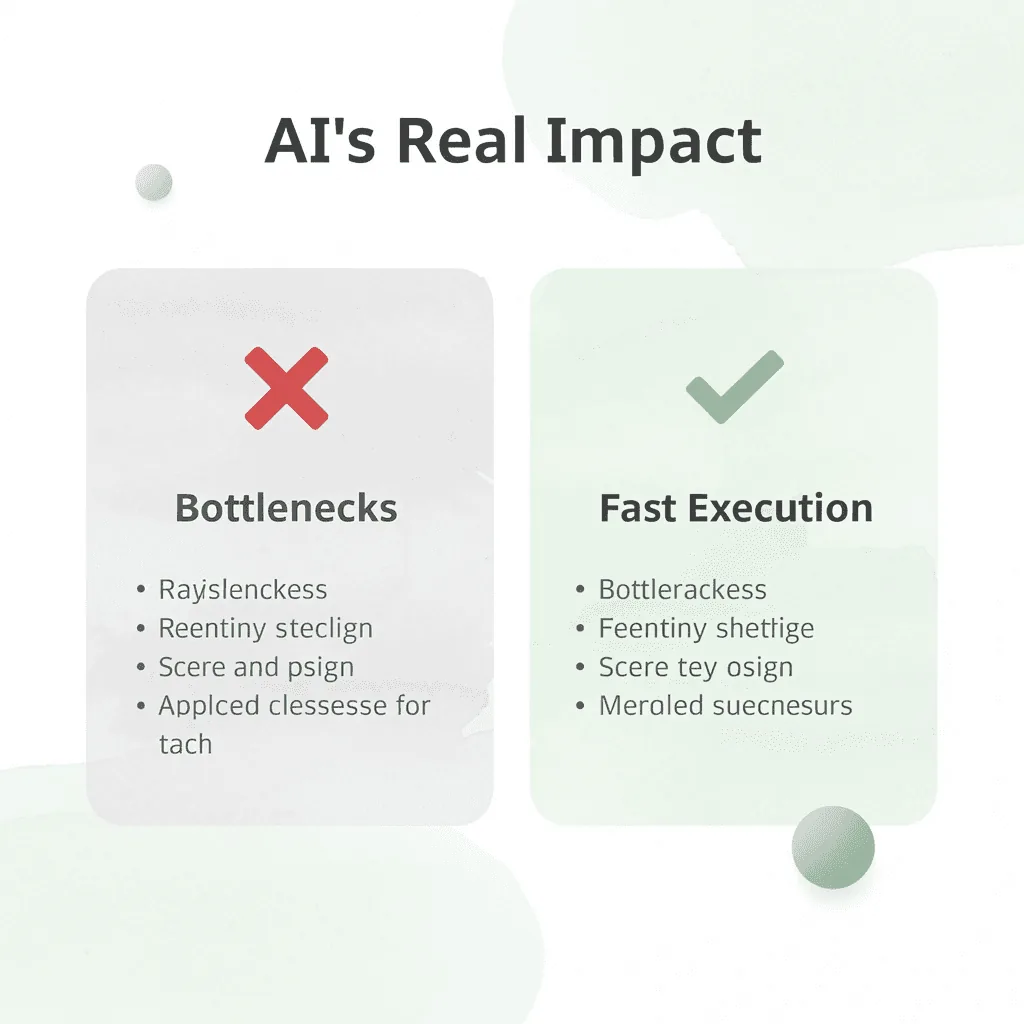
Most AI tools are valuable not because of the technology itself, but because of what they get rid of: bottlenecks, delays, and repetitive decisions that use up your ability to execute.
"The real value of AI isn't what it adds — it's what it eliminates: the bottlenecks, delays, and repetitive decisions that drain your capacity to get things done."
🎯 Key Point: The true power of AI tools lies in subtraction — removing the friction that slows you down, not simply adding more features to your workflow.
💡 Tip: When evaluating any AI tool, ask yourself: "What does this eliminate?" The best tools ruthlessly cut the repetitive decisions and delays that quietly drain your execution capacity every single day.
| What AI Removes | Why It Matters |
|---|---|
| Bottlenecks | Keeps work moving without manual intervention |
| Delays | Reduces time between decision and action |
| Repetitive decisions | Frees up cognitive bandwidth for high-value thinking |
Where do the biggest efficiency gains actually come from?
The biggest gains come from doing familiar things faster, with fewer handoffs and less friction. According to the Stanford HAI 2025 AI Index Report, 77% of workers say AI tools help them save time on repetitive tasks. In ecommerce, those tasks block revenue: writing product descriptions, editing images, generating ad variants, responding to customer queries. Each one costs attention; collectively, the burden is substantial.
The failure point is usually production capacity, not ambition. A brand can have a great product and a healthy ad budget, but if content production falls behind demand, everything stops. Most teams hire more people or outsource to agencies, which adds coordination overhead and slows feedback loops. Platforms like Caspa solve this at the source, allowing brands to generate studio-quality visuals and A+ content without scheduling delays and revision cycles, cutting content costs by up to 10x while maintaining conversion-driving quality.
What separates genuinely valuable AI tools from expensive noise?
What separates valuable AI tools from expensive noise is specificity. A tool that automates one high-friction task exceptionally well outperforms a tool that touches ten tasks adequately. The best ecommerce AI tools target a defined bottleneck, remove it cleanly, and integrate without creating new dependencies. Narrow, measurable impact is what shows up in your conversion rate.
How does faster execution translate into a compounding commercial advantage?
According to the Stanford HAI 2025 AI Index Report, AI adoption shortens execution timelines. In ecommerce, this speed is a business benefit. Brands that create more creative variations find winning combinations faster. Brands that respond to customers quickly retain more of them. Brands that update listings and ad creative without waiting on agencies build a competitive advantage over time. The tool itself is not the advantage; the speed of execution it enables is. The brands that get the most from AI are not the ones with the most tools, but those that have matched the right tool to the right friction point and let it run.
Related Reading
- How To Sell On Amazon
- Printful Vs Printify
- Shopify Vs Woocommerce
- Ai For Product Photos
- Ai Generated Product Images
- Ai Product Photo Generator
- Amazon Vs Shopify
- Ai Product Video Generator
- Ai For Ecommerce
- Ai Clothing Model
- Shopify Vs Bigcommerce
- Printful Review
- Shopify Vs Amazon
- Ai Model For Clothing
- Ai Product Video
- Ai Fashion Model
- Printful Pricing
- Best Amazon Seller Tools
Speed and Iteration Have Become Competitive Advantages
Matching the right tool to the right friction point solves one problem. What you do with that match determines everything else. Winning brands build systems that turn each correct match into compounding momentum, moving from insight to action faster than competitors can react.
💡 Tip: Build a repeatable process around each match so every solve becomes a replicable advantage, not a one-time fix.
🎯 Key Point: The right tool + the right process = a feedback loop that accelerates growth. Without both, you forfeit your competitive gains.

"Speed is a strategic asset that compounds over time. Every cycle you complete before a competitor completes theirs is a data point they do not have." — Len Jessup, LinkedIn Pulse
The brands pulling ahead are moving faster through the loop of test, learn, and adjust. According to LinkedIn Pulse's piece on speed as a competitive advantage by Len Jessup, speed is a strategic asset that compounds over time. Every cycle you complete before a competitor completes theirs is a data point they do not have — and in a market where iteration velocity separates leaders from laggards, that gap widens fast.
| Iteration Speed | Competitive Outcome |
|---|---|
| Faster test-learn-adjust loops | More data points, earlier insights |
| Slower or reactive cycles | Competitor advantage compounds |
| Matched tool to friction point | Reduced drag, higher output per cycle |
| Mismatched or delayed tooling | Wasted cycles, lost ground |
⚠️ Warning: Every cycle your competitor completes before you is intelligence you don't have. Delayed iteration isn't just slow — it's a strategic liability that grows harder to close over time.
Where iteration actually breaks down
The failure point is almost always content production. A brand can identify a winning product, build the landing page, and set up the email sequence in days. Then it waits two weeks for photography. That delay slows every downstream test tied to that visual asset, including ad variants, listing images, and social content. Most teams batch-shoot quarterly and optimize campaigns around whatever imagery comes back, which means they're optimizing for a snapshot of the market, not the market as it exists today.
How does faster image production tighten the testing loop?
Platforms like Caspa's product photography generate studio-quality product images, infographics, and A+ content in seconds rather than weeks. When brands can produce and swap visual assets as fast as they form a hypothesis, the testing loop tightens considerably. Our platform's data shows a 40% lift in conversions and a 10x reduction in production costs, transforming visual content from a fixed expense into a variable, testable asset.
Why faster testing beats bigger budgets
Brands that test new creative ideas outperform those pursuing perfection. TriNet's research on speed as a competitive advantage for small businesses shows smaller operators benefit most from speed: they can change direction quickly without the approval layers that slow larger organizations. A solo seller testing three product image styles in a week learns what a competitor running a quarterly studio cycle cannot know yet.
How does the cost of failure change what teams are willing to test?
Speed also changes how you think about failure. When creative work takes two weeks and costs hundreds of dollars, every failed test feels expensive. When it takes an afternoon and costs a fraction of that budget, failure becomes information rather than loss. Teams that fear failure test less, and teams that test less learn more slowly. Brands that figure this out stop asking which creative will win before launch. They build systems designed to find out quickly.
What happens when speed meets the right visual output at scale?
What happens when you combine that speed with the right visual output at scale across every customer touchpoint?
How Caspa Helps Ecommerce Brands Create Better Content Faster
Many ecommerce brands ask: "How do we create professional product pictures without expensive studios, photographers, and multiple editing tools?" Caspa answers this challenge.
"The demand for high-quality product visuals has never been higher, yet traditional production workflows remain slow, costly, and difficult to scale." — Ecommerce Industry Insight
🎯 Key Point: Caspa solves the pain point holding ecommerce brands back: delivering studio-quality content without the studio overhead.
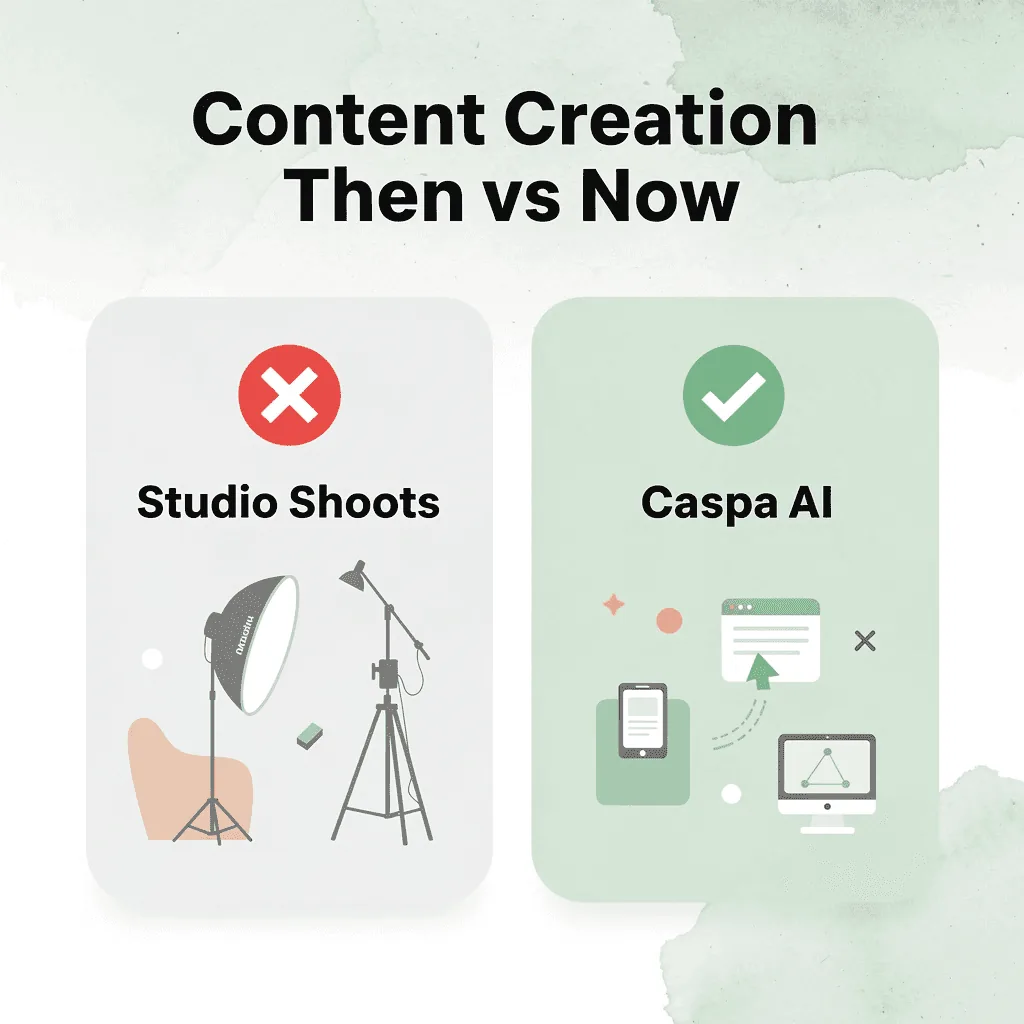
Modern ecommerce brands face constant pressure to launch products faster, refresh creatives frequently, and produce content across websites, marketplaces, social media, ads, and email. Traditional photography workflows create critical bottlenecks — coordinating photographers, models, studios, editing software, and stock libraries slows execution and increases costs.
| Traditional Workflow | With Caspa |
|---|---|
| Expensive studio bookings | No studio required |
| Multiple editing tools | All-in-one platform |
| Slow turnaround times | Faster content launches |
| High coordination costs | Streamlined execution |
| Stock library dependencies | Custom, on-brand visuals |
💡 Tip: If your team is still juggling photographers, editors, and stock subscriptions separately, you're paying a hidden tax on every content cycle — in both time and money.
⚠️ Warning: Brands that rely on traditional photography workflows risk falling behind competitors who can refresh creatives and launch faster using modern AI-powered tools.
What does Caspa's all-in-one platform actually do?
Caspa is an AI-powered, all-in-one product photography platform for ecommerce. Our platform helps brands create ultrarealistic product images featuring human models and lifestyle scenes in seconds, enabling customers to imagine owning products without physical sets, expensive talent, or long production cycles.
Caspa maximizes existing assets. Product photos can be edited and enhanced without starting over. Background removal creates clean catalog images, while image upscaling improves quality for product pages, marketplaces, and ads. Beyond editing, Caspa provides custom stock photography and complete studio editing capabilities: lifestyle images, marketing creatives, social media assets, and promotional visuals from a single platform instead of assembling multiple tools.
How does consolidating tools speed up content production?
This consolidation removes complexity that slows production. Teams no longer need to switch between software, work with external photographers, or pay for expensive photo shoots to create new versions. Caspa helps brands create more content while spending less on production. Faster creation lets brands test different backgrounds, models, settings, and ideas without budget or timeline constraints, enabling continuous iteration and improvement. In ecommerce, speed and innovation matter as much as quality. Caspa helps brands achieve both, enabling smaller teams to compete effectively while freeing larger teams from production bottlenecks.
Get Product Photos that Increase Your Sales Today
The system you build around visual content matters as much as the content itself. If your product images depend on studio bookings, freelancer availability, or manual editing, every new test costs time you don't have. A slow production pipeline is a direct drag on revenue and your ability to iterate and compete.
"Every new test costs time you don't have — and in ecommerce, speed to market is a competitive advantage you can't afford to lose."
⚠️ Warning: Relying on traditional studio workflows creates a bottleneck that limits how fast you can test, optimize, and scale your visual content strategy.
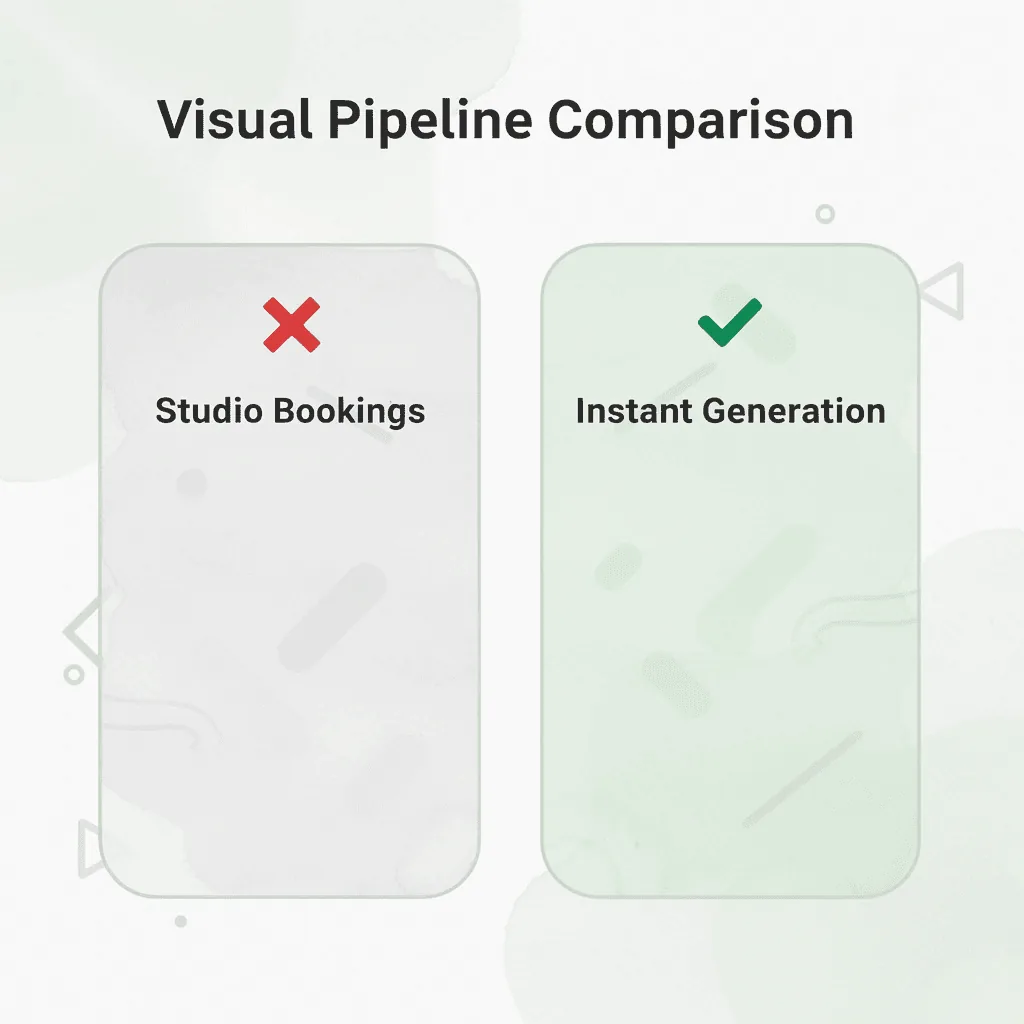
Product photography through Caspa removes that bottleneck entirely. Our platform helps brands generate ultra-realistic images, lifestyle scenes, and A+ content in seconds — with reported conversion lifts of up to 40% and production costs reduced by 10x compared to traditional studio workflows. Your first session turns a single existing product photo into a full set of professional marketing assets, ready for Amazon, Shopify, or wherever your customers find you.
🎯 Key Point: A 10x reduction in production costs combined with up to 40% higher conversions means Caspa doesn't just save money — it actively grows your bottom line.
| Metric | Traditional Studio | Caspa AI |
|---|---|---|
| Production Speed | Days to weeks | Seconds |
| Cost Efficiency | Baseline | 10x cheaper |
| Conversion Lift | Standard | Up to 40% higher |
| Asset Output | Limited by bookings | Full marketing set |
| Platform Ready | Manual resizing | Amazon, Shopify & more |
🔑 Takeaway: Caspa's AI-powered platform eliminates the three biggest barriers to great product photography — time, cost, and creative bottlenecks — so you can focus on scaling what works.
Related Reading
- Teespring Vs Printful
- Redbubble Vs Printful
- Placeit Pricing
- Amazon Merch On Demand
- Amazon Ai Tools
- Ecommerce Product Video
- Placeit Alternative
- Luxury Product Photography
- Printify Vs Gelato
- Flat Lay Product Photography
- T-shirt Mockup Ai
- Ai Product Video Maker
- Printful Vs Gelato
- Best Background For Product Photography
- Advertising Product Photography
- Ai Fashion Model Generator
- Teespring Alternatives
- Merch On Demand
- Ai Product Photo Editor
- Ai Clothing Model Generator
- Ai Clothing Mockup Generator