

Redbubble is a popular starting point for independent artists and print-on-demand sellers, but it is far from the only option. Depending on your margins, audience, and creative goals, platforms like Society6, Merch by Amazon, Zazzle, Printful, and Teepublic may be a stronger fit. Knowing how these alternatives compare can save sellers significant time and money.
One factor that shapes performance across any of these platforms is how well a product is presented visually. Buyers make quick decisions, and listings with sharp, consistent images consistently outperform those without. Sellers looking to improve their results without the cost of a traditional shoot can use Caspa's product photography tools to create compelling visuals that convert.
Table of Contents
- Why More Creators Are Looking for Redbubble Alternatives
- Why There Is No Single Best Redbubble Alternative
- 19 Best Redbubble Alternatives by Use Case
- Successful Ecommerce Brands Compete on More Than Where They Sell
- How Caspa Helps Ecommerce Brands Create Better Product Visuals
- Get Product Photos that Increase Your Sales Today
Summary
- Redbubble's base royalty rate is as low as 20% for artists, meaning the platform captures the majority of revenue on every sale. That math works during the testing phase, but it becomes a real problem for sellers who are driving their own traffic, building their own audience, and doing their own marketing work.
- The global print-on-demand market is projected to reach $39.4 billion by 2030, growing at a compound annual rate of 25.8% according to Merchize. That growth intensifies competition inside every marketplace, which shifts the advantage toward sellers who control their own distribution and own their customer relationships.
- Choosing a Redbubble alternative is not a product decision; it is a business model decision. Platforms that rank highest for margin control are rarely the same ones that rank highest for marketplace traffic, and every platform optimizes for one thing at the expense of another. Sellers who want passive discovery give up pricing power, and sellers who want pricing power give up passive discovery.
- Most shoppers decide within seconds whether a product is worth the price, and they react to an image before they read a single word of copy. Amazon accounts for over 40% of total U.S. e-commerce sales in 2025, which means sellers competing there are operating inside the world's most crowded visual marketplace, where a flat or generic mockup functions as an instant disqualifier.
- Branding is not a logo decision. It is the accumulated impression left by every image, every product description, and every customer interaction. Sellers who treat visual consistency as optional tend to plateau early because inconsistent presentation reduces the trust customers need before they buy again.
- Product photography addresses this directly for independent sellers managing multiple storefronts, where maintaining consistent, conversion-ready visuals across platforms like Merch by Amazon, Society6, and Etsy would otherwise become a part-time job in itself.
Why More Creators Are Looking for Redbubble Alternatives
Redbubble created an easy way for artists to sell products without managing inventory, shipping, or customer service. But once you want to build something that lasts, a platform designed for simplicity becomes a constraint.
"A platform built for ease of entry is rarely built for long-term growth — creators are starting to feel that ceiling."
💡 Tip: If you're outgrowing Redbubble's ecosystem, you're not alone. Thousands of creators are exploring alternatives that offer more control, higher margins, and stronger brand-building tools.
⚠️ Warning: Staying on a platform that limits your growth for familiarity's sake can cost you real revenue and brand equity over time.

Does Redbubble's royalty model still make sense as you scale?
The reality of profit margins becomes harder to ignore as you scale. According to the MyDesigns Blog, Redbubble's base royalty rate for artists is as low as 20%, meaning the platform takes most of the revenue from every sale. This math works when testing designs but breaks down when you're driving your own traffic, building your own audience, and handling marketing yourself, only to surrender most profits to the marketplace.
Branding compounds the problem. On Redbubble, the customer experience belongs to Redbubble: the packaging, confirmation email, storefront design, and trust signals all carry the platform's identity, not yours. Customers remember the platform, not the artist, making it nearly impossible to build repeat purchases and long-term loyalty without a direct relationship.
How does listing across multiple platforms create new production challenges?
The most common solution is listing on multiple platforms simultaneously: Merch by Amazon, Society6, Zazzle, and Teepublic. This reduces dependence on any single marketplace. However, each platform has different product mockup requirements, image dimensions, and presentation standards. Most sellers manually edit photos or use basic mockup generators, adding hours of repetitive work weekly. Platforms like Caspa address this by generating studio-quality product images in multiple formats without a photo shoot, thereby cutting production time and maintaining consistent visual standards.
Why does market growth make owning your brand more urgent?
The bigger market situation makes this change important. According to Merchize, the global print-on-demand market is expected to reach $39.4 billion by 2030, growing at 25.8% annually. This growth intensifies competition across marketplaces. With thousands of new designs arriving daily, discoverability becomes harder, and the advantage shifts toward sellers who control their own distribution, own their customer relationships, and present products with sharper, more consistent visuals.
Creators outgrowing Redbubble aren't leaving print-on-demand. They're choosing a different relationship with it, where the platform serves their brand rather than the other way around.
Related Reading
- Ecommerce Product Photography
- Ai Tools for E-commerce
- Printify Alternatives
- Photoroom Pricing
- Ecommerce Product Photography Services
- E-commerce AI Tools
- Printful Alternatives
- Best Ai Tools for E-commerce
- How To Sell On Shopify
- Ecommerce Product Videos
- Automated Product Photography
- Ecommerce Product Video
- Ecommerce Product Imagery
- Visual Merchandising Ecommerce
- Photoroom Cost
Why There Is No Single Best Redbubble Alternative
Choosing a Redbubble alternative is a business model decision. The platform you choose signals what kind of creator or seller you want to become, and those goals differ for each person.
🎯 Key Point: There is no single best Redbubble alternative because every creator's priorities — from passive income to brand control — are unique.
"The platform you choose shows what kind of creator or seller you want to become, and those goals are different for different people."
💡 Tip: Before comparing platforms, define your primary goal first: whether that's maximum traffic, higher margins, or brand ownership. This lets you evaluate alternatives against your specific needs, not someone else's.

Merchize's 2026 comparison of 15 Redbubble alternatives across profit margins and print quality reveals an important tradeoff: platforms that rank highest for margin control rarely rank highest for marketplace traffic. Every platform is best at something, and being best at one thing almost always means accepting a compromise somewhere else.
| Platform Strength | What You Gain | What You Sacrifice |
|---|---|---|
| High margin control | More profit per sale | Less built-in traffic |
| High marketplace traffic | Built-in audience | Lower margin control |
| Print quality focus | Premium product output | Typically higher base costs |
⚠️ Warning: Chasing the platform with the highest profit margins without considering traffic and discoverability is one of the most common mistakes new sellers make when leaving Redbubble.
What do you gain and what do you give up?
The same pattern emerges across independent stores and marketplace platforms: sellers who want passive discovery sacrifice pricing power, while those seeking pricing power sacrifice passive discovery. A creator building a Shopify store controls their brand, sets margins, and owns customer data—but must generate every visit themselves. A seller on Merch by Amazon gains built-in traffic, though the customer remembers Amazon, not them. Neither path is wrong; they represent different bets.
How does selling on multiple platforms create a visual consistency problem?
Most creators test the market by listing on multiple platforms simultaneously across Teepublic, Society6, and similar print-on-demand marketplaces. This works until volume grows and visual inconsistency becomes problematic. Product images that look polished on one platform appear flat on another, and maintaining conversion-ready visuals across every storefront becomes its own job. Platforms like Caspa address this directly, enabling independent sellers to generate studio-quality product photos and infographics without a shoot, cutting production overhead that scales poorly across multiple storefronts.
Why product variety changes the calculus
A designer selling art prints has different needs than someone building a branded apparel line or a stationery business. According to the MyDesigns Blog's 2026 review of 10 Redbubble alternative platforms, product availability varies significantly across major options, and platforms with the most products aren't always the most reliable. A curated selection of products that ship reliably, photograph well, and offer fair pricing outperforms a sprawling catalog with inconsistent shipping and lower conversion rates.
Why does searching for the best alternative keep leading people in circles?
The critical difference is which platform removes the most friction between your current stage and the business you're building toward. That answer varies by seller, which is why searching for a single "best" alternative leads nowhere.
Once you accept that, the real work begins: matching specific platforms to specific goals.
19 Best Redbubble Alternatives by Use Case
Finding the right platform for your goal means being clear about what your business needs are. Once you know what you need — whether that's higher royalties, better print quality, global reach, or niche audience targeting — the list of choices becomes much smaller and more manageable.
💡 Tip: Before diving into the 19 alternatives below, take 5 minutes to define your single most important priority — profit margins, product range, or ease of setup. That one decision will instantly eliminate half the options.
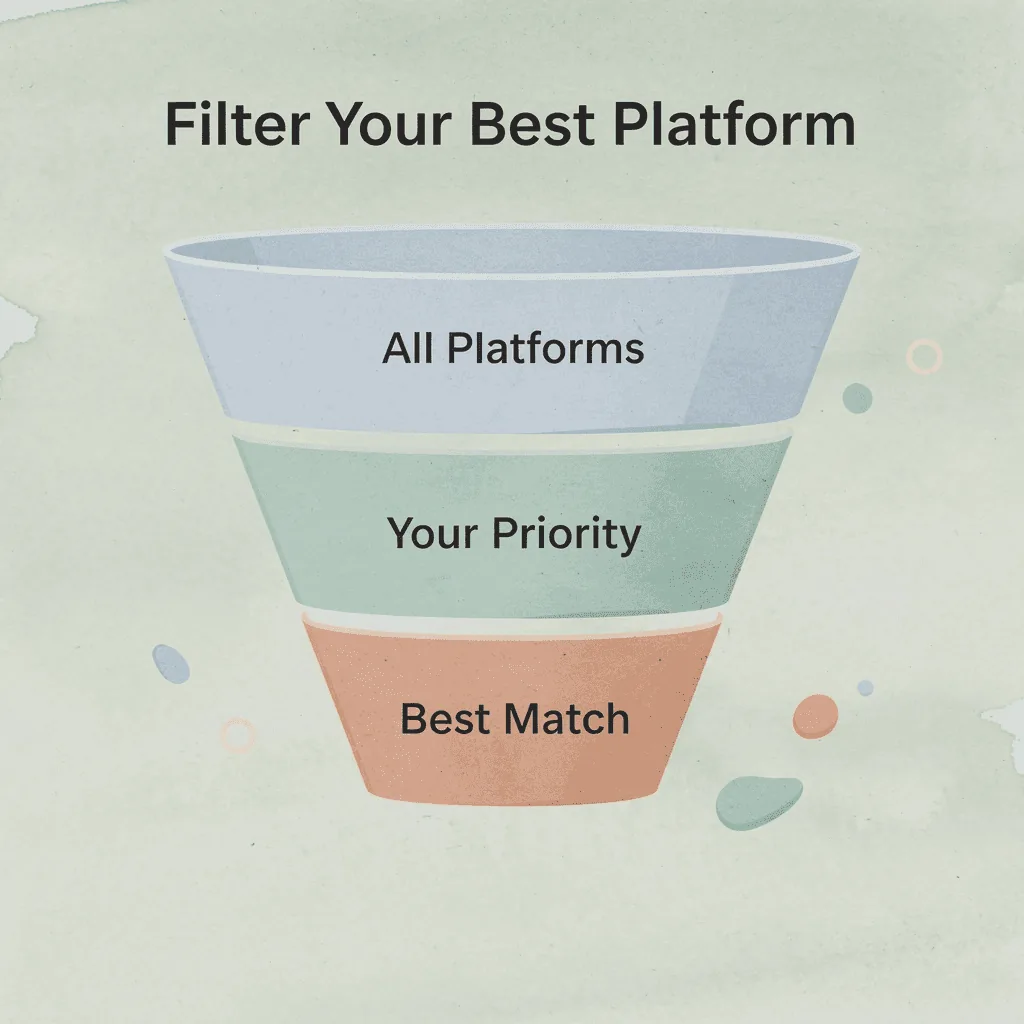
🎯 Key Point: The best Redbubble alternative isn't the most popular one — it's the one that directly aligns with your specific use case, target audience, and revenue goals.
"The real competitive advantage isn't choosing a platform — it's choosing the right platform for your exact needs." — Business Strategy Insight
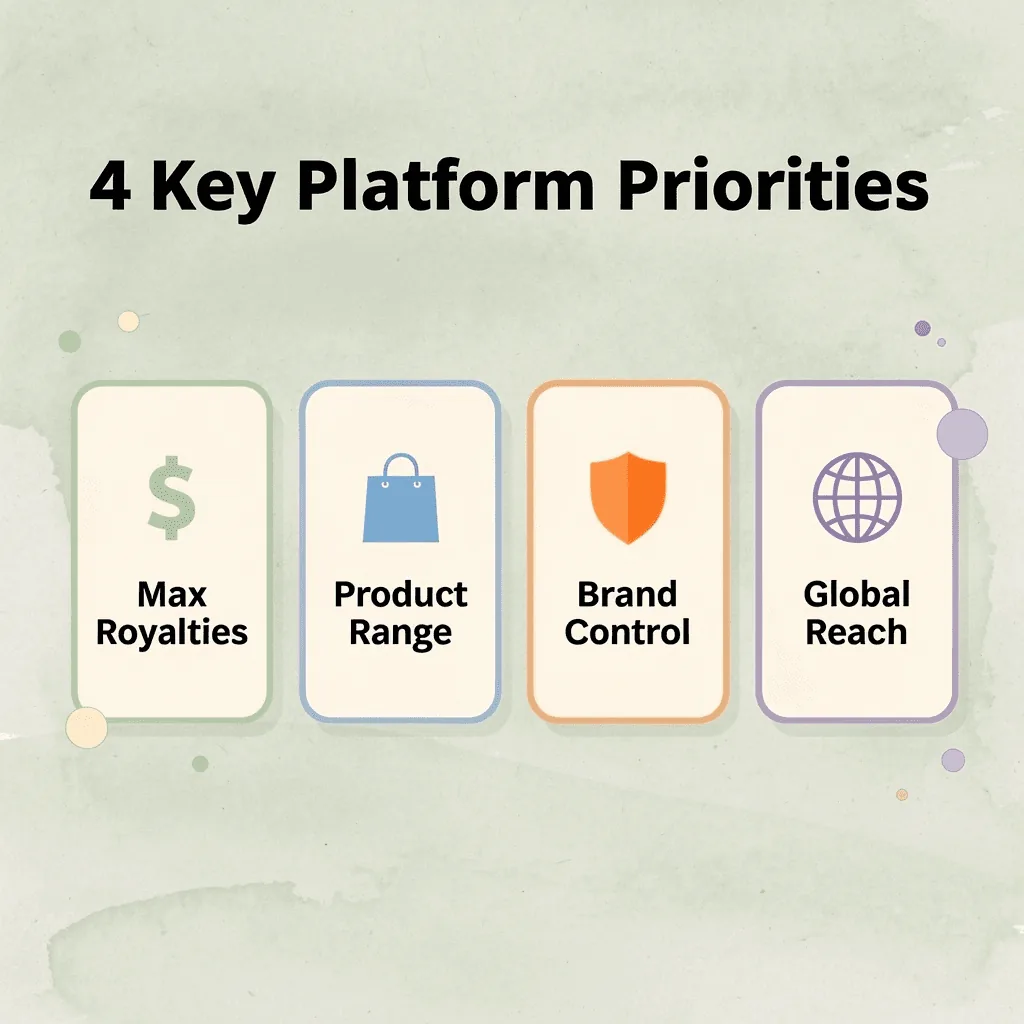
| Priority | Best Platform Type |
|---|---|
| Maximum royalties | Artist-first marketplaces |
| Physical product range | Full-service POD platforms |
| Brand control | Self-hosted storefronts |
| Niche audiences | Community-driven marketplaces |
| Global distribution | Multi-region POD networks |
1. Best Overall Alternative: Printful
Printful earns its top position by removing friction for sellers building independent brands. In-house fulfillment ensures consistent quality, and white-label packaging keeps your name on every box. For sellers moving from marketplaces like Redbubble to independent storefronts on Shopify or Etsy, Printful provides the most direct bridge.
2. Best for Supplier Flexibility: Printify
Printify connects you to a network of print providers, allowing you to compare pricing, location, and turnaround time before committing to a product. This flexibility matters most as your business grows, since small per-unit cost differences can add up across thousands of orders.
3. Best for Global Fulfillment: Gelato
Shipping time is the main barrier for print-on-demand sellers expanding internationally. Gelato solves this by printing locally in over 30 countries, reducing delivery times and transportation costs. Localized production also cuts emissions, giving environmentally focused brands a genuine sustainability advantage.
4. Best for Artists Wanting a Marketplace: Society6
Society6 is a curated marketplace where buyers search for original art on home decor, wall art, and lifestyle products. For artists whose work fits these categories, it offers marketplace exposure without the operational overhead of running a standalone store.
5. Best for Handmade and Creative Products: Etsy
Etsy buyers seek handmade, carefully crafted items rather than mass-produced products. Its growing print-on-demand integrations let sellers capitalize on that interest while automatically fulfilling orders, a rare combination among print-on-demand platforms.
6. Best for Fashion Brands Apliiq
Regular print-on-demand clothing lacks authenticity. Apliiq offers private-label branding, custom neck labels, and packaging that make products feel like genuine clothing brands. For sellers building a fashion identity, this difference converts one-time buyers into repeat customers.
7. Best for Beginners: Spring
Spring removes barriers to first sales by enabling new sellers to convert existing Instagram or YouTube audiences directly via social commerce integrations, without building a separate storefront first. For creators with an audience but no merchandising experience, this offers genuine value.
8. Best for Sustainable Brands: T-Pop
T-Pop keeps its promise to help the environment by using plastic-free packaging and sustainably sourced materials in every order. For sellers whose identity centers on environmental responsibility, this consistency is essential.
9. Best for Fast Production: SPOD
SPOD delivers fast turnaround times, a large apparel catalog, and tight Shopify integration. When customer expectations for delivery are high and fulfillment errors are costly, production speed becomes a competitive requirement.
10. Best for Niche Products: JetPrint
JetPrint specializes in watches, jewelry, and accessories that mainstream platforms rarely offer. If your designs work better on a watch face than a cotton tee, JetPrint is built for that opportunity.
11. Best for Phone Cases and Tech Accessories: CaseApp
CaseApp focuses on phone cases, laptop sleeves, and tech accessories, so its design tools, print quality, and product range are optimized for this category. Sellers targeting a specific niche benefit from this specialization rather than competing across a broad catalog.
12. Best for High-Quality Apparel: Printbox
Printbox combines white-label software with high-quality clothing, enabling sellers to create fully branded storefronts rather than generic marketplace listings.
13. Best for Wide Product Variety: CustomCat
Sellers working with many different suppliers often deal with mismatched prices, fragmented logistics, and information scattered across multiple dashboards. CustomCat solves this by centralizing everything in one place. We offer one of the industry's largest product catalogs: apparel, drinkware, home goods, and accessories through a single connection. This eliminates the confusion and extra work of managing multiple suppliers.
14. Best for Direct-to-Garment Quality: Gooten
Gooten is built for sellers who treat apparel quality as non-negotiable. Its direct-to-garment printing produces sharp, durable results, and its supplier network gives sellers flexibility across multiple sales channels without sacrificing consistency. If your brand reputation depends on how the product feels and looks after ten washes, Gooten belongs in your shortlist.
How do sellers solve the product photography bottleneck?
Most sellers building an independent storefront eventually hit the same wall: listing photos don't do products justice. The familiar workaround—hiring a photographer, booking a studio, or spending hours editing mockups in Photoshop—consumes 20+ hours per week and yields inconsistent results across platforms. Product photography tools like Caspa address this directly by generating ultra-realistic product images with AI human and animal models without requiring a shoot, studio, or design expertise, letting sellers move from product idea to a polished listing in a fraction of the time.
15. Best for Social Media Sellers: Spring Creator Tools
Content creators making money through YouTube, TikTok, or Instagram face a specific challenge: their audience exists on a social platform, not a store. Spring's creator tools let sellers turn followers into buyers without redirecting them to a separate checkout experience. For influencers whose merchandise sales depend on impulse and momentum, that seamless path is essential.
16. Best for Wall Art and Posters, Fine Art America
Fine Art America is an excellent choice for artists selling printed and framed wall art. Its marketplace focuses on fine art reproduction and attracts customers seeking original artwork rather than novelty products. For artists in this category, a targeted audience aligned with their offerings matters more than an extensive feature set.
17. Best for European Sellers: Contrado
Contrado's UK-based production reduces shipping times and costs for European customers compared to US-based fulfillment. For sellers with European customer bases, this localization improves reviews, reduces delivery complaints, and strengthens repeat purchase rates.
18. Best for Custom Packaging Control: Printy6
Unboxing is an important moment for premium brands. Printy6 gives sellers detailed control over packaging and branding elements, allowing the unboxing experience to be designed as carefully as the product itself. Brands that treat packaging as a customer touchpoint will find Printy6 built with that priority in mind.
19. Best for All-in-One Dropshipping Merchize
MyDesigns compares 10 print-on-demand platforms for 2026, and Merchize stands out as one of the few combining print-on-demand fulfillment with broader dropshipping capabilities in one place. This matters for sellers who want to expand beyond custom merchandise into a wider online store without managing separate systems, supplier relationships, or integration stacks. It's the right fit when print-on-demand is one revenue stream among several, not the entire business.
The fastest-growing sellers choose platforms based on where their business is heading, not where it currently stands.
Related Reading
- How To Sell On Amazon
- Printful Vs Printify
- Shopify Vs Woocommerce
- Ai For Product Photos
- Ai Generated Product Images
- Ai Product Photo Generator
- Amazon Vs Shopify
- Ai Product Video Generator
- Ai For Ecommerce
- Ai Clothing Model
- Shopify Vs Bigcommerce
- Printful Review
- Shopify Vs Amazon
- Ai Model For Clothing
- Ai Product Video
- Ai Fashion Model
- Printful Pricing
- Best Amazon Seller Tools
Successful Ecommerce Brands Compete on More Than Where They Sell
Platform choice opens the door. What happens inside that door separates sellers who grow from sellers who stall.
"Platform choice opens the door, but what happens inside that door is what separates sellers who grow from sellers who stall." — Core Ecommerce Principle
💡 Tip: Don't mistake platform selection for competitive strategy. The platform is the starting point, not the differentiator.

The pattern is consistent across independent storefronts, Etsy shops, Amazon listings, and Shopify stores: two sellers offering nearly identical products on the same platform reach the same audience but generate wildly different results. The gap is almost never the product itself — it's everything surrounding it: how it's framed, photographed, described, and positioned within a customer's life. Positioning creates perceived value before a single word of copy is read.
| Factor | Sellers Who Stall | Sellers Who Grow |
|---|---|---|
| Product Framing | Generic, feature-focused | Life-context, benefit-driven |
| Photography | Basic, unformatted | Styled, story-telling |
| Descriptions | Plain specs | Emotionally positioned copy |
| Perceived Value | Low differentiation | Premium positioning |
🎯 Key Point: The real competitive gap isn't the product — it's the positioning, presentation, and perceived value built around it.
⚠️ Warning: Assuming a better platform will fix flat sales is one of the most common and costly mistakes ecommerce sellers make.
Why do shoppers decide within seconds?
Most shoppers decide within seconds whether a product feels worth the price, reacting to an image rather than reading specifications. According to Marketing Mind, Amazon accounts for over 40% of total U.S. e-commerce sales in 2025. Sellers on that platform compete in the world's most crowded visual marketplace, where a blurry mockup is an instant disqualifier. Strong product imagery is the listing itself in those critical first three seconds that determine whether a shopper stays or leaves.
What happens when sellers rely on generic mockups?
Most sellers use standard mockups from their print-on-demand supplier and assume the product will speak for itself. Flat, generic images signal a generic brand. Shoppers who cannot picture themselves wearing, using, or displaying a product do not buy it—they scroll past. Platforms like Caspa offer independent sellers a direct solution that uses AI to generate ultra-realistic product photos, lifestyle imagery, and A+ content without a studio, photographer, or manual editing. The result is a storefront that looks like a brand, not a side project.
Why branding compounds over time
Branding is the overall impression left by every image, product description, email, and customer interaction. Sellers who treat visual consistency as optional stop growing early, since inconsistent presentation teaches customers not to trust the brand enough to return. The fastest-growing sellers made their storefronts feel put-together before making them feel busy. One strong visual identity, repeated across product pages, social content, and packaging inserts, builds recognition that converts first-time buyers into repeat customers without requiring a larger ad budget.
Marketing amplifies strong visuals; it does not replace them. A well-targeted ad campaign driving traffic to a poorly presented product page is an expensive way to confirm the page needs work. Brands that convert consistently align their marketing promise with the product page experience. That misalignment between customer expectations and reality is where most independent ecommerce sellers lose sales without realizing it.
Why do strong brands stand out through better product presentation?
Customers rarely know or care which platform fulfills an order. They notice image quality, brand consistency, and confident product presentation. Two businesses selling nearly identical products achieve different results because one blends into a crowded marketplace while the other builds a recognizable brand that customers remember.
How does unique product photography make products feel different?
Many creators use the same supplier mockups as thousands of other sellers, which doesn't help brands stand out. Custom product photography makes a stronger first impression by showcasing products in ways that align with a brand's personality and quality. According to Baymard Institute's Product Page UX benchmark of 327 leading ecommerce sites, 51% of sites have "mediocre" or worse product page UX, giving brands with better presentation a competitive advantage.
How does lifestyle imagery help customers picture ownership?
Customers are more likely to buy when they can picture using a product in their own lives. Lifestyle imagery places products in realistic settings or on human models, helping shoppers understand size, fit, and context. Vogue Business notes that leading ecommerce retailers increasingly use on-model photography, detailed product images, and short videos to show how products fit, move, and look in real-world situations.
How does consistent branding build recognition over time?
Successful brands maintain a consistent visual identity across product pages, websites, ads, and social media. Similar lighting, backgrounds, editing styles, and color palettes make products easy to recognise and build trust. Over time, this consistency helps customers connect every interaction with the brand rather than viewing each product as a separate purchase.
How does faster content creation enable continuous growth?
Strong ecommerce brands regularly produce new product images, advertising creatives, seasonal campaigns, and social media content. The ability to quickly create new assets enables businesses to respond to trends, test marketing ideas, and keep their stores current. Brands that streamline content creation spend less time waiting for assets and more time improving their marketing.
Creating high-quality visuals involves background removal, color correction, image enhancement, resizing, and optimization. Businesses with efficient editing workflows maintain professional standards while reducing production time and creative bottlenecks, enabling them to scale content production without sacrificing consistency.
Why do better visuals often create a bigger advantage than switching marketplaces?
Many creators think that changing marketplaces or fulfillment providers will transform their business. Stronger visuals often have a bigger impact because they influence every customer who visits a product page. A better marketplace may improve backend operations, but better product presentation improves the customer experience. Successful ecommerce brands invest in unique photography, lifestyle imagery, consistent branding, efficient content creation, and professional editing workflows.
These elements create meaningful differentiation, helping products stand out in crowded marketplaces even when competitors use the same suppliers, similar products, or identical fulfillment services.
How Caspa Helps Ecommerce Brands Create Better Product Visuals
Choosing a Redbubble alternative can give you more control over pricing, branding, or fulfillment, but those advantages won't make customers choose your products over competitors'. What matters is how your products are presented: in ecommerce, first impressions drive purchasing decisions.
🎯 Key Point: Switching platforms solves operational problems, but product presentation converts browsers into buyers.
"In a crowded ecommerce marketplace, visual quality is often the single biggest differentiator between a product that sells and one that gets scrolled past." — Caspa
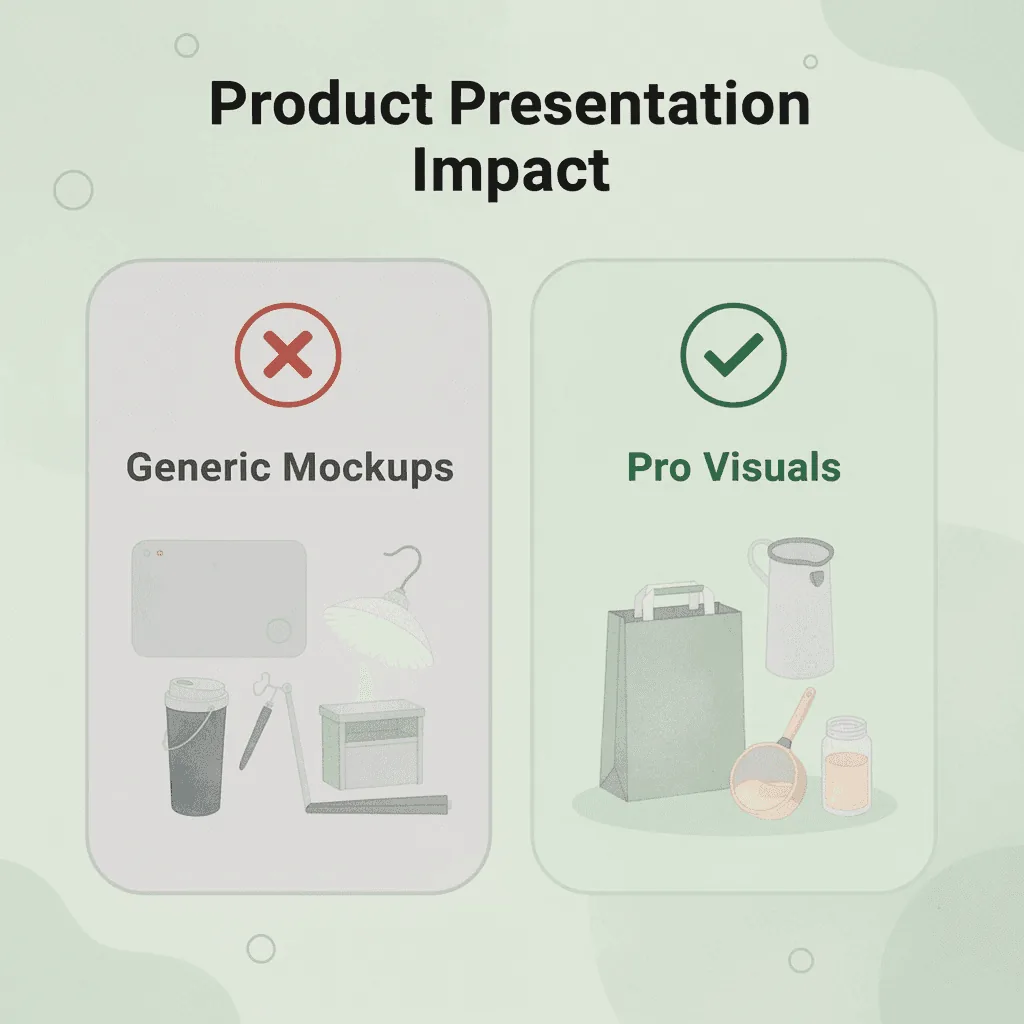
Caspa helps ecommerce brands create professional-quality visuals without the cost and complexity of traditional product photography. Instead of relying on generic marketplace mockups or expensive photoshoots, our platform lets you produce high-quality marketing assets from a single place — saving you significant time and budget.
💡 Tip: Replace costly photoshoots with Caspa's platform to produce polished, conversion-ready visuals at a fraction of the effort.
✅ Best Practice: Use a centralized visual creation platform like Caspa to maintain brand consistency across every product listing and marketing channel.
| Traditional Approach | With Caspa |
|---|---|
| Expensive photoshoots | Cost-effective visual creation |
| Generic marketplace mockups | Custom, branded product visuals |
| Multiple tools and vendors | Single platform for all assets |
| Slow turnaround times | Fast, scalable production |
How does Caspa's AI product photography make products look more polished?
One of Caspa's biggest advantages is its AI product photography capabilities. The platform helps brands generate ultrarealistic product images that look professionally photographed, enabling products to appear more polished across ecommerce stores, marketplaces, advertisements, and social media.
For businesses that want to showcase products in realistic settings, Caspa supports human models. Rather than displaying products on plain mockups, our solution lets brands create lifestyle images that help customers visualize products being worn or used in everyday situations. These visuals add context, create stronger emotional connections, and elevate the perceived value of the product.
Can Caspa improve the product photos a brand already has?
Caspa is equally valuable for businesses that already have product photos. Rather than replacing current assets, our background removal and AI-powered editing tools help brands enhance them. Background removal creates clean, consistent product images, while image upscaling improves quality for websites, marketplaces, and marketing campaigns.
The platform enables brands to generate custom stock images that align with their visual identity. Rather than relying on generic assets that competitors may use, businesses can create original imagery that reinforces their branding and makes their products more distinctive.
How does Caspa streamline the full creative workflow for ecommerce brands?
Caspa brings all of these tools together into one complete studio workflow. Product photography, image editing, background replacement, upscaling, and custom visual creation happen in one place. This eliminates the need to switch between multiple software tools, coordinate photographers and models, or manage lengthy editing processes.
The result is a faster, more efficient creative workflow that lets ecommerce brands create professional visuals at scale while spending less time and money. How products look often decides whether customers will buy them.
Get Product Photos that Increase Your Sales Today
Upload your existing product photos to Caspa to create professional lifestyle images, branded visuals, and marketing materials without needing a studio, photographer, or editing software. This is the fastest, most accessible way to transform ordinary product shots into high-converting visuals that compete at the highest level.
💡 Tip: You don't need a big budget or a professional camera to get started. Upload what you have and let Caspa do the heavy lifting.
This access closes the visual gap between independent sellers and larger brands. Whether you sell on Shopify, Amazon, Etsy, or multiple platforms, professional visuals are no longer something that costs too much money.
"Professional product photography is no longer a luxury reserved for big brands — tools like Caspa put studio-quality visuals within reach of every independent seller, on any platform." — Industry Insight
🎯 Key Point: Visual quality directly impacts sales — sellers who upgrade to professional imagery consistently see stronger click-through rates, higher conversions, and greater customer trust across every major platform.
| Platform | Why Visuals Matter |
|---|---|
| Shopify | First impressions drive purchase decisions |
| Amazon | High-quality images improve search ranking & conversions |
| Etsy | Lifestyle photos build emotional connection with buyers |
⚠️ Warning: Listing with low-quality or unbranded product photos puts you at an immediate disadvantage — shoppers will always choose the listing that looks more professional.
Related Reading
- Flat Lay Product Photography
- Redbubble Vs Printful
- Placeit Pricing
- Advertising Product Photography
- Luxury Product Photography
- Printful Vs Gelato
- Ai Product Photo Editor
- T-shirt Mockup Ai
- Amazon Ai Tools
- Ai Fashion Model Generator
- Ai Clothing Mockup Generator
- Ai Product Video Maker
- Placeit Alternative
- Ai Clothing Model Generator
- Best Background For Product Photography
- Teespring Vs Printful
- Teespring Alternatives
- Printify Vs Gelato
- Amazon Merch On Demand
- Merch On Demand
- Ecommerce Product Video