
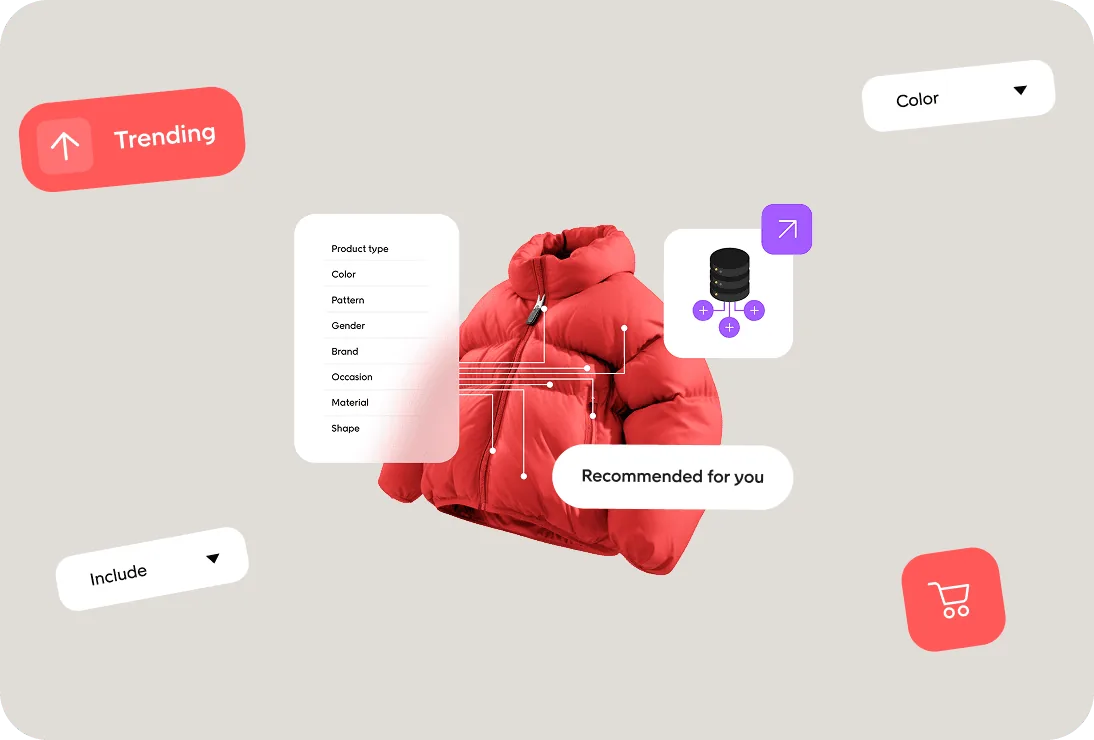
A shopper lands on an online store and decides within seconds whether to stay or leave. That judgment is shaped almost entirely by visuals, from how products are displayed to how images guide the eye toward a purchase. Ecommerce product photography and visual merchandising work together to create a browsing experience that builds trust and moves customers closer to making a purchase.
Getting that experience right does not require a large budget or a complicated production process. Clear, compelling images improve product presentation, strengthen brand identity, and reduce hesitation at the point of purchase. Caspa gives online sellers a faster, more accessible way to create standout product photography.
Table of Contents
- Why Visual Merchandising Matters More Than Ever in Ecommerce
- What Is Visual Merchandising in Ecommerce?
- The Key Elements of Effective Ecommerce Visual Merchandising
- Common Visual Merchandising Mistakes That Hurt Ecommerce Sales
- 7 Best Practices for Improving Ecommerce Visual Merchandising
- How Caspa Helps Ecommerce Brands Create Better Visual Merchandising at Scale
- Get Product Photos that Increase Your Sales Today
Summary
- Visual appearance is the dominant factor in online purchase decisions, with 93% of consumers citing it as the key deciding factor, according to Counter Intelligence Merchandising. This dynamic is unique to ecommerce, where shoppers cannot touch, lift, or test a product before buying. Every image on a product page either closes the gap between digital browsing and physical confidence or it widens it.
- Image quality does not just affect aesthetics; it directly affects visibility. Products with high-quality images receive 94% more views than those without high-quality images, according to Conferenzia World's 2025 retail and visual merchandising research. That gap means polished photography is not a finishing touch but a prerequisite for being seen in the first place, especially in crowded category pages where shoppers make split-second judgments.
- Inconsistency across a product catalog quietly erodes shopper trust even when individual images are technically acceptable. When lighting, backgrounds, and editing styles vary from product to product, the catalog feels assembled rather than curated. Shoppers pick up on this mismatch even without being able to name it, resulting in reduced overall confidence in the brand.
- Missing context around a product is one of the most consistent conversion killers in ecommerce. A single studio shot communicates color and shape but leaves questions about scale, fit, and real-world use unanswered. Those unanswered questions lead to hesitation, and hesitation leads to cart abandonment, particularly in categories like furniture, apparel, and accessories, where spatial or physical context matters most.
- Mobile optimization has moved from a secondary concern to a primary one, with mobile devices generating approximately 78% of global ecommerce website traffic in the first quarter of 2025, according to Statista. Visual merchandising strategies built around desktop experiences routinely underperform on mobile if images load slowly, zoom functions fail on touchscreens, or gallery layouts create friction. Shoppers who cannot easily explore a product on a phone rarely return for a second look.
- Products presented with 3D and AR experiences see up to 40% lower return rates, according to Modelry's ecommerce research, pointing to a broader principle: when shoppers can fully understand a product before purchasing, they make more informed decisions and experience less post-purchase regret. Interactive and contextual visual formats reduce uncertainty in ways that static images alone cannot.
- Product photography addresses this by giving ecommerce teams a way to close the gap between having a product ready to sell and having the visual assets needed to sell it well, across formats, contexts, and catalog scales.
Why Visual Merchandising Matters More Than Ever in Ecommerce
When shoppers walk into a physical store, they can pick up a product and decide in seconds whether it belongs in their life. Online, shoppers arrive at a product page and make the same judgment using only what they see on a screen. Product images, layout, and visual context become the entire sensory experience, making visual quality a conversion variable, not a design preference.
"Online shoppers make the same split-second purchasing judgment as in-store customers — using only what they see on a screen."
🎯 Key Point: In ecommerce, visual presentation is the product experience. There is no shelf to touch, no associate to ask. What shoppers see is all they get.

According to Counter Intelligence Merchandising, 93% of consumers consider visual appearance the key deciding factor in a purchasing decision. This is about trust. Sharp, well-lit, intentional product images signal credibility. Rushed or inconsistent visuals create doubt — and doubt does not convert.
| Visual Quality Signal | Shopper Response |
|---|---|
| Sharp, well-lit images | Builds trust and credibility |
| Inconsistent or rushed visuals | Creates doubt |
| Intentional layout and context | Drives conversion |
🔑 Takeaway: 93% is not a marginal stat — it means visual appearance outranks price, reviews, and brand name as the #1 purchase trigger. Every low-quality image is a direct threat to your conversion rate.
⚠️ Warning: Treating product photography as a cost to minimize rather than a revenue driver is one of the most common — and most expensive — mistakes in ecommerce.
Why do so many ecommerce brands still treat photography as an afterthought?
Research from UX Matters found that 90% of online buyers consider product photo quality extremely important. Yet many ecommerce brands treat photography as a production task rather than a strategic one, scheduling shoots around budget cycles and accepting whatever images result from a single session.
Most ecommerce teams handle product imagery through traditional photography workflows: studio bookings, freelance photographers, post-production editing, and seasonal reshoots, which can take weeks and cost thousands of dollars per product line. As catalogs grow and marketplaces demand more visual formats, the process strains. Platforms like Caspa generate ultra-realistic product images, lifestyle visuals, and infographics without a studio, reducing production costs by up to 10x and cutting timelines from weeks to hours.
How does strong visual merchandising become a durable competitive advantage?
Global ecommerce continues to grow, and as more brands compete for the same search results and category pages, visual differentiation becomes one of the few levers a brand can control. Price can be matched. Shipping speeds converge. A product page that presents items across multiple contexts, with diverse models, clear infographics, and consistent brand styling, is harder to replicate at scale. Visual merchandising, done well, is a durable advantage.
Effective visual merchandising online is not merely about beautiful photography. It requires building a complete visual system that guides shoppers from curiosity to confidence without friction. To build that system, you first need to understand what visual merchandising in ecommerce means, and the definition is more specific than most people expect.
Related Reading
- Ecommerce Product Photography
- Ai Tools for E-commerce
- Printify Alternatives
- Photoroom Pricing
- Ecommerce Product Photography Services
- E-commerce AI Tools
- Printful Alternatives
- Best Ai Tools for E-commerce
- How To Sell On Shopify
- Redbubble Alternatives
- Ecommerce Product Videos
- Automated Product Photography
- Ecommerce Product Imagery
- Visual Merchandising Ecommerce
- Photoroom Cost
What Is Visual Merchandising in Ecommerce?
Ecommerce visual merchandising is the practice of strategically presenting products online to attract attention, communicate value, and move shoppers toward a purchase decision. Where a physical retailer uses shelf placement, lighting, and window displays, an online store uses product photography, page layout, collection organization, and video. The goal is identical: reduce uncertainty and make buying feel like the obvious next step.
"The best ecommerce visual merchandising doesn't just show a product — it eliminates doubt and makes the path to purchase feel effortless and inevitable."
💡 Example: Think of Amazon's product pages — multiple image angles, zoom functionality, and video demos are all deliberate visual merchandising decisions designed to replicate the in-store experience online.
| Physical Retail | Ecommerce Equivalent |
|---|---|
| Shelf placement | Page layout & product ranking |
| Window displays | Homepage hero banners |
| In-store lighting | Product photography & image quality |
| Product demos | Video & 360° imagery |
| Store layout | Collection & category organization |
🎯 Key Point: Visual merchandising is not just about aesthetics — it's a conversion tool that directly impacts whether a shopper buys or bounces.
⚠️ Warning: Ignoring visual merchandising principles online is the equivalent of a physical store with poor lighting and messy shelves — it actively drives customers away.

Why do product images carry so much responsibility in online retail?
The failure point is usually not product quality, but the gap between what a product is and what a shopper can perceive through a screen. Customers cannot pick up the item, feel the texture, or test the weight. Every visual element either closes that gap or widens it. Product images carry most of that responsibility—according to the Virto Commerce Blog, 67% of online shoppers say that product image quality is important when selecting and purchasing a product. That number reflects information needs, not aesthetics.
How do page design and lifestyle imagery work together as a system?
How you design your product page and organize your collection page affects how shoppers understand your products. A messy product page hides the information customers need to feel confident about buying. A well-organized collection page converts browsers into buyers by presenting relevant choices without friction. Lifestyle imagery answers "where does this fit in my life?" rather than "what does this look like?" These elements work together as a system.
What does visual inconsistency cost a brand across its catalog?
Most brands treat visual merchandising as one-time production choices, resulting in visual inconsistency that damages trust. Shoppers notice when product images look different across a catalog. Consistent photography style, color treatment, and layout signal that a brand is organized and reliable, directly affecting how shoppers judge the product itself.
How does modern tooling remove the bottleneck between product and presentation?
The traditional approach involves booking studios, coordinating photographers, waiting on post-production edits, and repeating the cycle each time inventory changes. As catalogs grow or seasonal updates accelerate, costs and lead times compound rapidly. Platforms like Caspa address this by generating ultra-realistic product images, lifestyle scenes with models across diverse ethnicities, infographics, and video content without a studio, cutting production costs significantly and eliminating the bottleneck between product launch and polished presentation.
Visual merchandising can increase sales by up to 30% when implemented effectively in ecommerce. This is a revenue decision, not a design investment. Every element of the visual experience, from the first thumbnail on a collection page to the final close-up shot on a product listing, either earns the sale or surrenders it to a competitor.
The Key Elements of Effective Ecommerce Visual Merchandising
Good ecommerce visual merchandising depends on several connected parts. Remove any one, and shoppers will fill in the gaps with doubt instead of confidence.
"Every element of your online store's visual presentation works together — weaken one link and the entire chain of trust breaks down." — Ecommerce UX Principle
🎯 Key Point: Ecommerce visual merchandising is not a single tactic — it's a system of interconnected elements that must work together to convert browsers into buyers.
💡 Tip: Audit your store by removing each visual element mentally — if shoppers would hesitate without it, that element is mission-critical to your merchandising strategy.
| Visual Merchandising Element | What Breaks Without It |
|---|---|
| Product Photography | Shoppers lose visual confidence in the product |
| Consistent Branding | Trust and brand recognition collapse |
| Clear Navigation & Layout | Discovery and flow are disrupted |
| Social Proof Visuals | Doubt replaces confidence at the decision point |

High-quality images are the non-negotiable foundation
According to Conferenzia World's 2025 retail and visual merchandising research, products with high-quality images get 94% more views than those without. Strong product photography must be clear, feature accurate color correction, and work on both desktop and mobile devices: a main image that blurs on phone screens fails half your audience. Every image is a silent salesperson that either captures attention or loses it in the first three seconds.
Why do multiple angles answer the questions shoppers cannot ask out loud?
A shopper buying a leather wallet online cannot feel the stitching or check how many cards fit inside. Multiple product angles—close-ups of hardware, interior shots, and scale references—replace hands-on investigation with visual proof. Each additional relevant view removes one more reason to hesitate.
How does rigid production scheduling limit a brand's ability to respond?
Most ecommerce teams handle lifestyle photography as a separate, occasional production, booking a studio shoot once per season and reusing assets until they go stale. This creates rigidity: brands cannot respond quickly to new products, trend shifts, or platform-specific needs when every image requires a two-week production cycle. Platforms like Caspa address this directly by generating ultra-realistic lifestyle and studio images at scale, including models across diverse ethnicities and multi-product compositions, without studio bookings or post-production editing.
Visual hierarchy shapes what shoppers notice first
How you arrange images on a collection or product page is a merchandising decision. Weak visual hierarchy causes excellent photography to lose impact because shoppers cannot quickly find what they need, creating friction that leads to exits. A well-structured product page guides the eye from the primary image to supporting angles to contextual lifestyle shots, mirroring how a shopper would examine a product in a physical store.
Why are static images no longer enough for online shoppers?
Conferenzia World reports that online shopping sites using product videos see a 144% increase in purchase intent. Static images fall short for categories where movement, texture, or functionality matter. Video and interactive content, including 360-degree views and zoom features, bridge the gap between browsing online and handling a product in person. Consistent branding across all materials—image editing style, color palette, and model selection—signals attention to detail. Knowing what works is not the same as knowing what quietly destroys a sale before it begins.
Common Visual Merchandising Mistakes That Hurt Ecommerce Sales
The most damaging visual merchandising mistakes in ecommerce are not big, obvious failures — they are small, consistent gaps that wear away shopper confidence one product page at a time.
"The most dangerous ecommerce mistakes are the ones you don't notice — silent conversion killers hiding in plain sight across every product page."
⚠️ Warning: Even a single recurring gap in your visual presentation — a low-quality image, a missing size guide, or inconsistent styling — can quietly erode trust and cost you significant revenue over time.
💡 Tip: Audit your product pages for small, repeatable issues first. Most stores lose sales not from one catastrophic flaw, but from dozens of minor visual missteps compounding across their entire catalog.
| Mistake Type | Impact on Shopper | Risk Level |
|---|---|---|
| Low-quality product images | Destroys first impressions | 🔴 High |
| Inconsistent visual styling | Undermines brand credibility | 🔴 High |
| Missing contextual photos | Reduces purchase confidence | 🟠 Medium-High |
| Poor mobile image formatting | Breaks the browsing experience | 🔴 High |
When image quality signals product quality
Low-resolution photos tell shoppers something about the brand. When an image appears blurry, flat, or poorly lit, the shopper's brain doesn't separate "bad photo" from "bad product": the two collapse into a single impression. According to the One Door and GlobalData 2025 Visual Merchandising Report, poor visual presentation is one of the main reasons shoppers decide not to buy, both in stores and online.
Why does catalog inconsistency carry a hidden cost?
The same problem appears across growing online stores and large retailers selling multiple product categories: inconsistent product photography that accumulates over time. A product photographed in 2022 sits next to one shot last month, with different lighting, backgrounds, and editing styles. Shoppers notice this inconsistency even when they cannot articulate it. The result is a catalog that feels assembled rather than curated, which undermines the trust that visual merchandising should build.
How does visual debt compound as catalogs scale?
Most teams photograph new products as they arrive, using whoever is available, and fix inconsistencies later with editing. As catalogs grow to hundreds or thousands of products, this approach creates visual problems that accumulate quickly. AI-powered product photography platforms like Caspa generate consistent, studio-quality images across entire catalogs without the variables introduced by rotating photographers, studios, and editing teams. Brands using this approach report reducing production costs by up to 10x while maintaining a coherent visual identity at scale.
Missing context is a silent conversion killer
The problem usually isn't the product picture itself, but the lack of information around it. PPMS Field Marketing's analysis of common merchandising missteps shows that limited product images and poor context are among the most common mistakes that hurt retail sales. Shoppers need to understand scale, fit, and real-world use before purchasing. A single studio photo of a backpack shows its color but not whether it fits a 15-inch laptop, how it looks on a person's back, or whether the straps can be adjusted. Unanswered questions breed doubt, which prevents purchase.
When slow production creates visible gaps
Brands with great products but slow image production face operational challenges: seasonal campaigns stall, new products launch with placeholder images, and product pages go live incomplete. Incomplete visual merchandising signals to shoppers that the brand isn't ready, giving them no reason to wait. Brands that close the gap between what they sell and how they show it treat visual content production as a continuous operation, not a periodic project.
7 Best Practices for Improving Ecommerce Visual Merchandising
Visual merchandising needs regular updates as customer preferences, products available, design styles, and shopping behaviors evolve. Failing to adapt means falling behind competitors who refine their online storefronts to match shifting customer expectations.
"The most effective ecommerce brands treat visual merchandising as a living strategy: one that evolves alongside customer preferences, market trends, and product offerings." — Ecommerce Best Practices
💡 Tip: Schedule regular audits of your visual merchandising strategy at least quarterly to ensure your store stays aligned with current design trends and buyer expectations.

The most successful online stores treat visual merchandising as an important tool to help people buy. By following key best practices, brands can create shopping experiences that build trust, help customers understand products better, and significantly increase sales.
🎯 Key Point: Visual merchandising is not just about aesthetics — it's a conversion driver that directly impacts your bottom line.
| Best Practice Area | Primary Benefit | Impact On Store |
|---|---|---|
| Product Photography | Builds immediate trust | Higher conversion rates |
| Consistent Design Style | Reinforces brand identity | Stronger customer loyalty |
| Strategic Layout | Guides buying decisions | Increased average order value |
| Regular Updates | Matches customer expectations | Improved repeat visits |
| Clear Navigation | Reduces friction | Lower bounce rates |
✅ Best Practice: Treat every visual element of your store — from product images to page layout — as a deliberate decision that either builds or breaks buyer confidence.
1. Build Consistent Visual Standards First
Consistency is the foundation of effective visual merchandising. When product photos vary in lighting, backgrounds, dimensions, or editing styles, the shopping experience feels disjointed. These inconsistencies reduce conversions by affecting how customers perceive your professionalism and trustworthiness. Establish clear visual guidelines for photography style, formatting, background colors, and aspect ratios. Consistent visual identity makes products easier to browse while strengthening brand recognition across the customer journey.
2. Combine Studio Shots with Lifestyle Imagery
Studio photography showcases product details effectively, but lifestyle imagery adds important context by showing products in realistic environments or on real people. This helps shoppers visualize ownership and understand use cases that studio shots cannot communicate. A sofa in a furnished living room demonstrates scale and style more effectively than a standalone image. Clothing on models shows fit and real-world appearance. The strongest product pages combine both studio images for clarity and lifestyle images for connection.
3. Test Visuals the Way You Test Prices
Testing different visual approaches reveals opportunities to improve engagement that assumptions cannot. Experiment with primary product images, lifestyle photography placement, image ordering, video positioning, and collection page layouts to discover what drives shoppers toward purchase. According to the Wedia Group's product merchandising research, products with high-quality images see a 94% higher conversion rate than those without. This gap stems from brands that continuously test, refine, and optimize their visual presentation, rather than treating a product launch as the finish line.
4. Optimize Every Visual for Mobile First
Mobile devices generated approximately 78% of global ecommerce website traffic in the first quarter of 2025, making mobile optimization essential. Visual merchandising that looks great on desktop can perform poorly on smartphones when images are difficult to view or layouts create friction. Check how product image galleries, videos, and collection pages display across different screen sizes. Image load speed, zoom functionality on touchscreens, and the number of images appearing above the fold on mobile devices all matter. Shoppers who cannot easily explore products on mobile rarely return.
5. Refresh Creative Assets on a Schedule
Visual merchandising that remains unchanged signals neglect and costs brands customer engagement. Consumer expectations shift, seasonal trends create natural opportunities to present products differently, and a store that looks identical year after year loses relevance. Regularly updating imagery doesn't require a complete redesign. Targeted updates to hero images, lifestyle photography, and seasonal collection visuals maintain momentum and engagement without disrupting what already works.
6. Scale Content Production Without Losing Quality
As product catalogs grow, maintaining a consistent look becomes harder. Most brands hire additional photographers or work with outside agencies, delaying launches due to production timelines.
What is the real cost of slow visual asset production?
The real cost is the gap between when a product is ready to sell and when it has the necessary visual assets. Teams find that AI product photography platforms like Caspa address this directly, generating ultra-realistic product images, lifestyle scenes, and infographics without studio overhead. This cuts production costs by up to 10x and saves more than 20 hours per week, enabling brands to maintain visual standards across hundreds of SKUs without overwhelming creative teams or stalling launches.
7. Treat Visuals as a Conversion Tool, Not Decoration
Every image, layout decision, and design element directly influences whether a shopper feels confident enough to buy. Visual merchandising is a conversion optimization strategy with measurable outcomes, not a design exercise.
Why do strong visuals reduce returns and build purchase confidence?
Modelry's ecommerce visual merchandising research shows that products with 3D and AR experiences see up to 40% lower return rates. When shoppers understand a product before purchasing, they make better choices and experience fewer regrets. Strong visuals reduce purchase uncertainty, build trust, and increase conversion rates.
How should brands approach visual merchandising as an ongoing discipline?
The brands that succeed treat visual merchandising as an ongoing operational discipline, not a one-time creative project. Every product page is a sales conversation, and the images do most of the talking.
Related Reading
- How To Sell On Amazon
- Printful Vs Printify
- Shopify Vs Woocommerce
- Ai For Product Photos
- Ai Generated Product Images
- Ai Product Photo Generator
- Amazon Vs Shopify
- Ai Product Video Generator
- Ai For Ecommerce
- Ai Clothing Model
- Shopify Vs Bigcommerce
- Printful Review
- Shopify Vs Amazon
- Ai Model For Clothing
- Ai Product Video
- Ai Fashion Model
- Printful Pricing
- Best Amazon Seller Tools
How Caspa Helps Ecommerce Brands Create Better Visual Merchandising at Scale
Creating effective visual merchandising is one thing. Maintaining it across dozens, hundreds, or even thousands of products is another challenge entirely. As ecommerce businesses grow, the demand for high-quality visual content grows with them—new product launches, seasonal campaigns, collection updates, promotional assets, lifestyle imagery, and marketplace listings all require a steady stream of professional visuals. Traditional photography workflows quickly become expensive, time-consuming, and difficult to scale.
"As ecommerce catalogs expand, the need for consistent, high-quality visual content scales with them—making traditional photography workflows one of the biggest bottlenecks to sustainable growth."
| Visual Content Need | Traditional Photography Challenge | At Scale |
|---|---|---|
| New product launches | Requires studio booking & coordination | Delays time-to-market |
| Seasonal campaigns | Full reshoot often needed | High recurring cost |
| Collection updates | Inconsistent style across shoots | Brand inconsistency |
| Marketplace listings | Platform-specific formatting | Multiplies workload |
| Lifestyle imagery | Models, locations, editors required | Exponential expense |
🎯 Key Point: The real bottleneck for scaling ecommerce brands isn't product quality—it's the inability to produce professional visuals fast enough to keep up with catalog growth.
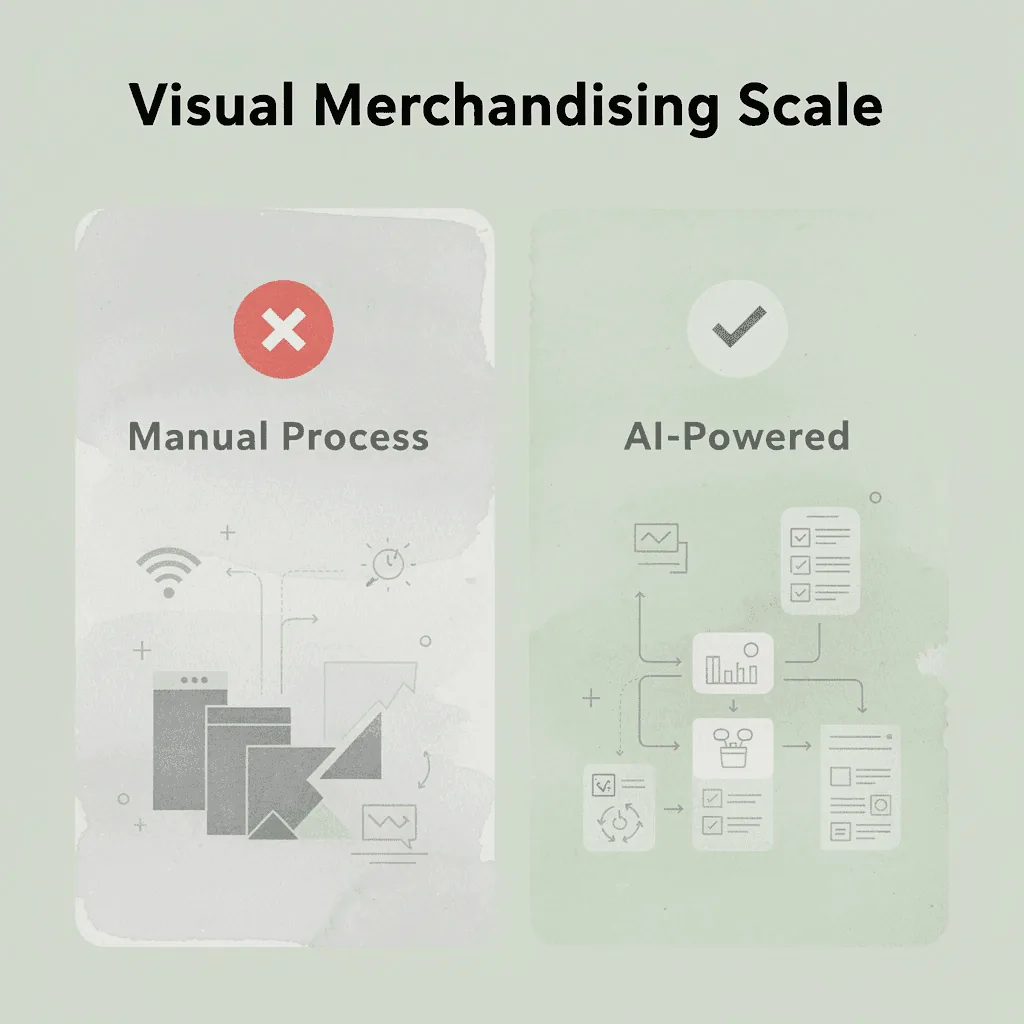
Caspa uses AI-powered product photography to help businesses create professional product imagery without coordinating photographers, studios, models, locations, and editing teams. Our solution enables brands to generate high-quality visuals much faster while maintaining consistency across their catalogs, turning what was once a weeks-long production process into something far more efficient and scalable.
💡 Tip: Brands that maintain visual consistency across their full catalog see stronger customer trust and higher conversion rates, making a scalable imagery solution a direct revenue lever, not just a production convenience.
✅ Best Practice: Use AI-powered photography tools like Caspa early in your product launch workflow so that marketplace listings, promotional assets, and lifestyle imagery are all ready before go-live, eliminating costly last-minute delays.
How does Caspa help brands create lifestyle and contextual imagery?
One of Caspa's standout abilities is creating realistic product images featuring human models. This allows ecommerce brands to generate lifestyle and contextual imagery that helps shoppers picture products in real-world situations, whether they are selling clothes, accessories, beauty products, or other consumer goods. Caspa also simplifies background replacement and customization. Brands can quickly change product images for different campaigns, audiences, seasons, or marketplaces without scheduling new photo shoots. This flexibility keeps product pages, collection pages, advertising campaigns, and social media content fresh.
What editing and enhancement tools does Caspa offer?
Beyond image generation, Caspa improves existing visual assets through editing and enhancement tools. The platform helps businesses refine product photos, improve image quality, remove distractions, and create polished presentations without relying on multiple software platforms or specialized expertise. Caspa's upscaling capabilities enable brands to achieve studio-quality outputs from existing images, which is particularly valuable for older catalogs where product photography may no longer meet current standards.
Caspa enables custom stock photography generation, giving brands access to unique visuals tailored to their products and brand identity. Rather than relying on generic stock photos that competitors may also use, the solution helps businesses create imagery that feels distinctive and aligned with their merchandising strategy.
How does Caspa support scale, cost reduction, and higher conversion rates?
For growing ecommerce companies, speed and scalability are critical. Caspa accelerates content creation across large product catalogs, enabling faster product launches, listing refreshes, merchandising tests, and visual content updates. By reducing dependence on photographers, models, studios, and multiple editing tools, brands lower production costs while increasing output.
Better visual merchandising leads to better shopping experiences. When products are presented clearly and professionally, shoppers understand features more easily, develop greater confidence in the brand, and make purchasing decisions with less hesitation. Strong visuals reduce uncertainty, strengthen trust, and support higher conversion rates. As ecommerce catalogs expand and competition intensifies, Caspa enables brands to create and maintain high-quality visual merchandising across growing product lines without the traditional costs and operational challenges of large-scale content production.
Get Product Photos that Increase Your Sales Today
Caspa lets ecommerce brands create studio-quality product photos, lifestyle imagery, and model shots across diverse representations without the overhead that has historically made visual merchandising inaccessible to smaller teams.
"Since product pages do most of the selling, the images carrying that conversation deserve serious attention." — Caspa
💡 Tip: You don't need a big-budget photo studio to compete with major retailers. Caspa delivers professional-grade visuals at a fraction of the traditional cost.

Since product pages do most of the selling, the images carrying that conversation deserve serious attention. Our Caspa platform can transform existing product photos, expand your catalog with on-brand visuals, and give shoppers the clarity they need to buy with confidence.
🎯 Key Point: High-quality product imagery is not a luxury — it's the single most powerful driver of shopper trust and purchase decisions on any ecommerce page.
| Caspa Capability | Business Impact |
|---|---|
| Studio-quality product photos | Builds immediate shopper trust |
| Lifestyle imagery | Drives emotional connection to products |
| Diverse model shots | Expands audience reach and inclusivity |
| On-brand visual expansion | Grows your catalog without extra shoots |
⚠️ Warning: Relying on low-quality or inconsistent product images is one of the fastest ways to lose a sale — shoppers will always choose a competitor with clearer, more compelling visuals.
Related Reading
- Redbubble Vs Printful
- Ai Product Video Maker
- Advertising Product Photography
- Printify Vs Gelato
- Placeit Pricing
- Placeit Alternative
- Teespring Vs Printful
- Luxury Product Photography
- Teespring Alternatives
- Ecommerce Product Video
- Flat Lay Product Photography
- Ai Clothing Model Generator
- Merch On Demand
- Best Background For Product Photography
- Ai Fashion Model Generator
- Amazon Merch On Demand
- Ai Clothing Mockup Generator
- Ai Product Photo Editor
- T-shirt Mockup Ai
- Printful Vs Gelato
- Amazon Ai Tools