
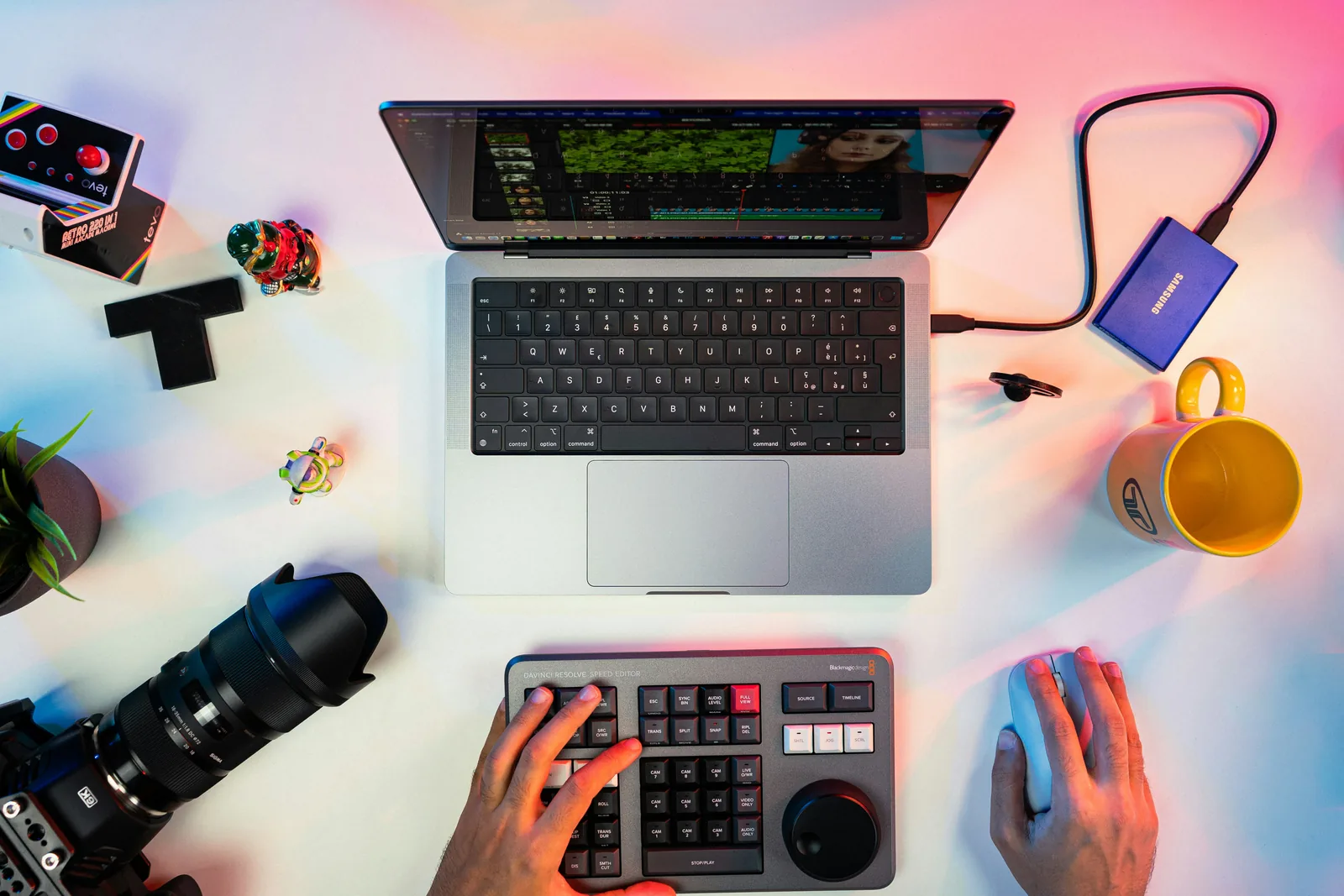
Selling on Amazon means competing with thousands of listings, and product images often determine whether a shopper clicks or keeps scrolling. The gap between a poorly lit snapshot and a clean, professional shot directly impacts conversions. Strong ecommerce product photography is not just about aesthetics; it is a practical sales tool.
Caspa gives sellers a straightforward way to create sharp, professional images without a full studio setup or a large budget. From main listing images to lifestyle and infographic-style visuals, the platform is built to help products stand out and give shoppers the confidence to buy. Sellers looking to upgrade their listings can get started with Caspa's product photography.
Table of Contents
- Why Amazon Product Photography Matters More Than Ever
- Why Many Amazon Sellers Struggle to Create Effective Images
- What Is Amazon Product Photography?
- What Makes Amazon Product Photography More Effective?
- Speed and Creative Testing Have Become Competitive Advantages
- How Caspa Helps Amazon Sellers Create Better Product Images Faster
- Get Product Photos that Increase Your Sales Today
Summary
- Visual appearance is the dominant factor in Amazon purchase decisions, before price, reviews, or copy. According to Squareshot's analysis, 93% of consumers cite visual appearance as the key deciding factor when making a purchase. This means a listing's images do most of the persuasion before a shopper reads a single word.
- Weak product images create a compounding disadvantage that extends beyond a missed click. Low click-through rates suppress organic rankings, reducing visibility and making every other optimization effort less effective. Sellers who treat photography as a one-time checkbox rather than a continuous asset tend to fall behind in ways that are difficult to reverse.
- Inaccurate images are a measurable business problem, not just a creative one. Amazon's own seller data show that 22% of online product returns are due to the product looking different in person than in the photos. Images that honestly represent scale, texture, and color prevent this problem before it damages seller metrics.
- The gap between technically correct images and high-performing ones comes down to specificity and context. Squareshot reports that products with high-quality images see up to a 58% increase in conversion rates, with quality defined by accuracy and relevance rather than resolution alone. Lifestyle images, in particular, shift a shopper from inspecting a product to imagining themselves using it, which actually drives purchasing decisions.
- Creative speed has become a structural competitive advantage on Amazon. Kantar's research found that creative quality drives 49% of advertising's sales ROI, meaning the image itself does nearly half the work regardless of bid or budget. Sellers who can generate and test new image variations quickly collect better data, recover from underperforming listings faster, and build a feedback loop that slower production workflows cannot match.
- Most sellers are not testing enough creative variations to know what actually converts. Only 1 in 5 Amazon sellers consistently meets Amazon's image quality requirements across all their listings, according to Analyzer.tools, which means the majority are starting from a deficit before a single shopper clicks. Sellers who treat image creation as a recurring process rather than a launch task are the ones building a durable advantage.
- Product photography addresses this directly by giving sellers the visual evidence shoppers need to make a confident buying decision, covering everything from the main search thumbnail to lifestyle context and A+ content assets.
Why Amazon Product Photography Matters More Than Ever
Selling on Amazon in 2025 is a visual contest decided in milliseconds. With nearly 2.5 million active sellers competing across hundreds of millions of product listings, the gap between a click and a scroll-past often comes down to a single image.
"With nearly 2.5 million active sellers on Amazon, the difference between a sale and a missed opportunity is decided by one image in a matter of milliseconds." — Amazon Marketplace, 2025
🎯 Key Point: In 2025, Amazon has evolved into a purely visual marketplace. Product photography is no longer optional; it's your #1 conversion tool.
💡 Tip: Before optimizing your price, title, or bullet points, audit your hero image first. It's the single highest-impact change you can make to your click-through rate.

Why does the main image decide whether shoppers click or scroll past?
According to Squareshot's analysis of the benefits of product photography, 93% of consumers say that how a product looks is the most important factor in their purchase decision. Your pricing strategy, keyword optimization, and review count matter less if the image doesn't compel clicks. The main listing image is your first opportunity to impress a potential buyer who has never encountered your brand and has twenty competing options open in other tabs.
Many sellers treat photography as an afterthought rather than a smart business choice. A dark, flat, or generic image signals a lack of effort, regardless of product quality. Since customers cannot pick up or feel the product's weight, your images must convey the physical experience they're missing.
How do weak visuals compound into bigger ranking and revenue problems?
Most sellers use supplier photos or phone snapshots because they're fast and free upfront. However, weak visuals create a compounding disadvantage: lower click-through rates suppress organic rankings, reduce visibility, and undermine all other optimization efforts. Platforms like Caspa address this directly, enabling sellers to produce ultra-realistic product images, lifestyle shots, and A+ content at scale without a studio, Photoshop, or lengthy back-and-forth.
Amazon's own seller data shows that 22% of online product returns occur because items look different in person than in photos. This photography accuracy problem is preventable. Images that honestly represent texture, scale, color, and context convert better and protect seller metrics by setting realistic expectations.
How do product images function as both advertising and evidence on Amazon?
Photography stopped being about branding the moment Amazon became a search engine. Your images serve two functions: advertising and proof. They must catch attention in crowded search results, build enough trust to earn a click, and answer the questions a shopper would ask while holding the product.
Why Many Amazon Sellers Struggle to Create Effective Images
The cost of getting this wrong is not abstract. Sellers who rely on supplier images or stretch a single hero shot across every listing slot are making a business mistake, not a creative one. Analyzer.tools reports that Amazon listings with high-quality images see up to 30% more conversions than those with low-quality images. That gap closes by solving the production problem underneath it.
"Amazon listings with high-quality images see up to 30% more conversions than those with low-quality images." — Analyzer.tools
⚠️ Warning: Relying on supplier-provided images or reusing a single hero shot across all listing slots isn't a minor oversight—it's a direct drag on your conversion rate that compounds with every impression.
🔑 Takeaway: A 30% conversion gap between high- and low-quality listings means the problem isn't design taste—it's a solvable production bottleneck costing sellers revenue daily.

Why do traditional photography workflows break down at scale?
Traditional photography workflows are where most sellers hit the wall first. A professional product shoot with studio, lighting, and post-production editing costs hundreds of dollars per image. Lifestyle shots with models and location scouting cost significantly more. For a seller managing twenty SKUs or launching new products every three months, the costs become prohibitive. The result: fewer images, less variety, and listings that resemble competitors' listings that use the same supplier photos.
The same issue appears in catalog management and new product launches: when content production is slow, everything downstream suffers. Sellers cannot test which infographic layout drives clicks, update A+ Content when customer questions reveal objections, or respond when competitors refresh their gallery. Speed is a creative advantage, and traditional workflows rarely provide it.
How does a fragmented toolset make the problem worse?
Most sellers use separate tools: one for background removal, another for text overlays, a third for resizing. The workflow feels manageable until the catalog grows or a deadline arrives. Platforms like Caspa consolidate this process, generating ultra-realistic product images, lifestyle scenes with AI human models, and A+ Content assets in a single workflow, significantly reducing production time without requiring Photoshop skills or a photography budget.
Why does the creative testing problem compound everything?
The creative testing problem makes everything harder. Winning images are rarely obvious before launch. A close-up texture shot might work better than a full-product hero image, and a lifestyle scene with a person using the product might convert better than one without. According to Analyzer.tools, only 1 in 5 Amazon sellers consistently meet Amazon's image quality requirements across all listings, meaning most sellers start from behind before a single shopper clicks.
What holds most sellers back is a structural mismatch between what effective Amazon product photography requires and what traditional production methods can deliver at scale.
Related Reading
- Ecommerce Product Photography
- Ai Tools for E-commerce
- Printify Alternatives
- Photoroom Pricing
- Ecommerce Product Photography Services
- E-commerce AI Tools
- Printful Alternatives
- Best Ai Tools for E-commerce
- How To Sell On Shopify
- Redbubble Alternatives
- Ecommerce Product Videos
- Automated Product Photography
- Ecommerce Product Imagery
- Visual Merchandising Ecommerce
- Photoroom Cost
What Is Amazon Product Photography?
Amazon product photography is a coordinated set of photos, each designed to attract clicks, build trust, answer questions, and remove objections between a shopper and the buy button.
💡 Definition: Amazon product photography is a strategic system where every image has a job: attract, inform, reassure, and convert.

"75% of online shoppers rely on product photos when deciding on a purchase." — Electro IQ, 2025
According to Electro IQ's 2025 product photography research, 75% of online shoppers rely on product photos when deciding on a purchase. Most buying decisions are made visually, before the description is even read. The listing description, bullet points, and reviews confirm a decision that the images have already made.
🎯 Key Point: Your images close the sale — the copy just backs them up. Shoppers see before they read, which makes photography your #1 conversion lever.
The image types that do real work
Each image format serves a different purpose. The main image, shot against pure white at high resolution, appears in search results and determines whether your listing earns a click in under two seconds. White background images must communicate quality instantly, as shoppers compare six or seven thumbnails simultaneously. Infographic images explain dimensions, materials, key features, and usage scenarios without text. Lifestyle images place the product in real context so shoppers can envision themselves using it.
Which image formats move buyers past basic product shots?
Most sellers stick with white background shots. Electro IQ's 2025 data shows that 95.6% of Amazon sellers now use model photography, moving the category past basic product isolation. Human model images are especially important in apparel, beauty, and fitness categories, where fit, scale, and real-world appearance matter more than written descriptions. Close-up detail shots and multi-angle views reduce uncertainty by showing exactly what arrives in the box.
How do modern tools solve the multi-SKU production bottleneck?
Making product images the traditional way—booking a studio, hiring a photographer, finding models, and planning multiple days—works fine for one product. But with twenty or fifty different products to photograph, it becomes problematic. Platforms like Caspa can create realistic product photos, lifestyle images, infographics, and A+ content visuals with different human models, eliminating the need for studio sessions. The result is a complete set of listing images for significantly less money and time than traditional methods.
What does A+ Content add for registered brands?
For brands enrolled in Amazon Brand Registry, A+ Content adds another layer. Comparison charts, branded banners, and narrative image modules tell a fuller brand story beyond the standard gallery. These conversion assets differentiate products in categories where multiple listings look nearly identical.
Knowing what each image type does is only the beginning. The real question is what separates a technically correct image from one that consistently performs better.
What Makes Amazon Product Photography More Effective?
Good Amazon product photography answers questions before shoppers even think to ask them. Every image should make people want to click, build trust, explain the product, or remove a reason to hesitate. Images that do none of those things actually cost you sales.
"Every image should serve a purpose: drive the click, build trust, clarify the product, or eliminate doubt. Anything less is a missed opportunity."
💡 Tip: Before finalizing your image lineup, ask yourself — does each photo answer a question, overcome an objection, or trigger desire? If it doesn't do at least one of those things, cut it.
| Image Purpose | What It Achieves |
|---|---|
| Hero shot | Drives the initial click |
| Lifestyle image | Builds trust and emotional connection |
| Detail/close-up | Explains the product clearly |
| Infographic overlay | Removes a reason to hesitate |
🎯 Key Point: Every single image in your listing must earn its place — purposeless photos don't just waste space; they actively dilute buyer confidence and hurt your conversion rate.

Why does specificity outperform technically correct images?
Clarity and context are foundational, but the gap between technically correct images and high-performing ones comes down to specificity. A white background shot showing a water bottle is correct. One showing the exact lid mechanism, measurement markings, and leak-proof seal is useful. Shoppers reward specificity because it reduces the mental effort required to make a decision.
Scale and proportion matter more than most sellers expect. According to Squareshot's product photography research, 22% of returns occur because the product looks different than the photos. Showing a product next to a familiar object—a hand, coffee mug, or sheet of paper—sets accurate expectations better than any dimension listed in bullet points.
How should lifestyle photography connect with buyers?
Most sellers treat lifestyle photography as decoration. But lifestyle images should show the product being used in a setting that resembles your buyer's real life. A yoga mat photographed with someone who looks like your actual customer using it sends a clear message: this product is for them. It creates an emotional connection that moves people from browsing to buying.
What does image quality actually mean for conversion rates?
Squareshot reports that products with high-quality images see up to a 58% increase in conversion rates, where "quality" means accuracy, relevance, and emotional connection. Many sellers invest in expensive photography yet underperform because images look polished but fail to convert. As catalog sizes grow and competition intensifies, shooting once or twice yearly leads to a steady sales decline. Platforms like Caspa let sellers generate ultra-realistic product photos, lifestyle scenes with diverse models, and infographic images on demand, enabling listings to be updated and tested without traditional shoot costs.
How does mobile context change the way images should be designed?
Mobile context changes image design rules in ways that are easy to underestimate. On desktop, a shopper can view full-size images with readable text and fine detail. On mobile, that same image compresses into a thumbnail, rendering dense infographics illegible. Mobile-optimized images focus on one clear focal point, large, readable text, and strong contrast. Designing for desktop without considering mobile leaves conversions on the table.
Speed and Creative Testing Have Become Competitive Advantages
The other half is knowing how fast you can move once you do.
"Speed is the silent competitive advantage: the sellers who iterate fastest win the long game." — Growth Marketing Principle
🎯 Key Point: Knowing what works is only valuable if you can act on it quickly. Speed of execution is the real differentiator.

Speed on Amazon means learning what works and changing course quickly. Most sellers treat image creation as a one-time event: shoot, upload, move on. Top performers treat it as continuous, running creative variations like split tests on ad copy.
| Approach | Seller Type | Outcome |
|---|---|---|
| Shoot, upload, move on | Average Seller | Stagnant performance |
| Continuous creative testing | Top Performer | Ongoing optimization |
| Running split tests on variations | Elite Seller | Maximum conversion gains |
💡 Tip: Treat every product image as a hypothesis — test it, measure it, and never stop iterating.
⚠️ Warning: Treating image creation as a one-time event is one of the most costly mistakes a seller can make — your competitors are already testing against you.
Why does creative quality drive so much of your sales ROI?
Kantar's research on creative performance found that creative quality drives 49% of advertising's sales ROI. The image itself, not the bid or budget, accounts for nearly half the impact. Sellers who treat their hero image as fixed forfeit that ROI daily.
How does slow iteration compound losses in a crowded marketplace?
The traditional approach—commission a shoot, wait two to three weeks, upload, hope for conversions—breaks down when 900,000 new sellers joined Amazon in 2024 alone. As categories fill and competition sharpens, slow iteration compounds. A listing running underperforming images for six weeks misses conversions and trains the algorithm on weak click-through data that takes time to recover from. Platforms like Caspa compress weeks of production into hours by generating product photos, infographics, and lifestyle images with AI, making testing a habit rather than a project.
Why does iteration speed change the math?
The difference between sellers who grow and those who stagnate lies not in capital but in creative autonomy. TriNet's research on small business agility reports that small businesses can make decisions five times faster than large enterprises. A solo seller who creates a new lifestyle scene, changes a hero image, and tests a new infographic in a single afternoon gains a feedback loop that larger competitors operating on quarterly photoshoot budgets cannot match.
Why does creative volume matter across every channel?
Testing extends beyond the listing itself. Sponsored Products campaigns, Amazon Posts, social ads, and email sequences each require different visual assets. Brands that rely on traditional photo shoots often reuse the same three or four images across channels, limiting creative freshness and reducing data quality. When you can produce contextual product images, model shots, and A+ content variations quickly and affordably, each channel receives assets built for its specific format.
How does moving toward clarity open the competitive gap?
The sellers who figure this out stop asking which image is best before launch. They publish their strongest hypothesis and build a testing rhythm that answers the question with real data. That shift from planning toward certainty to moving toward clarity is where the competitive gap opens up.
Related Reading
- How To Sell On Amazon
- Printful Vs Printify
- Shopify Vs Woocommerce
- Shopify Vs Bigcommerce
- Ai For Ecommerce
- Ai For Product Photos
- Ai Generated Product Images
- Ai Product Photo Generator
- Amazon Vs Shopify
- Ai Product Video Generator
- Ai Clothing Model
- Printful Review
- Shopify Vs Amazon
- Ai Model For Clothing
- Ai Product Video
- Ai Fashion Model
- Printful Pricing
- Best Amazon Seller Tools
How Caspa Helps Amazon Sellers Create Better Product Images Faster
Many sellers ask: "How do we create professional Amazon images without spending a lot of money on photographers, studios, and multiple editing tools?" Caspa answers this challenge directly. Traditional product photography costs hundreds—sometimes thousands—of dollars per shoot, creating a major barrier for sellers who need to move fast and stay cost-efficient.
"The biggest bottleneck for Amazon sellers isn't the product — it's the imagery. Without high-quality visuals, even great products get overlooked." — E-Commerce Industry Insight
💡 Tip: Caspa eliminates the need for expensive photographers, studios, and multiple editing tools, putting professional-grade image creation directly in your hands.
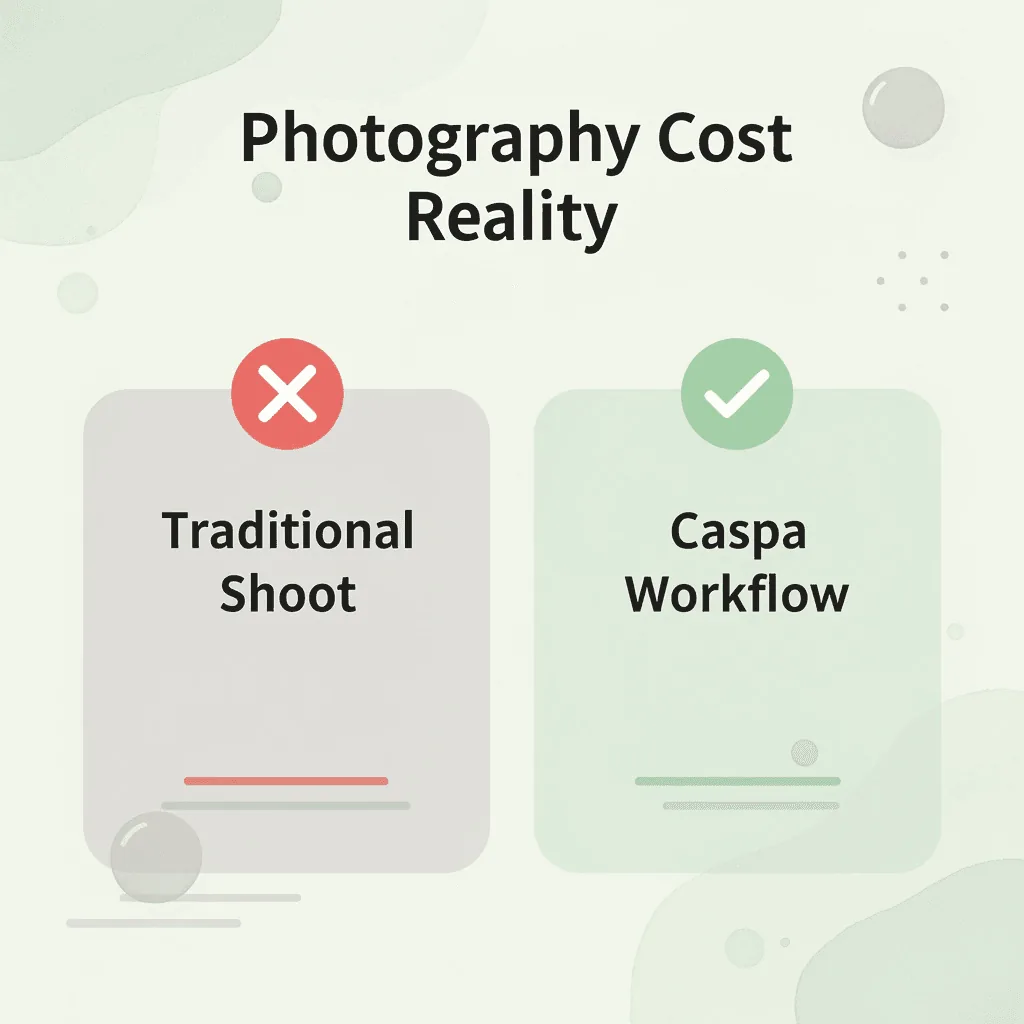
Amazon sellers face constant pressure to launch products quickly, refresh listings, and stay ahead of competitors. Traditional photography workflows — organizing photoshoots, hiring models, juggling editing tools — slow down launches and drain resources. Every day a listing sits with weak visuals is a day of lost conversions and missed revenue.
✅ Best Practice: Streamline your image creation process by replacing fragmented traditional workflows with an all-in-one solution that keeps your listings fresh and your launch timelines tight.
| Traditional Workflow | With Caspa |
|---|---|
| Expensive photographer & studio fees | Cost-effective AI-powered image generation |
| Slow turnaround from shoot to edit | Fast image creation in minutes |
| Multiple disconnected editing tools | Single all-in-one platform |
| Rigid scheduling around photoshoots | On-demand creation anytime |
⚠️ Warning: Sticking to outdated photography workflows doesn't just cost money — it costs critical launch momentum and hands your competitors a head start.
What does Caspa's all-in-one platform actually do for sellers?
Caspa is an AI-powered, all-in-one product photography platform that lets sellers create realistic product shots with human models and lifestyle scenes in seconds. This enables compelling Amazon listings that help customers visualize products and feel confident buying.
Caspa maximizes existing images by removing backgrounds to create Amazon-compliant white backgrounds and upscaling them to improve listing and ad quality. Beyond basic editing, it provides custom stock photography and complete studio editing: infographics, lifestyle images, social media creatives, and promotional visuals, all without switching platforms.
How does a streamlined workflow save sellers time and money?
This streamlined workflow eliminates the need for separate photographers, models, editing software, and stock libraries, allowing sellers to focus on launching products, testing creative concepts, and optimizing performance rather than managing tools and production schedules.
Caspa increases creative output while lowering production costs. Faster image generation lets sellers experiment with more backgrounds, angles, and lifestyle scenes without expensive reshoots, enabling greater flexibility, faster iteration, and improved conversion opportunities.
In an increasingly competitive marketplace, speed and creativity are advantages. Caspa helps Amazon sellers achieve both.
Get Product Photos that Increase Your Sales Today
Closing the gap between where your listings are and where they could be requires faster creative production, a testing rhythm, and images built specifically for your customer, not borrowed from a supplier catalog.
"The difference between a high-converting listing and a stagnant one often comes down to a single factor: images built for your customer, not copied from a supplier sheet."
🎯 Key Point: Generic supplier images signal low effort to shoppers. Custom, customer-focused visuals drive click-through rates and conversion lifts.
⚠️ Warning: Relying on supplier catalog photos means you're showing the same images as every competitor, giving shoppers no reason to choose you.

Caspa transforms existing product images into multiple Amazon-ready assets — including lifestyle scenes with human models, custom backgrounds, and infographic overlays — without Photoshop or a photographer. Our platform helps sellers report up to 40% more conversions and over 20 hours saved per week, enabling faster testing and optimization cycles.
| Asset Type | What It Does |
|---|---|
| Lifestyle Scenes with Human Models | Builds emotional connection and shows real-world use |
| Custom Backgrounds | Matches your brand aesthetic and stands out in search |
| Infographic Overlays | Communicates key features at a glance |
"Sellers using Caspa report up to 40% more conversions and over 20 hours saved per week — without a photographer or Photoshop."
🔑 Takeaway: 40% more conversions isn't a minor tweak — it's a fundamental shift in listing performance. Combined with 20+ hours saved weekly, Caspa makes rapid creative testing accessible to every seller.
💡 Tip: Use Caspa to generate multiple image variations quickly, then A/B test them to find your highest-converting asset — turning creative production into a competitive advantage.
Related Reading
- Ai Clothing Model Generator
- Flat Lay Product Photography
- Advertising Product Photography
- Ai Product Photo Editor
- Merch On Demand
- Amazon Merch On Demand
- Best Background For Product Photography
- Amazon Ai Tools
- Teespring Vs Printful
- Teespring Alternatives
- Placeit Alternative
- T-shirt Mockup Ai
- Ai Clothing Mockup Generator
- Redbubble Vs Printful
- Printful Vs Gelato
- Ai Product Video Maker
- Ecommerce Product Video
- Ai Fashion Model Generator
- Printify Vs Gelato
- Luxury Product Photography
- Placeit Pricing