
Best AI Product Video Generator for Faster Ecommerce Content

Static images alone no longer hold a shopper's attention long enough to drive a sale. Brands selling online are under real pressure to produce video content at scale, yet most lack the budget or bandwidth for traditional production. AI product video generators solve that problem by turning existing product images into polished, scroll-stopping video assets in a fraction of the time.
Caspa is built for exactly this workflow, letting sellers go from still shots to finished video content without juggling multiple tools or hiring a production crew. The platform streamlines every step, from sourcing strong visuals to generating video-ready assets that perform across storefronts and social ads alike. Teams looking to strengthen their entire visual pipeline can start with Caspa's product photography tools as a natural first step.
Table of Contents
Why Product Video Creation Has Become a Bottleneck for Ecommerce Brands
The Biggest Limitations of Traditional Product Video Production
What Makes an AI Product Video Generator Different?
How AI Product Video Generators Help Brands Scale Content Faster
What to Look for in an AI Product Video Generator
How Caspa Helps Ecommerce Brands Create Product Videos and Visuals at Scale
Get Product Videos that Increase Your Sales Today
Summary
Video has become the primary format consumers use to evaluate products before purchasing, and the gap between what brands need to produce and what traditional methods can support is growing. According to api.video, product videos can increase purchases by up to 144%, which means the pressure to create more of them is directly tied to revenue outcomes, not just content preferences.
Traditional video production costs average between $10,000 and $50,000 per video, according to Chapla Studio's 2025 video marketing analysis. For brands managing deep catalogs across multiple platforms, that price range makes consistent video coverage financially impossible. Rev's Video Marketing Statistics report found that 30% of marketers cite cost as the primary reason they don't create more video content, confirming the bottleneck is structural rather than creative.
The volume demands of modern ecommerce exceed what traditional production timelines can accommodate. A single product launch may require separate assets for a product page, Meta ads, TikTok, and marketplace listings simultaneously. Teams often report needing 10 to 30 hook variations per product to stay competitive in paid media, a requirement that was never built into the way professional video production works.
AI video generation has crossed a quality threshold that makes it viable for mainstream ecommerce advertising. Human detection accuracy for AI-generated video now sits at just 50.7%, according to Digital Applied's AI Video Generation Statistics 2026, meaning viewers are essentially guessing when they try to identify AI content. The visual gap between AI-generated and traditionally produced video is no longer significant enough to affect performance in most advertising contexts.
Marketing teams that use AI video generators create 11 times as much content as those relying on traditional production methods, according to ngram.com. That multiplier changes what is operationally possible for catalog-heavy brands, shifting the bottleneck away from production capacity and toward creative strategy. Brands that can continuously refresh ad creative with new hooks and formats hold a measurable advantage in performance marketing, where creative fatigue sets in within days on high-spend campaigns.
Format control and editing capability matter as much as generation quality when evaluating AI video tools. AI video tools can reduce production costs by up to 80%, according to ngram.com, but that efficiency only holds when format customization, pacing, and editing happen inside the same platform. Exporting raw clips into a separate editing stack quietly erodes the time savings the tool was supposed to deliver, and any tool that requires a specialist to operate becomes a dependency rather than a scalable solution.
Product photography addresses this by serving as the source material for AI-generated video, meaning brands with existing image libraries already have the foundation for a full video content pipeline without booking studios or coordinating new production.
Why Product Video Creation Has Become a Bottleneck for Ecommerce Brands
Video is no longer a nice extra in ecommerce. It is the main way customers evaluate products before they buy, and brands without consistent production are falling behind.
"Video is the primary lens through which modern shoppers assess products — brands without a consistent production pipeline are competing with one hand tied behind their back."
🚨 Warning: Brands that treat product video as an afterthought are losing ground to competitors who have made it a core operational priority.
A single product launch today might require a product page video, multiple social formats, paid ad variations for Meta and TikTok, and marketplace content — all at the same time. According to api.video, product videos can increase purchases by up to 144%, tying production pressure directly to revenue. When each new SKU multiplies content requirements, the math becomes brutal fast.
Content Type | Required Per Launch |
|---|---|
Product page video | 1–2 hero videos |
Social formats | Multiple cuts per platform |
Paid ad variations | Meta + TikTok variants |
Marketplace content | Amazon, retail listings |
🔑 Takeaway: A 144% lift in purchases means every missed or delayed video is direct lost revenue — production bottlenecks are not a creative problem; they are a business problem.
💡 Key Point: When each new SKU demands 4–6 unique content assets, even a catalog of 10 products can balloon into 40–60 individual videos — making scalable production essential, not optional.
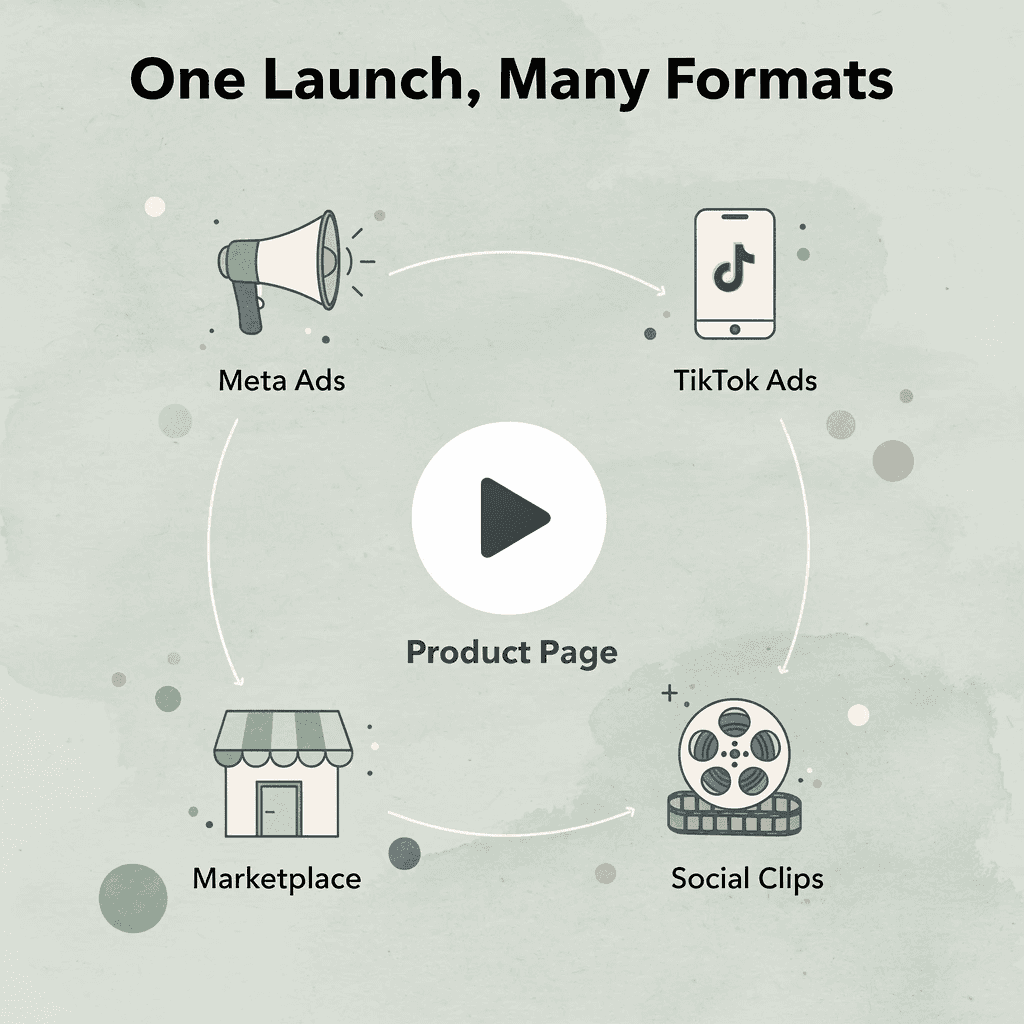
Why does volume break traditional video production workflows?
The failure point is usually volume, not quality. Traditional production was built around single projects with defined timelines, never designed to support fifty products each needing five to ten creative variations refreshed regularly. Teams often report needing ten to thirty hook variations per product to stay competitive in paid media. Briefing creators, shipping products, waiting on edits, and cycling through approvals for each variation reveal a structural mismatch between how video has always been made and what ecommerce now demands.
Most brands prioritize top sellers and leave the rest underserved. Every product without a video represents a lost conversion opportunity. Platforms like Caspa are changing product photography by generating video assets directly from product images, collapsing multi-day production cycles into minutes without a studio, crew, or shipping.
How does platform fragmentation multiply creative production demands?
Performance marketing has made creative experimentation non-negotiable. According to api.video, 73% of consumers are more likely to buy after watching a product video, but only if the right video reaches the right audience. What works on a product page rarely translates to TikTok; what converts on Instagram may fail on Google. Every platform, audience segment, and campaign angle demands its own creative treatment, multiplying production demands beyond what traditional methods can handle cost-effectively. The gap between what brands need and what traditional production can deliver is widening because consumer expectations keep rising while production timelines and costs stay fixed.
Related Reading
The Biggest Limitations of Traditional Product Video Production
Traditional product video production was built for a fundamentally different time in business. The limits on cost, speed, and growing your business show that how professionals make videos doesn't match how modern online shopping works.
"The way traditional video production operates — slow, expensive, and difficult to scale — is fundamentally misaligned with the demands of modern ecommerce." — Industry Insight
🚨 Warning: Sticking with traditional production methods means falling behind competitors who are already leveraging faster, more scalable video solutions.
💡 Key Takeaway: The three core limitations of traditional video production — cost, speed, and scalability — aren't minor inconveniences. They are critical barriers to growth in today's ecommerce landscape.
Limitation | Traditional Production | Modern Expectation |
|---|---|---|
Cost | High agency & studio fees | Affordable, flexible pricing |
Speed | Weeks or months per video | Fast turnaround, on demand |
Scalability | Difficult to scale output | Easily scaled across the catalog |

How much does traditional video production actually cost brands?
According to Chapla Studio's 2025 video marketing analysis, traditional video production costs average between $10,000 and $50,000 per video. A brand with fifty products needing two video assets each faces a production budget rivaling a small company's entire annual marketing spend. The failure point is usually not a single expensive project but the buildup of smaller compromises: skipping video for lower-margin products, reusing outdated assets, or launching new products with static images because the production calendar is full. These quietly erode conversion performance across the catalog.
Why do so many brands publish less video than they should?
Rev's Video Marketing Statistics report found that 30% of marketers don't create more video content because it costs too much. The gap between what brands should produce and what they publish is driven by budget limits, not creative constraints. Platforms like Caspa offer a different approach. Rather than scheduling shoots and coordinating production teams for each product or campaign, the platform generates product videos directly from existing product images, reducing the cycle from weeks to seconds. For brands with large catalogs, this shift in production costs expands what is financially feasible.
Why Speed Compounds the Problem
Traditional production pipelines require products to be shipped, staged, filmed, edited, reviewed, and approved before assets go live. When launches depend on production calendars rather than business decisions, speed-to-market suffers. A competitor publishing video content within hours of a trend shift gains a real advantage over one waiting three weeks for post-production. The real surprise is not how expensive or slow traditional production is, but how fundamentally the entire model must change for those constraints to disappear.
What Makes an AI Product Video Generator Different?
AI product video generators work fundamentally differently. Instead of starting with what you still need to build, creation starts with what you already have: turning your existing assets into polished, publish-ready video content in a fraction of the time.

"The most powerful shift in AI video creation is the move from building from scratch to building from what exists — your products, your images, your brand." — AI Commerce Insight
🎯 Key Point: AI product video generators eliminate the traditional blank canvas problem — no crew, no studio, no starting from zero.
💡 Tip: If you already have product photos or a URL, you have everything you need to generate a professional-quality video instantly.
Traditional Video Production | AI Product Video Generator |
|---|---|
Starts with what you need to build | Starts with what you already have |
Requires crew, equipment & time | Requires only existing product assets |
Hours or days to produce | Minutes to generate |
High upfront cost | Fraction of the traditional budget |
How does the input model change what video production requires?
The critical difference lies in the input. Traditional video production requires new raw material at each stage: new footage, new sessions, new rounds of editing. AI video generation inverts that logic. Existing product images become source material for animated scenes, simulated camera movement, dynamic backgrounds, and format-ready outputs. A brand with a product photography library already possesses the foundation for a full video content pipeline. This shift—from production as a project to content generation as a repeatable process—changes the economics.
Most teams handle video testing by producing a handful of assets and running them until performance data forces a creative change. When the winning hook requires six variations to find, and each variation costs days of production time, the ceiling becomes a wall. Platforms like Caspa address this by generating video assets, infographics, and product visuals from existing imagery, compressing what used to be a multi-day production cycle into a single session without a studio, crew, or editing queue.
Can viewers actually tell the difference between AI and traditional video?
Many people think AI-generated video looks obviously fake. According to Digital Applied's AI Video Generation Statistics 2026, humans identify AI-generated video correctly only 50.7 percent of the time, meaning viewers are essentially guessing when spotting AI content. The difference between AI-generated and traditionally produced video is no longer discernible for most ecommerce advertising situations. Digital Applied reports that Kling AI has reached a $500 million annual revenue run rate, demonstrating that businesses are adopting this technology at scale. Platforms do not generate such revenue without solving genuine production problems for their users.
What does this mean for ecommerce brands competing on video volume?
What this creates for ecommerce brands is a practical reframe: the question is no longer whether you can afford to produce video content, but whether your current workflow lets you produce enough of it, fast enough, across enough SKUs to compete. A solo operator on Shopify and an established brand on Amazon now have access to the same generation speed and output quality.
How AI Product Video Generators Help Brands Scale Content Faster
When content demands double, most teams don't double their output. They ration it, pick products most likely to sell, and skip video for the rest. That's a capacity problem, and AI product video generators solve it structurally.
"When content demands double, most teams ration output — skipping video for the majority of products. AI product video generators exist to solve this structurally, not incrementally." — Core Industry Insight
🚨 Warning: Rationing video content means your lowest-priority products get zero visual representation — costing you conversions you never even see.
💡 Tip: AI product video generators don't just speed up production — they eliminate the triage process entirely, so every product gets a fighting chance on your storefront.
Traditional Approach | AI-Powered Approach |
|---|---|
Ration video to top sellers only | Scale video across the entire catalog |
Teams bottlenecked by capacity limits | Automated output removes the ceiling |
Most products get no video coverage | Every product gets visual content |
Slow, manual production cycles | Structural, repeatable content generation |
How much more content can teams produce with AI video tools?
According to ngram.com, marketing teams using AI video generators create 11 times as much content as those using traditional production methods—the difference between covering 10 products and 110 in the same timeframe with the same team. For brands managing large product collections across Amazon, Shopify, and social channels, that multiplier transforms what's operationally possible.
What happens when video production can't keep up with catalog depth?
The common approach prioritizes hero products with video, while other items use static images. As product catalogs expand and platform algorithms favor video, this gap becomes costly. Brands like Caspa address this by generating video assets from existing product photography, shifting the bottleneck from production capacity to creative strategy.
How does scaling creative output change paid advertising results?
The compounding effect shows up most clearly in paid advertising. Performance marketers know that creative fatigue sets in fast, sometimes within days, on high-spend campaigns. The brands winning on Meta and TikTok aren't necessarily those with the biggest budgets—they're the ones continuously refreshing creative with new hooks, formats, and angles. AI-generated video makes rapid iteration practical by eliminating the production restart that normally accompanies each new variation. Teams that once tested two or three ad creatives per month can now test dozens, each optimized for a different audience segment or placement format.
How does AI-generated video make localization more practical?
Localization works similarly. A product selling across multiple regions often needs different visual framing, pacing, or background context to resonate with each audience. Traditional production requires separate budgets for each regional adaptation. With AI-generated video, the same product assets can be transformed into multiple variations quickly, without rebuilding the entire process.
What strategic shift happens when video content is no longer scarce?
The real shift isn't speed—it's what speed makes possible. When video content is no longer hard to find, brands stop making careful decisions about where to use it. Every product in the catalog becomes an option. Every campaign gets proper visual support. Every platform gets content that fits its format. That's a significant strategic advantage, and the brands that recognize it early will be hardest to catch later.
Related Reading
Ai For Product Photos
Ai Generated Product Images
Ai Product Photo Generator
Amazon Vs Shopify
Ai Product Video Generator
Ai Clothing Model
Printful Review
Shopify Vs Amazon
Ai Model For Clothing
Ai Product Video
Ai Fashion Model
Printful Pricing
Best Amazon Seller Tools
What to Look for in an AI Product Video Generator
Not all AI product video generators are created equal. The best ones support your entire content workflow—from raw asset to platform-ready output—without requiring multiple separate tools.
"The strongest AI video tools eliminate tool-switching entirely, covering every stage from raw asset ingestion to final platform-ready output in a single unified workflow."
🎯 Key Point: When evaluating an AI product video generator, the most critical question is whether it supports your end-to-end content workflow—not just one isolated step.
💡 Tip: Avoid tools that only handle one part of the process. The best platforms eliminate tool-switching by covering every production stage—from first asset upload to final export—saving you significant time and reducing costly errors.
Feature to Look For | Why It Matters |
|---|---|
End-to-end workflow support | Eliminates the need for multiple separate tools |
Raw asset compatibility | Handles inputs without manual pre-processing |
Platform-ready output formats | Delivers content directly optimized for each channel |
Integrated editing tools | Keeps your entire production process in one place |

Realistic rendering and human model integration
The foundation is product accuracy. If the tool cannot faithfully reproduce a product's texture, color, or material finish, the resulting video works against you. Customers who receive something that looks different from what they saw in the ad quickly lose trust. Look for a generator that maintains visual consistency across angles, scenes, and lighting conditions and can place the product in context with realistic human models. Apparel, accessories, and lifestyle products perform better when shoppers can see them in use, at scale, on a realistic person.
Why does format control matter after generation?
The failure point is usually not generation—it's what happens after. Teams generate a clip only to discover it's the wrong aspect ratio for Meta, too short for pre-roll ads, or missing captions for organic social. According to ngram.com, AI video tools can reduce production costs by up to 80%, but that efficiency materializes only when the tool handles format customization, pacing, and editing within the same platform. Exporting raw clips into a separate editing stack erodes the promised time savings.
How does an all-in-one editing workflow reduce friction?
Most teams accept whatever output the generator produces and adapt around it. Every manual adjustment adds friction, slows iteration, and pulls creative decisions away from strategy. Platforms like Caspa address this by combining AI video generation with image enhancement, background replacement, and editing in a single workflow, so assets emerge ready to deploy.
The case for image and video in one place
Ngram.com reports that 91% of businesses use video as a marketing tool; the competition comes from brands that use it more effectively. A generator that only makes video leaves your team using separate tools for product photography, marketplace images, and advertising creatives. That fragmentation adds cost and coordination work across every campaign. Brands that pull ahead treat visual content as a unified system rather than as isolated outputs.
Ease of use is a strategic variable
A tool requiring a specialist to operate is a dependency, not a scalable solution. The best AI product video generators enable founders, ecommerce managers, and small marketing teams to create professional-quality content without production experience. When the tool is difficult to use, adoption suffers; it is reserved only for the most important products, and the catalog coverage problem persists. Choosing the right platform is only half the decision. The more interesting question is what you do with it once the content starts moving.
How Caspa Helps Ecommerce Brands Create Product Videos and Visuals at Scale
Most ecommerce brands understand that product videos help customers make critical buying decisions, that social media needs fresh creative content, and that high-quality images directly influence conversions. The challenge isn't recognizing that content matters — it's producing enough of it. Traditional workflows force brands to choose between quality, speed, and cost. Creating product videos requires expensive studio shoots. Updating photography involves coordinating photographers, models, editors, and multiple software tools. As content demands grow, so do production costs and operational complexity.
"The bottleneck for most ecommerce brands isn't knowing what content they need — it's having the infrastructure, budget, and bandwidth to produce it consistently at scale."
⚠️ Warning: Relying on traditional production workflows — studios, freelancers, and disconnected tools — makes it nearly impossible to keep up with the volume of content modern ecommerce demands without ballooning costs.
Production Challenge | Traditional Workflow | AI-Powered Platform |
|---|---|---|
Product Videos | Studio shoots, high cost | Generated at scale, on-demand |
Photography Updates | Photographers + models | AI visuals, no coordination needed |
Editing & Post-Production | Multiple software tools | Unified, single platform |
Speed to Publish | Days to weeks | Significantly faster turnaround |
Scalability | Costs rise with volume | Scales without proportional cost |
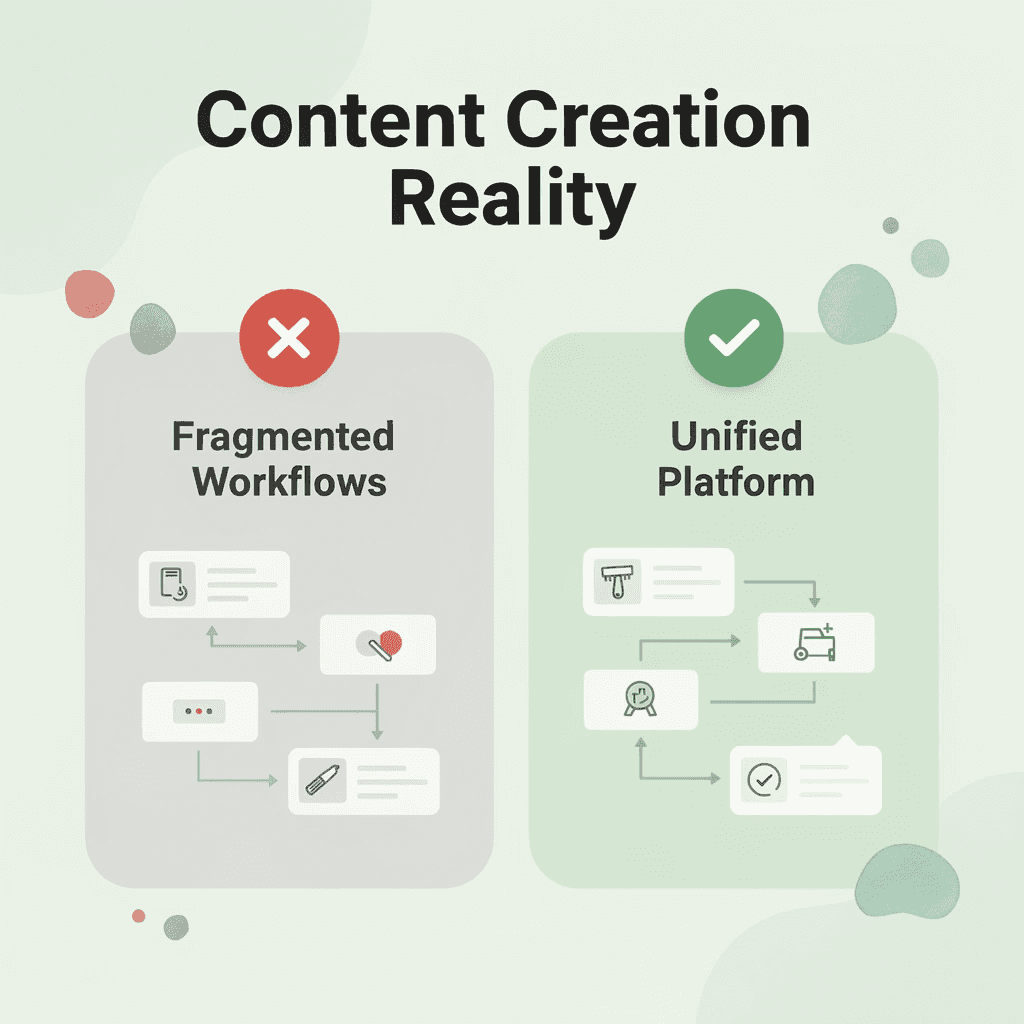
Caspa solves this by offering a single AI-powered platform to create both product videos and visuals at scale, eliminating the fragmented, costly workflows that hold ecommerce brands back.
🎯 Key Point: Instead of juggling studios, photographers, and multiple editing tools, brands can consolidate their entire visual content operation into one platform, producing more content faster at a fraction of the traditional cost.
💡 Tip: If your brand struggles to keep creative content fresh across social media, product pages, and ads, an AI-powered solution like Caspa offers the most efficient path to solving your content volume problem without sacrificing quality.
How does Caspa simplify video and image production for ecommerce?
Caspa makes video production easier by helping brands create product-focused content faster than traditional methods. This allows companies to quickly produce assets for advertising campaigns, product launches, social media, and storefronts without scheduling new photo shoots. Caspa lets brands create professional product images without expensive studios or lengthy photoshoots, which is especially helpful for growing brands managing large product catalogs on limited creative budgets.
How does Caspa help brands create lifestyle and model visuals?
Many products sell better when customers see them in real situations. Caspa allows brands to create realistic images featuring human models, helping shoppers visualize how products look and fit into everyday life. Instead of booking models and coordinating schedules, brands can generate lifestyle images directly on the platform.
How does Caspa help brands adapt and enhance existing content?
Not every asset needs to be created from scratch. Caspa helps brands improve existing content by removing or replacing backgrounds, updating environments, refining images, and creating variations from existing assets. This allows businesses to adapt content for different channels and campaigns without repeating the entire production process. Visual quality impacts how products are perceived. Caspa includes enhancement and upscaling capabilities that improve resolution, sharpen details, and create more polished assets, particularly useful for older product photos or assets reused across multiple channels.
How does Caspa support the full ecommerce content workflow from one platform?
Caspa supports every stage of the ecommerce workflow: new product launches, paid advertising, social media, product pages, marketplace listings, promotional campaigns, and catalog updates. Teams manage all visual production from one centralized platform rather than creating separate workflows for each content type.
Many ecommerce brands rely on multiple tools for photography, editing, background removal, enhancement, lifestyle content, and video production. Managing separate platforms increases costs, slows production, and creates unnecessary complexity. Caspa consolidates these capabilities, helping brands streamline content creation while reducing dependence on external photographers, editors, agencies, and creative software.
The challenge isn't knowing that video content works—it's producing enough high-quality content to support every product, campaign, and channel without letting creative production consume time, budget, and resources. Caspa solves this by giving ecommerce brands a faster, more scalable way to create the product videos and visuals modern commerce demands.
Get Product Videos that Increase Your Sales Today
Caspa creates AI-powered product photos, videos, lifestyle images, and marketing-ready content from a single platform. You don't need to book studios, hire models, or juggle multiple tools. Our platform lets you get your first project ready faster than waiting for changes from a single round of traditional production.
"You don't need studios, models, or multiple tools — Caspa delivers AI-powered, marketing-ready content from a single platform, faster than traditional production." — Caspa
🎯 Key Point: Caspa replaces your entire content production stack — studios, models, and editing tools — with one streamlined AI platform.
Traditional Production | Caspa AI Platform |
|---|---|
Book studios & models | No booking required |
Multiple tools & vendors | One unified platform |
Slow revision cycles | Faster first project delivery |
High overhead costs | Marketing-ready content instantly |

Speed lets you cover more products, test more formats, and launch more campaigns with images that get results, completing your entire content strategy.
💡 Tip: Use Caspa to test multiple content formats across your product catalog simultaneously. The faster your launch cycle, the more data you have to optimize campaign performance.
✅ Best Practice: Don't limit Caspa to a single product. The real competitive advantage comes from scaling AI-generated content across your full product range to maximize sales impact.
Related Reading
T-shirt Mockup Ai
Printify Vs Gelato
Teespring Alternatives
Ai Clothing Mockup Generator
Merch On Demand
Placeit Alternative
Luxury Product Photography
Printful Vs Gelato
Best Ai For Clothing Brands
Advertising Product Photography
Ai Fashion Model Generator
Ecommerce Product Video
Best Background For Product Photography
Ai Clothing Model Generator
Ai Product Photo Editor
Amazon Merch On Demand
Placeit Pricing
Flat Lay Product Photography
Ai Product Video Maker
Redbubble Vs Printful
Teespring Vs Printful
Amazon Ai Tools