

Choosing between Shopify and Amazon is one of the most consequential decisions an online seller can make. Shopify offers full brand control and a customizable storefront, while Amazon provides immediate access to millions of shoppers under strict platform rules. Both have real advantages, and the right choice depends on business goals, budget, and how much creative freedom matters.
Product visuals factor into that decision more than most sellers realize. Amazon enforces rigid image requirements, while Shopify gives brands the freedom to present products however they choose. Either way, strong imagery drives conversions, and tools like Caspa make it easier to produce platform-ready product photography without the cost or complexity of a traditional shoot.
Table of Contents
- Shopify Vs Amazon: Why Most Sellers Compare the Wrong Things
- The Appeal of Amazon, and Why So Many Sellers Start There
- Why More Brands Eventually Move Toward Shopify
- The Real Growth Challenge Both Platforms Share
- What Winning Brands Do Differently
- How Caspa Helps Shopify and Amazon Sellers Create Better-Converting Visuals
- Get Product Photos that Increase Your Sales Today
Summary
- Sellers comparing Shopify and Amazon typically focus on fees, traffic volume, and time to first sale, but those metrics measure the cost of entry rather than the cost of staying. The structural difference is more fundamental: Amazon is a marketplace built for discovery and transaction speed, while Shopify is infrastructure built for brand ownership and customer relationship development. That distinction, invisible in year one, becomes the defining factor in whether a business scales or stays dependent.
- Amazon's built-in audience is real, but access to that audience is not the same as owning a relationship with it. When a customer buys through Amazon, the confirmation email, the review request, and the next product recommendation all belong to Amazon, not the seller. The customer remembers the platform, not the brand. On Shopify, where merchants have collectively generated over $700 billion in sales, every transaction directly builds familiarity with the business, and that compounding effect is what separates growing brands from those that remain marketplace-dependent.
- Customer data is one of the most overlooked advantages of owning a direct storefront. On a marketplace, purchase data stays with the platform. On Shopify, which powers over 4.6 million live websites worldwide, that data accumulates with the seller, enabling audience segmentation, personalized campaigns, and buying cycle predictions that marketplace sellers simply cannot replicate, regardless of sales volume.
- Amazon's scale is substantial, accounting for approximately 37.6% of all US ecommerce sales in the US, and more than 75,000 independent sellers surpassed $1 million in sales in 2024 alone, a 36% increase from the prior year. But operating inside a platform that controls that share of the market does not mean sellers control any of it. Referral fees ranging from 8% to 15% per sale, combined with algorithm-driven visibility, mean every conversion metric carries real financial weight.
- Visual content is the growth challenge both platforms share. Whether traffic arrives through an Amazon search or a Shopify paid ad, a shopper's decision to engage happens in under a second and is driven almost entirely by what the image communicates before any text is read. Sellers who invest in traffic acquisition but neglect visual presentation consistently underperform against competitors spending less on ads but more on how their products look. With over 9.7 million sellers on Amazon worldwide, that first impression is the primary competitive variable available to most independent operators.
- Winning brands treat visual content as infrastructure rather than a production task to complete before launch. According to Kantar's BRANDWEEK 2025 Report, leading brands balance consistency with bold change, use AI to scale creativity, and optimize for algorithmic discovery, patterns that show up clearly in how the best ecommerce sellers approach product imagery. Brands using current content strategies report 300% higher ROI, a gap that reflects not just what they publish but how quickly they identify what works and replace what does not.
- Product photography addresses this directly by compressing production timelines from weeks to hours, allowing sellers to generate multiple visual variations and test them across Amazon listings, Shopify storefronts, and paid social channels without the scheduling overhead or cost structure of traditional studio workflows.
Shopify Vs Amazon: Why Most Sellers Compare the Wrong Things
Sellers comparing Shopify and Amazon usually focus on monthly fees, transaction percentages, traffic volume, and time to first sale. These numbers seem important because they're easy to find, but they measure the cost of starting, not the cost of continuing.
⚠️ Warning: Optimizing for startup metrics like fees and traffic volume is one of the most common mistakes sellers make — it ignores the long-term structural costs that determine whether a business survives.
| Metric | What Sellers Compare | What Actually Matters |
|---|---|---|
| Fees | Monthly subscription cost | Total take rate over time |
| Traffic | Built-in audience size | Customer ownership & retention |
| Setup | Time to first sale | Cost of scaling sustainably |
| Revenue | Early transaction volume | Long-term margin and control |
"The real cost of a platform is never the entry price — it's the structural tax you pay on every sale, every customer, and every decision as you grow." — Caspa AI

The real comparison is about structure. Amazon is a marketplace built to help people find and buy products quickly. Shopify is infrastructure built for ownership and brand development. They solve different problems for different business models.
🔑 Takeaway: Choosing between Shopify and Amazon isn't about which platform is better: it's about which business model you're building. Marketplace dependency vs. brand ownership is the real decision.
💡 Tip: Before comparing fees or traffic, ask yourself one critical question: do you want to rent an audience or build one you own? Your answer should drive every platform decision.
What does Amazon's market dominance actually mean for your business?
According to Evolve Media Agency, Amazon accounts for approximately 37.6% of all US ecommerce sales. However, this describes Amazon's dominance as a platform, not yours within it. Selling inside a marketplace controlling 37.6% of US ecommerce means you're renting space under their rules, competing against their algorithm, and paying for visibility that was never yours.
How does customer ownership compound differently on each platform?
Most sellers overlook how this difference compounds over time. When a customer buys from you on Amazon, they remember Amazon. The confirmation email is from Amazon. The review request is from Amazon. The next recommendation is from Amazon and often shows a competitor. On Shopify, that same customer enters your world, sees your branding, receives your emails, and becomes familiar with your business specifically. That gap becomes the key difference between a business that grows and one that remains dependent.
Why does product presentation matter more than sellers realize?
The same pattern shows up in product presentation. On Amazon, where ProactiveAI Blog reports referral fees ranging from 8% to 15% per sale depending on category, every percentage point of conversion rate matters. On Shopify, where you control the full visual experience, imagery quality is often the single largest conversion lever. Tools like Caspa's AI product photography platform give sellers on both platforms a faster path to professional-grade visuals, cutting production timelines from weeks to hours. The businesses that grow sustainably are not the ones that chose the right platform, but rather the ones that understood what they were building before they chose where to build it.
The Appeal of Amazon, and Why So Many Sellers Start There
Amazon's appeal is designed to make selling feel simple, especially for those starting with just a product and hope. The platform offers built-in traffic, trusted infrastructure, and a ready-made customer base that would take years to build independently, making it the go-to launchpad for first-time sellers worldwide.
💡 Tip: If you're starting out, Amazon's ecosystem can reduce your time-to-first-sale compared to building a standalone storefront from scratch.

"More than 75,000 independent sellers made over $1 million in sales in 2025 — a 36% increase from 2024." — Amazon 2025 Small Business Empowerment Report
According to the Amazon 2025 Small Business Empowerment Report, more than 75,000 independent sellers made over $1 million in sales in 2025 — a 36% increase from 2024. This shows that the platform can genuinely help independent businesses achieve serious, scalable results that go far beyond side-hustle territory.
🔑 Takeaway: A 36% year-over-year jump in million-dollar sellers isn't a coincidence — it reflects how powerfully Amazon's reach can accelerate revenue growth for independent businesses willing to commit to the platform.
⚠️ Warning: While these numbers are impressive, they represent the top tier of sellers. Most new sellers face a steep learning curve before reaching anywhere near $1 million in annual revenue.
Why does Amazon remove so many barriers for new sellers?
The honest answer is friction reduction. Amazon removes three obstacles that stop most new sellers: traffic, trust, and logistics. Shoppers arrive wanting to buy. The platform's review system, buyer protections, and fast-shipping infrastructure build credibility that would otherwise take years to earn independently. Through FBA, sellers can hand off fulfillment entirely. For sellers with limited capital and no existing audience, that combination is hard to argue against.
How does product photography fit into a marketplace where every listing looks the same?
Most sellers handle product photography quickly and cheaply: a phone camera, white bedsheet, weekend hours. On a platform where customers cannot touch or test products, images do all the selling. Platforms like Caspa let sellers produce studio-quality visuals and A+ content without traditional shoot costs, which matters most when competing in a marketplace where every listing looks nearly identical.
The gap between access and ownership
A seller builds steady revenue on Amazon, optimizes listings, earns reviews, and grows a business. But the customer who bought last Tuesday doesn't know the brand name. She knows Amazon. If she wants to reorder, she'll search Amazon again rather than seek out the seller directly. That gap between accessing a customer and owning a relationship with that customer is where marketplace success and brand success diverge.
What does renting your revenue actually mean?
Amazon helps you find buyers but not keep them. The platform controls customer data, dictates communication methods, and sets rules for future contact. A seller who builds only within that system rents their revenue instead of growing it. Once that realization hits, sellers' thinking about platforms shifts, and their next question changes everything.
Related Reading
- Ecommerce Product Photography
- Ai Tools for E-commerce
- Printify Alternatives
- Photoroom Pricing
- Ecommerce Product Photography Services
- E-commerce AI Tools
- Printful Alternatives
- Best Ai Tools for E-commerce
- How To Sell On Shopify
- Redbubble Alternatives
- Ecommerce Product Videos
- Automated Product Photography
- Ecommerce Product Imagery
- Visual Merchandising Ecommerce
- Photoroom Cost
Why More Brands Eventually Move Toward Shopify
Brands move toward Shopify not because Amazon stops working, but because they shift their question from "where can I sell?" to "what am I actually building?" — and that fundamental mindset shift changes everything about how they approach long-term growth, customer ownership, and brand identity.
"The brands that win long-term aren't asking where to sell — they're asking what they're building and who they're building it for." — Brand Strategy Insight
🎯 Key Point: The move to Shopify isn't about abandoning Amazon — it's about graduating from a selling mindset to a brand-building mindset.
💡 Tip: If your team is still asking "where should we list this product?" instead of "what experience are we creating for our customer?", it may be time to rethink your long-term platform strategy.
| Amazon Mindset | Shopify Mindset |
|---|---|
| "Where can I sell?" | "What am I building?" |
| Marketplace visibility | Brand ownership |
| Platform-controlled customer data | First-party customer relationships |
| Competing on price and rank | Competing on experience and loyalty |

What ownership really changes
A seller notices their best-performing product has dozens of competitors offering lower prices. They can't email their customers. Their product page looks identical to every other listing. The platform shifts from launching their business to holding it back. Shopify removes that barrier by giving brands direct ownership of the storefront, data, and customer relationship. According to Enricher.io, Shopify powers over 4.6 million live websites worldwide—a signal that many businesses consider building their own traffic worth the control they gain.
Why does customer data compound over time
The real value of owning a Shopify store isn't the storefront itself: it's what the storefront generates over time. Every purchase creates a data point—what the customer bought, when they returned, what they ignored, how they found you. On a marketplace, that data stays with the platform. On Shopify, it stays with you and grows more useful over time. A brand with two years of first-party customer data can segment audiences, personalize campaigns, and predict buying cycles in ways a marketplace seller cannot, regardless of sales volume.
How does faster product photography compound that advantage?
Most brands handle product photography traditionally: hire a studio, schedule a shoot, wait weeks for edits, and repeat for each product change or market. The hidden cost isn't the invoice—it's the delay, inflexibility, and inability to test creative quickly. Platforms like Caspa generate ultra-realistic product images and A+ content at a fraction of traditional costs, reducing weeks-long timelines to hours and cutting production spend by up to 10x. On Shopify, where every visual decision shapes customer experience, that speed and quality advantage compounds rapidly.
The branding gap that separates growing stores from stagnant ones
According to Enricher.io, Shopify merchants have collectively generated over $700 billion in sales. This demonstrates the value of owned commerce channels, where brands control positioning, presentation, and price perception. On a marketplace, products compete within grids of similar listings. On Shopify, products exist within stories brands tell entirely on their own terms. This distinction matters most in categories where products are easy to copy, but experiences are not.
The traffic objection, and why it misses the point
The most common complaint about Shopify is that it doesn't come with built-in traffic. That's true but incomplete. Traffic requires ongoing payment, while brand equity is an asset you build once and continue to grow. A seller who spends three years driving paid traffic to a Shopify store and building an email list of 50,000 customers creates something lasting. A seller who spends three years improving Amazon listings creates something dependent on Amazon. Only one path ends with something the seller owns.
But here's what most platform comparisons never account for: the problem that catches both Amazon and Shopify sellers completely off guard.
The Real Growth Challenge Both Platforms Share
Both platforms eventually bring sellers to the same question: why should this shopper choose your product over the one next to it? That question doesn't get answered by shipping speed, fees, or platform choice—it gets answered in a fraction of a second by what a shopper sees.

Why does neglecting visual presentation hurt conversions?
Sellers who spend heavily on traffic but neglect product presentation underperform competitors who invest less in advertising but more in product appeal. This reflects a conversion problem: visitors aren't purchasing. Every dollar spent driving traffic to a non-converting page compounds the issue.
How do creative bottlenecks slow down product campaigns?
Most teams handle this through traditional photo shoots, studio coordination, and weeks of waiting for assets—a process that repeats whenever product lines change or marketplaces require different specifications. The hidden costs are delays, iteration cycles, and creative bottlenecks that slow campaigns. Platforms like Caspa address this directly by generating ultra-realistic product images and A+ content at a fraction of traditional costs, compressing weeks-long workflows into market-speed iterations.
Why do sellers lose to inferior products every day?
According to Glen Allsopp's analysis on LinkedIn, 169 of 250 "best X software" search results featured the article's author ranking their own product. This reveals how information is shaped by those controlling its presentation. Sellers who control product presentation through images and context gain a significant advantage. On Amazon, this means images that convey quality before readers engage with text. On Shopify, it means images that build sufficient trust to convert new visitors into buyers, even without brand recognition.
Sellers lose sales to worse products every day because the worse product looks more trustworthy and well thought out. The real competition isn't on the platform settings page or inside the ad manager: it's in the moment when a shopper's eye lands on an image and decides, almost without thinking, whether to keep looking.
What do the brands pulling ahead understand about this moment?
What the brands pulling ahead consistently understand about this moment would reshape how most sellers approach their entire growth strategy.
Related Reading
- How To Sell On Amazon
- Shopify Vs WooCommerce
- Printful Vs Printify
- Ai For Product Photos
- Ai Generated Product Images
- Ai Product Photo Generator
- Amazon Vs Shopify
- Ai Product Video Generator
- Ai Clothing Model
- Printful Review
- Shopify Vs Amazon
- Ai Model For Clothing
- Ai Product Video
- Ai Fashion Model
- Printful Pricing
- Best Amazon Seller Tools
What Winning Brands Do Differently
Winning brands treat visual content as infrastructure, not decoration. Top sellers on Amazon and Shopify understand that image quality compounds over time — like reputation itself. Every asset either builds trust or erodes it.
"Every visual asset either builds trust or erodes it — there is no neutral ground in how customers perceive your brand."
🎯 Key Point: Visual content is not a cosmetic afterthought — it is a core business asset that directly impacts conversions, credibility, and long-term brand equity.
💡 Tip: Audit every image across your Amazon and Shopify storefronts regularly. Ask yourself: does this asset build trust or quietly undermine it?
| Visual Content Approach | Brand Outcome |
|---|---|
| High-quality, consistent imagery | Builds trust, increases conversions |
| Inconsistent or low-effort visuals | Erodes credibility, loses sales |
| Strategic asset management | Compounds brand reputation over time |

Why does discipline separate the leaders from the rest?
The critical difference is rarely the budget. It's discipline. Winning brands develop a visual system: consistent lighting, consistent tone, consistent storytelling across every channel where customers encounter them. According to the Kantar BRANDWEEK 2025 Report, winning brands balance consistency with bold change, use AI to scale creativity, and optimize for algorithmic discovery. That consistency isn't rigid sameness—it's a recognizable point of view customers can trust before they've read a single word.
How does slow production become a structural disadvantage?
Most sellers launch products the same way: book a photographer, wait two to three weeks for delivery, make changes once, then publish. When trends shift in days and competitors test five creative directions weekly, slow production cycles become a structural disadvantage. Teams using product photography platforms built on AI compress that timeline from weeks to hours, generating multiple scene variations and lifestyle contexts without traditional shoot overhead. Caspa helps you test faster, learn faster, and adapt before the market moves on.
How does speed become a creative advantage?
The fastest-improving brands aren't making more content—they're running more experiments. According to Humanswith.AI's 2025 content marketing research, brands using current content strategies report 300% higher ROI, a gap that reflects how quickly they identify what works and replace what doesn't. Testing a lifestyle scene against a plain background, or a close-up detail shot against a full-product view, once required separate shoots and budgets. When production costs drop significantly, testing becomes routine rather than a special project.
What do brands gain from testing visual content regularly?
Brands that test visual content regularly develop sharper instincts about their customers. They stop guessing what resonates and start knowing. That knowledge feeds back into product development, positioning, and pricing decisions. The image becomes a feedback mechanism, not merely a sales tool. The brands that understand this treat every product page as a living asset, refining and retesting it as customer behavior shifts. That mindset separates steady growth from spikes followed by stalls.
How Caspa Helps Shopify and Amazon Sellers Create Better-Converting Visuals
Visual infrastructure improves when sellers create content at the speed modern ecommerce demands. The question is whether your production workflow matches your goals.
"The sellers who win aren't those with the best products — they're the ones whose visual content pipeline moves as fast as the market demands." — Ecommerce Industry Insight
🎯 Key Point: Your visual output capacity is tied to your revenue ceiling. If your workflow can't scale, neither can your sales.
Most sellers handle product photography the traditional way: booking studios, coordinating photographers, waiting on edits, and repeating the process for each product line expansion or channel requirement. A single seller today might manage listings across Amazon, Shopify, Etsy, and paid social at the same time, each with its own visual requirements. Traditional workflows were simply not built for that volume.
| Platform | Visual Requirement | Traditional Turnaround |
|---|---|---|
| Amazon | White background, multiple angles | Days to weeks |
| Shopify | Lifestyle + product shots | Days to weeks |
| Etsy | Styled, brand-consistent imagery | Days to weeks |
| Paid Social | Ad-optimized creatives | Days to weeks |
💡 Tip: If you're managing 3 or more sales channels, your photography workflow needs to be systematically faster — or you'll always be playing catch-up.
⚠️ Warning: Relying on traditional studio workflows for multi-channel selling creates costly bottlenecks that directly delay product launches and kill momentum.
Why does slow production throughput hurt seller performance?
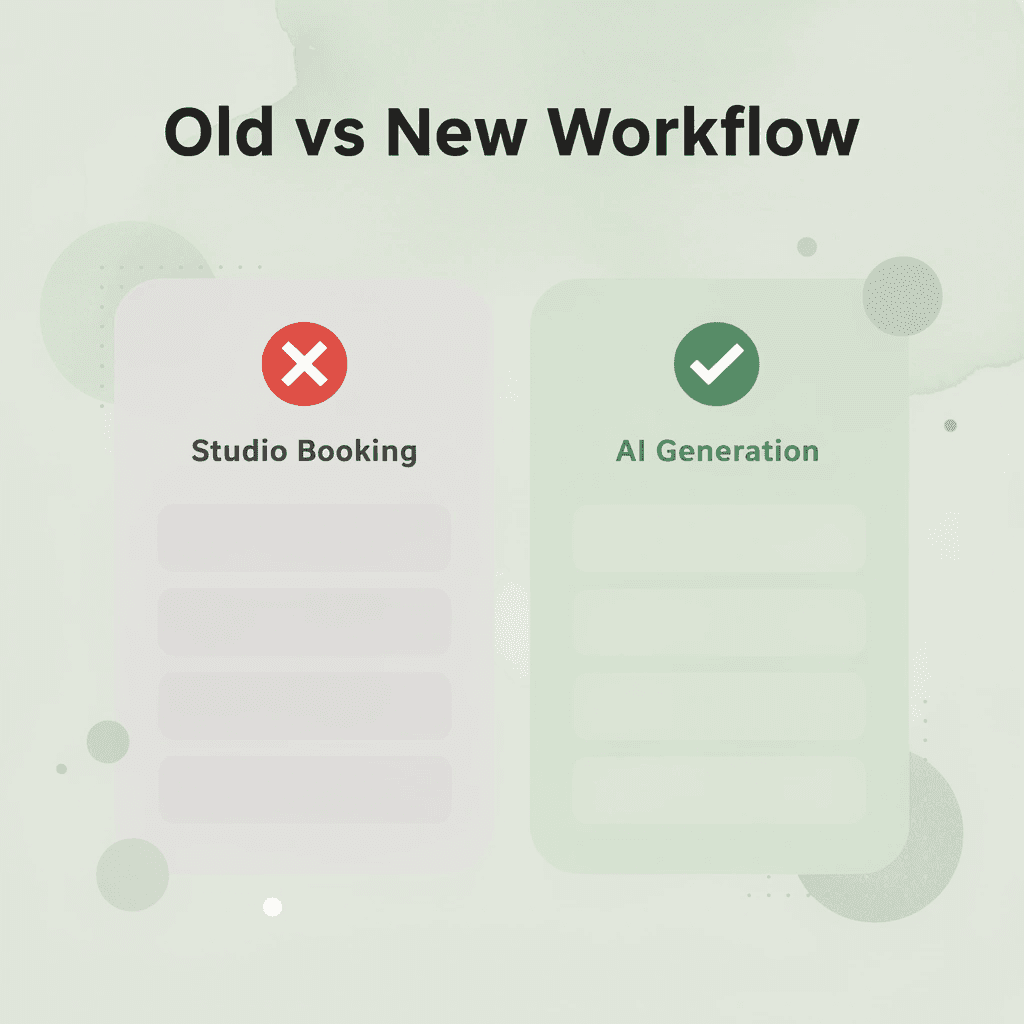
The failure point is throughput. When producing a new set of product images takes two weeks, sellers stop testing. They pick one visual, run it everywhere, and hope it converts—fewer iterations, slower learning, and underperforming product pages. Caspa compresses the production cycle, enabling sellers to generate lifestyle imagery, swap backgrounds for different channels, and upscale existing assets without rebuilding shoots from scratch.
According to Analyzer Tools' Amazon Statistics, there are over 9.7 million sellers on Amazon worldwide. In a catalog that large, shoppers decide whether to click or scroll in under a second, driven almost entirely by what the image communicates. Sellers who generate multiple visual variations and test them quickly gain a structural edge that compounds over time, not because they have bigger budgets, but because they iterate faster.
How does visual content pace determine whether sellers grow or stall?
The same logic applies to Shopify, where shoppers arrive with less built-in trust than on a marketplace. A polished lifestyle image that places a product in a recognizable, desirable context answers the question every browser asks: Does this product belong in my life?
What separates sellers who grow steadily from those who stall is whether their visual content keeps pace with their distribution. Independent sellers account for more than 60% of sales on Amazon's store, so competitive pressure comes primarily from other independent sellers. The tools available to close that gap have changed significantly. What you do with that gap, once you recognize it exists, matters more than most sellers expect.
Get Product Photos that Increase Your Sales Today
Upload a product to product photography and generate marketplace-ready visuals in minutes, not weeks. Our product photography solution delivers professional images for Amazon listings, Shopify product pages, and marketing campaigns without studio overhead or scheduling delays.
💡 Tip: Skip the studio entirely. Caspa's AI-powered platform delivers marketplace-ready results faster than traditional photography workflows.
Products that convert look professional — and that standard is no longer reserved for brands with big budgets. Caspa delivers that professional quality without traditional costs or wait times, giving you a real competitive edge on every listing.
🎯 Key Point: Professional product visuals are directly linked to higher conversion rates — don't let poor imagery cost you sales.
"Marketplace-ready product photography no longer requires studio overhead, scheduling delays, or weeks of waiting — Caspa delivers the same professional standard in minutes." — Caspa
| Traditional Photography | Caspa AI Photography |
|---|---|
| Weeks of turnaround time | Minutes to generate visuals |
| High studio overhead costs | No studio costs |
| Scheduling delays | Instant availability |
| Limited to one shoot | Unlimited iterations |
⚠️ Warning: Listings with unprofessional product images risk lower click-through rates and lost conversions — every day without quality visuals is a missed opportunity.

Related Reading
- Best Ai For Clothing Brands
- Printful Vs Gelato
- Amazon Merch On Demand
- Best Background For Product Photography
- Ai Clothing Mockup Generator
- Ai Fashion Model Generator
- Amazon Ai Tools
- Flat Lay Product Photography
- Ai Product Photo Editor
- T-shirt Mockup Ai
- Ecommerce Product Video
- Redbubble Vs Printful
- Merch On Demand
- Luxury Product Photography
- Teespring Alternatives
- Teespring Vs Printful
- Placeit Alternative
- Advertising Product Photography
- Printify Vs Gelato
- Placeit Pricing
- Ai Product Video Maker
- Ai Clothing Model Generator